Inside Ford's Universal Electric Vehicle Platform
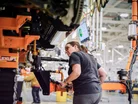
Ford Motor's Universal Electric Vehicle (UEV) platform is a big change in how the US manufacturer approaches EV production at scale.
As the automotive sector faces mounting pressure to deliver affordable EVs whilst maintaining profitability, Ford's latest initiative seeks to address both cost efficiency and production complexity.
The platform is designed to enable the delivery of a new generation of affordable EVs, with the first vehicle, a mid-size pickup, already moving towards production.
The company has experienced challenges in its EV operations, including a US$19.5bn write-down to close certain EV-related investments and adjustments to production plans.
However, the UEV platform could mark a turning point in Ford's strategy to compete globally, particularly against Chinese manufacturers who have established themselves as leaders in cost-effective EV production.

Transforming the production line
Perhaps the most significant manufacturing innovation lies in how Ford is producing UEV platform vehicles. The Louisville plant, where the first vehicle is being manufactured ahead of the 2027 launch, has adopted what Ford calls an 'assembly tree' approach.
Bryce Currie, Chief Manufacturing Officer at Ford and Vice President of Americas Manufacturing, said: "Simply put, we're transforming the traditional assembly line into an 'assembly tree'. Instead of one long conveyor, three sub-assemblies run down their own lines simultaneously and then join together."
Bryce explained that one sub-assembly handles the front of the vehicle, another manages the rear, whilst the third addresses the structural battery, seats, consoles and carpeting.
"We're confident this is the first time a vehicle will be built like this anywhere in the world. We tore up the century-old concept of the moving assembly line, transforming it with three sub-assemblies and a process that presents the vehicle to operators as a kit," Bryce said.
This parallel assembly approach could reduce production time and improve quality control by allowing specialists to focus on specific vehicle sections before final integration.
Rethinking vehicle architecture and assembly
Ford CEO Jim Farley described the UEV platform during a ceremony at Ford's Louisville Assembly Plant on 10 April 2025 as "the most radical change on how we design and how we build vehicles at Ford since the Model T".
The platform's departure from traditional automotive design is substantial. According to The Wall Street Journal, Ford has eliminated thousands of feet of heavy copper wiring in the new truck, removed hundreds of components and achieved a 15% improvement in aerodynamics compared to its other pickups.
The California-based Advanced Electric Vehicle Development team, led by Alan Clarke, Vice President of Advanced Development Projects at Ford, developed the platform. Alan previously worked at Tesla as Director of New Programs Engineering on the Model S and Cybertruck.
Writing about the UEV platform, Alan said: "If we succeed, we will have a family of vehicles that we expect to compete on price with the best in the world, including gas vehicles. There's still a lot of work to do, but we're making progress and we can't wait to share more soon."
The first vehicle off the production line
According to The Wall Street Journal, Ford is targeting a 2027 launch for its mid-size pickup, with an anticipated price point of around US$30,000.
The vehicle is expected to offer approximately 300 miles of range on a single charge and include in-car technology that could rival offerings from Tesla and Chinese competitors.
The Wall Street Journal suggests the vehicle's performance could nearly match that of a Ford Mustang, indicating that affordability will not come at the expense of capability.
For manufacturers watching Ford's progress, this balance between cost, performance and range could provide valuable insights into scalable EV production.
Competing on a global stage
Vehicles built on Ford's UEV architecture are designed to lower costs and simplify systems, with the ultimate goal of competing with Chinese manufacturers globally.
Alan wrote on Ford's website: "Our big bet for electric vehicles? Obsessing over the vehicle as a system to get more miles out of a smaller battery and radically simplifying the system to reduce the number of parts so we can deliver a new family of affordable electric vehicles to driveways around the world."
Chinese vehicle manufacturers have demonstrated the ability to produce cars more quickly and cost-effectively than American or European counterparts.
BYD has overtaken rival carmakers to become the best-selling EV brand, highlighting the competitive pressure facing established manufacturers. Ford's UEV platform could represent a crucial step in closing this manufacturing efficiency gap.
Company portals

Executives
Alan Clarke
Executive Director Advanced EV Development
Bryce Currie
Vice President - Americas Manufacturing, Global MP&L, Manuf. Eng - Company Officer - Ford Motor
Jim Farley
Chief Executive Officer