Inside Nokia’s US$30m US Photonic Semiconductor Expansion
Finland headquartered Nokia announced an expansion to its advanced test and packaging (ATP) operations for photonic chips in Allentown, Pennsylvania.
Nokia says the expansion is set to double its workforce in Pennsylvania, bringing the total number of staff at the site to 500 across manufacturing and research and development, while generating an estimated US$500m initial impact over the next five years.
It forms part of the company’s plan to invest US$4bn in US manufacturing over the coming years for ‘AI-ready’ network connectivity.

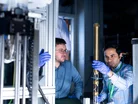
Nokia’s manufacturing facility in Allentown
Nokia’s Allentown facility is one of only a few in the US providing ATP of photonic chips into optical modules for use in AI and telecom infrastructure.
Through the investment, Nokia is increasing the site’s production capacity by 'up to 10 times' its current level.
Justin Hotard, President and CEO of Nokia, says: “The AI supercycle is fundamentally reshaping network and infrastructure requirements in the US and globally.
“Our expansion in Allentown is a direct investment in that future, scaling domestic manufacturing of the optical networking technologies that power AI infrastructure.
“It also reflects the strong partnership between Nokia, the US and the Commonwealth of Pennsylvania to support advanced manufacturing, create jobs and strengthen U.S. technology leadership and global competitiveness.”
The investment includes approximately US$30m from Nokia, which includes bipartisan support of approximately US$4m in assistance from the state of Pennsylvania and approximately US$10m in federal CHIPS investment tax credit.
What are photonic chips?
Photonic chips use light to process data instead of electricity, enabling faster communication speeds and greater bandwidth.
The chips are set to play a big role in AI data centres.
A report from Deloitte explains that these chips allow generative AI data centres, which need to move around much more significant amounts of data at higher speeds than other data centres, to communicate at lightspeed, using smaller, cheaper components while using less energy and producing less heat than the traditional alternatives.
McKinsey estimates that global spending on data centres could reach US$7tn by 2030.
Nokia says its investment in Pennsylvania results in the domestic manufacturing of components used in AI infrastructure, creates new jobs and significantly reduces energy usage in AI communications.
A recent report from CNBC noted that Pennsylvania already has more than 100 data centres.
Semiconductor demand
As Nokia works to scale semiconductor ATP, the global industry is struggling to keep up with ever expanding demand, driven primarily by data centre expansions and the demand for AI.
According to the Semiconductor Industry Association, global sales were US$99.5bn during the month of March 2026, an increase of 79.2% compared to the March 2025 total of US$55.5bn and 11.5% more than sales in February 2026.
Josh Shapiro, Governor of Pennsylvania, says: “As demand for semiconductors continues to grow across industries, we’ll continue to position Pennsylvania as a leader in innovation, with a supportive, thriving business climate that helps companies compete on a global scale.
"From advanced manufacturing to the research and development of new technology like advanced chip packaging, Pennsylvania has all the resources to be a world leader in chip production.”
Company portals

Executives
Justin Hotard
President and CEO