Nvidia's AI Chip Dominance Challenged By Chinese Ambition
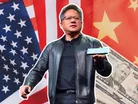
China's strategic ambition to achieve technological self-reliance is creating new dynamics in the global semiconductor market, presenting a major challenge to Nvidia's established leadership in artificial intelligence (AI) hardware.
The shift presents implications for the digital manufacturing sector that relies on this technology.
The movement gained considerable traction after the 2024 launch of an AI model from DeepSeek, a then-obscure startup.
DeepSeek showed it could train its models using considerably fewer high-end chips than its rivals, causing a stir in the technology industry.
This development appears to have spurred on domestic technology firms in China to increase their efforts in creating viable alternatives to Nvidia's widely used products.
These efforts are reshaping the supply chain for the essential components that power modern digital infrastructure and advanced manufacturing systems.
Chinese semiconductor alternatives
Several of China's largest technology companies have since made public their progress in developing proprietary semiconductor technology.
In September, Alibaba revealed a new chip that, according to Chinese state media reports, is designed to compete with the performance of Nvidia's H20 semiconductors while consuming less power.
The H20 processors are versions of Nvidia's hardware scaled down to comply with US export controls for the Chinese market.
In a similar move, Huawei introduced what it called the most powerful chips to date, forming part of a wider three-year strategy aimed at challenging Nvidia's position in the market.
Huawei stated its intention to make its designs and associated computer programs publicly available within China, a strategy that could encourage local firms to move away from American technology.
Nvidia has acknowledged this emerging competition.
"The competition has undeniably arrived," a spokesperson for Nvidia told the BBC, stating that Nvidia would "continue to work to earn the trust and support of mainstream developers everywhere".
Other domestic chipmakers are also making inroads. MetaX has reportedly secured contracts to supply state-owned telecommunications firm China Unicom, while the share price for Beijing's Cambricon Technologies more than doubled over a three-month period.
Performance and analytical gaps
Despite these developments, industry experts advise a careful approach to claims from Chinese manufacturers, citing a lack of publicly available data and inconsistent benchmarks for testing.
Jawad Haj-Yahya, a computer scientist who has tested chips from both the US and China, offers a nuanced view.
He believes that while China's semiconductors show comparable performance in predictive AI tasks, they do not yet match their American counterparts in more complex analytical functions.
"The gap is clear and it is surely shrinking. But I don't think it's something they will catch up on in the short-term," he explains.
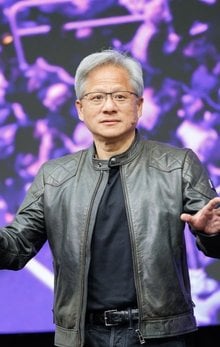
From a broader perspective, Nvidia's own CEO Jensen Huang has commented that China is merely "nanoseconds behind" the US in the field of chip development.
Speaking on the BG2 podcast, Jensen urged the US to compete "for its survival" and noted China's "vibrant entrepreneurial, high-tech, modern industry".
Geopolitical dimensions and future outlook
The recent announcements from China's technology sector are viewed by some as a strategic manoeuvre in its ongoing trade and tariff discussions with the US.
Chia-Lin Yang, a computing professor at National Taiwan University, describes these moves as a "bargaining chip".
The thinking is that Beijing could be applying pressure on Washington, suggesting that, if the US does not permit the sale of advanced equipment, it risks being excluded from a substantial market.
Most analysts concur that, for the most powerful semiconductors, China is still reliant on the US. US export restrictions have aimed to decelerate China's progress in advanced technology by blocking access to high-end Nvidia chips.
The US has "hit China exactly where its dependency is deepest," explains Raghavendra Anjanappa, a semiconductor engineer.
He acknowledges that China can lessen its dependency on American technology for less advanced applications but still requires the "raw performance" of US chips for training sophisticated AI systems.
"But China's not far off in the grand scheme and they might only need five more years to be independent from the US," he adds.
This aligns with President Xi Jinping's national strategy to make China more self-reliant, investing billions into what he terms "high-quality development" to avoid depending on "anyone's gifts".
Company portals


Executives
Jensen Huang
Founder and CEO