Applied Materials: Can Semiconductor Companies Hit Net Zero?
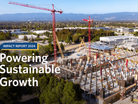
Applied Materials’ 2024 Impact Report shows a semiconductor manufacturing heavyweight under pressure to reduce its carbon footprint while simultaneously expanding its production base.
The California-based firm has committed to hitting net-zero emissions by 2040, an ambition that collides with the practical demands of running a global business with more than 35,000 employees across 207 cities.
Applied’s progress is laid out target by target in the report, with mixed results – and much of it stems from what’s happening inside its factories.
Inside the numbers: Factory power and product energy
Applied Materials is pushing to source 100% of its electricity from renewables by 2030. So far, 73% of global electricity comes from renewable sources, with its US sites already at 100%.
But, energy is just one part of the equation. The firm also aims to cut Scope 1 and 2 emissions—which cover direct emissions from its operations and those from purchased electricity—by 50% against a 2019 baseline.
However, latest figures show these emissions are 4% higher than they were in 2019. A major factor is the construction and expansion of manufacturing facilities, which naturally adds to energy use, emissions and complexity.
The report outlines progress on reducing energy consumption per wafer pass, a key manufacturing metric that reflects energy used in processing semiconductor wafers. Applied is targeting a 30% improvement by 2030 from a 2019 baseline. As of now, it has achieved a 13% improvement across its semiconductor products.
New energy infrastructure at production sites is starting to show results. The report notes a 48% increase in on-site solar electricity, including a new 700kW solar array at the firm’s Tainan facility, which generated more than 228,000kWh of clean energy in just three months.
Writing on LinkedIn, Chris Librie, Chief Sustainability Officer at Applied Materials, says: “I’m pleased to share that Applied Materials has published our 2024 Impact Report, detailing great progress in reducing our Scope 3 emissions (down 24% since 2022), controlling our Scopes 1 and 2 emissions in spite of business growth and continuing to invest in the communities where we operate.
"We are transforming the future of technology innovation while we anchor purpose at the heart of our business strategy.”
The manufacturing loop: supply chain meets emissions
Manufacturing semiconductors means managing a large, complex supply chain—and Applied Materials puts this at the centre of its sustainability strategy.
According to the report, its supply chain accounts for around 10% of the company’s total carbon footprint. But its suppliers also serve other firms in the industry, multiplying the impact of any changes Applied helps implement.
Each year, Applied surveys suppliers representing 80% of its procurement spend. In 2024, 183 suppliers responded, with 109 providing detailed emissions data from their facilities. Nearly 100 suppliers say they’ve adopted greenhouse gas reduction targets and 23 are now aligned with science-based targets.
Applied continues to work with suppliers to interpret their data, build emissions-reduction plans and transition towards renewable energy. One-on-one conversations are now under way with major partners to assess their readiness to support Applied’s 2040 net-zero goals.
The report says: “Applied continues to collaborate with suppliers, using their provided survey data, to help them create emissions-reduction plans. We also engage a third party to help them calculate their emissions data. In 2024, we began one-on-one conversations with our major suppliers to discuss our net zero aspirations and review their ability to transition their facility and suppliers to renewable energy.”
Applied’s ECO Services offering, launched this year, adds another layer to this approach. The service helps customers—many of which are also manufacturers—track and cut their own utility use and emissions, using data gathered from Applied’s products.

Manufacturing meets AI
Beyond the emissions and targets, Applied is preparing for an even larger manufacturing challenge: keeping pace with demand driven by AI.
These technologies depend on semiconductors and data centres, which themselves consume vast amounts of energy.
- US$3.2bn R&D investment
- US$27.2bn revenue
- 35,700 employees in 207 cities, 24 countries
- More than 20,000 patents
In his foreword to the 2024 Impact Report, Applied’s CEO Gary E. Dickerson says: “Tectonic shifts in technology are reshaping our lives and the global economy. Transformative innovations, like artificial intelligence and the internet of things, have near-infinite potential and we’re only beginning to explore what’s possible. Semiconductors are the foundation of these technological megatrends.
“To scale breakthrough innovations, our industry must confront the environmental and social impacts associated with the exponential advancement of these data-intensive applications. In short, we must drive sustainable growth across our entire ecosystem. As the world’s leading semiconductor and display equipment company, Applied is uniquely positioned to accelerate our industry’s roadmap and enable more energy-efficient computing.”
With US$27.2bn in annual revenue and more than US$3bn invested in R&D, Applied is positioning itself to play a major role in industrywide sustainability innovation.