Who Will Win the Race to Electrify Heavy-Duty Fleets?
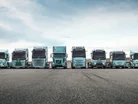
During London Climate Action Week 2025, global attention shifted to the electrification of heavy-duty vehicle fleets, a key focus for achieving net zero targets and decarbonising logistics.
While light-duty vehicles have made significant headway, the heavy-duty segment remains a relatively untapped opportunity, presenting both significant environmental impact and commercial potential for manufacturers.
Closing the electrification gap
Heavy-duty vehicle (HDV) electrification currently lags behind light-duty vehicles by six to eight years, according to the London-based think tank Carbon Tracker. However, that gap is beginning to close.

In early 2025, Amazon placed its largest-ever order of 200 electric trucks, expected to deliver 350 million parcels per year once operational. The move by one of the world’s largest logistics operators signals a broader shift: fleet operators are beginning to act on sustainability pledges and re-evaluate the long-term cost implications of diesel vehicles.
As battery technology improves and the total cost of ownership (TCO) for electric HDVs decreases, the automotive industry may be nearing a decisive turning point.
Refleeting: a commercial imperative
For global manufacturers, the transition from fossil-fuelled to battery-electric heavy-duty vehicles represents a significant business opportunity. Fleet electrification is no longer a distant aspiration but a near-term operational decision for many logistics companies.
The shift, driven by rising sustainability expectations and impending emissions regulations, could open the door to an estimated US$300bn global HDV market by 2035, according to Carbon Tracker.
As fleet operators seek to align their transport operations with sustainability targets, demand for fully electric HDVs is expected to grow. For automotive OEMs, it presents an incentive to scale production, refine vehicle offerings and strengthen their market position before global competitors do.
Incumbents risk falling behind
European and US automotive manufacturers now face increasing pressure from Chinese EMs, who are rapidly expanding their dominance in the electric HDV market. In 2024, BYD, China’s leading electric vehicle manufacturer, sold more than five times as many heavy-duty EVs as its closest competitor.
Although the majority of the sales are in China, analysts believe global expansion is imminent.
Without greater investment in electric HDV development from incumbent OEMs in Western markets, the competitive gap is likely to continue widening, with long-term consequences for market share and innovation leadership.
A sector with a high sustainability impact
Ben Scott, Head of Energy Demand at Carbon Tracker, believes that the heavy-duty vehicle segment holds enormous potential for emissions reduction, saying: “The heavy-duty vehicle sector doesn’t get as many headlines as the passenger pathways, but it’s certainly a sector that needs to rapidly decarbonise.
“It’s a sector which contributes around 30% towards road transport emissions, but only constitutes about 3% of vehicles on the road. So in terms of moving the needle for sustainability, you don’t actually have to replace or remove that many vehicles to really have a meaningful impact on greenhouse gas emissions.”
From a manufacturing perspective, the potential to create meaningful change with relatively fewer vehicles makes the HDV segment particularly attractive. But the path forward is not without obstacles.
The economic equation for fleets
According to Ben, the decision-making process for fleet operators centres around practical economics and functionality:
“Let’s think about the customers here,” he says. “It’s fleet operators and they can be anyone from a small family business who might own just a single truck, all the way up to the large logistics companies which are household names.
Ultimately, when these businesses decide to buy new trucks, they care about only two things. One, what’s the total cost of ownership of the vehicle over its life? And two, can they even use it? Does it have the same functionality as the diesel vehicle they’re used to?”
Despite the promise, electric HDVs remain two to three times more expensive than their diesel counterparts, a significant barrier to large-scale adoption.
However, Ben remains optimistic:
“Once we see the total cost of ownership equation solved – it will be a no-brainer for making the transition from diesel to electric trucks.”
A moment of opportunity
For manufacturers in the heavy-duty segment, the race is on. Electrification is no longer just a sustainability strategy; it is a strategic growth lever. Those who invest now in scalable EV production, regional compliance and next-generation technology will be best placed to lead the transition and shape the future of zero-emission transport.
Explore the latest edition of Manufacturing Digital and be part of the conversation at our global conference series, Procurement & Supply Chain LIVE.
Discover all our upcoming events and secure your tickets today.
Manufacturing Digital is a BizClik brand.