Manufacturing v Health: How Humans Feel About Robots at Work
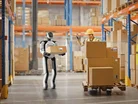
Today, robots are the norm in many areas and are even preferred for jobs like lifting and transporting heavy items.
Hexagon surveyed more than 18,000 people around the world to find out which tasks they are happy to hand off to machines.
The Robot Generation study found that 63% are comfortable with robots in factories, but just 46% with robots at home.
People also think manufacturing is one of the industries where robots will scale first.
“Industrial environments are where the tasks for robots are the most defined, the safety cases are mature and governance is in public view," says Burkhard Boeckem, Chief Technological Officer at Hexagon.
"This data confirms that the path to adoption runs through industry, not around it.”
People and machines
People have always had fears about new technologies changing work.
In 1911, mechanised looms sparked riots across England.
As computing and early robotics entered factories and offices, workers worried that assembly-line automation and early software would trigger mass unemployment.
Today, workers are concerned about generative AI and other tools that aim to automate decision-making, administrative tasks and creative processes.
What tasks do people want robots to do?
Hexagon's survey found that robots are preferred for some tasks.

Heavy lifting was cited by 68% of respondents and carrying and delivery by 54%.
Hazard monitoring was agreed with by 52% and cleaning and information tasks both 50%.
Adults predict that robots will scale first across four industries:
- Logistics - 45%
- Hazardous environments - 44%
- Logistics - 44%
- Manufacturing - 43%
What jobs do people want humans to do?
Humans, however, were preferred for a variety of tasks.
Caregiving received the biggest percentage, 71%, followed by training with 57% and health checks with 56%.
Conflict resolution and handling sensitive data were also tasks where more than half of the respondents preferred humans to do the job.
Just 21% of adult respondents think that robots should be considered full colleagues. Children, however, were 50% more likely to view robots as full colleagues.
The ideal robot
Most adults say there must be clear rules for what robots can and cannot do.
Around a third prefer machine-like robots to human-like ones.
Just more than half want help with basic tasks like research from robots.
Only 14% would want them in charge.