Why is Mitel Moving its IP Phone Manufacturing to Germany?
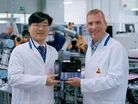
As a strategic response to increasing global supply chain volatility, communications technology firm Mitel has relocated its IP phone manufacturing to Germany.
The move is facilitated by a new production agreement with Gigaset, a European company with expertise in precision communications technology.
The agreement will see approximately one million Mitel devices manufactured each year at Gigaset’s advanced facility in Bocholt, North Rhine-Westphalia.
The facility is known for its automated production systems and high engineering standards.
The move is intended to strengthen Mitel’s global supply chain while ensuring faster delivery times for its European customers.
German engineering to bolster Mitel's supply chain
The collaboration leverages the strengths of Mitel and Gigaset.
Mitel will maintain full control of hardware design and software development ,ensuring alignment with its hybrid communications strategy and future innovations such as AI-driven embedded capabilities.
Gigaset will provide high-precision manufacturing from its facility in Bocholt.
“As global supply chains face increasing volatility, we are taking strategic proactive steps to ensure quality and reliability for our customers,” explained Martin Bitzinger, Senior Vice-President of Product Management at Mitel.
He adds: “This move leverages renowned German engineering to enhance device quality and reliability. For our customers it means predictable access to our trusted products and a robust foundation for their communications infrastructure," adds Martin.
Gigaset’s manufacturing plant in Bocholt is noted for its highly automated and environmentally responsible processes which comply with Trade Agreements Act (TAA) standards.
These standards offer assurances for enterprise and public sector customers, particularly those operating in regulated industries.
Boosting resilience and quality in communications manufacturing
By anchoring its manufacturing in Europe, Mitel shortens lead times for regional customers and bolsters operational continuity for its partners and end users in more than 100 countries.
This decision is a forward-looking commitment to stability amid ongoing geopolitical uncertainty and logistics disruptions that continue to challenge technology supply chains.
Ralf Lueb, Senior Vice President Global Sales & Marketing at Gigaset commented: “We are delighted to expand our partnership with Mitel further and through our production in Bocholt send a strong signal of quality, reliability and ‘Made in Germany’,”.
“With our highly automated and precision-driven manufacturing, we provide Mitel customers in Europe and worldwide with the assurance of faster delivery times, the highest quality standards and long-term planning security,” says Ralf.

Strategic production change in a US$2bn market
Desk and cordless phones are a fundamental part of Mitel’s hybrid communications portfolio.
These devices are especially important for frontline and office-based employees who rely on dependable voice technology for daily operations.
According to Frost & Sullivan, the global market for such devices is valued at approximately US$2bn, highlighting their essential role in emergency response secure communication and frontline work.
Ensuring a stable and efficient supply of these devices is central to Mitel's commitment to delivering high-quality communications infrastructure.
An industry analyst noted the strategic importance of the manufacturing relocation.
Chris Pennell, Industry Principal at Frost & Sullivan, said: “Mitel’s decision to move handset production to Germany is a key strategic step that strengthens supply chain resilience and reinforces its connection to European markets."
"This transition allows Mitel to leverage Germany’s rigorous and high-quality standards and demonstrates its commitment to long-term competitiveness and customer trust.”
Through its collaboration with Gigaset, Mitel is not only optimising its production and supply chain but also reinforcing its commitment to meeting customer expectations for reliability and innovation in a changing global market.
Company portals

Executives
Christopher Pennell
Industry Principal
Martin Bitzinger
Senior Vice President Product Management & Marketing

Ralf Lueb
SVP Global Sales & Marketing