How Norway's Plastic Sorting Hub can Benefit Manufacturers
A new facility in Norway, called Områ, has been developed to address the country's plastic packaging waste, creating a domestic solution for an international challenge.
The plant is a joint venture between the technology company TOMRA and the producer responsibility organisation Plastretur, and has been established to help Norway meet forthcoming European Union recycling mandates. Currently, around a third of plastic packaging waste in Norway is recycled, with the remainder mostly incinerated.
With the EU’s PPWR regulation requiring a minimum 55% recycling rate for plastic packaging by 2030, a new approach is needed. Located at Holtskogen, near Oslo, the Områ facility is the country’s first national fine-sorting plant for plastic packaging waste.
It has the capacity to process 90,000 tonnes of plastic annually, sourced from households across the country. This infrastructure is designed to transform mixed plastic waste into distinct polymer fractions, which are necessary for creating high-quality recycled materials and advancing a circular economy.
This is what circularity looks like in practice: technology, industry and policy working together to turn waste into value

Advanced sorting technology for plastic feedstock
At the heart of the Områ plant’s operation is TOMRA’s sensor-based sorting technology. These systems employ AI and advanced sensors to sort mixed plastic waste with high precision.
The process separates the material into as many as ten different polymer types, including polyethene (PE), polypropylene (PP), polyethene terephthalate (PET), and polystyrene (PS).
This level of purity enables the production of high-value recycled plastic feedstocks that are suitable for both mechanical and chemical recycling processes, providing a new source of raw material for manufacturers.
TOMRA’s GAINnext system, another innovation, facilitates the sorting of food-grade plastics to purity levels that can exceed 95%.
A modular digital management platform is also integrated into the system, allowing for the real-time monitoring of throughput, energy consumption and equipment performance to enhance operational efficiency.
Supporting a circular plastics economy
The Områ facility provides the infrastructure for municipalities and waste management companies to meet recycling targets through an automated mixed waste sorting (MWS) approach.
The system reduces reliance on household source separation to achieve higher recycling rates. The name Områ comes from a Norwegian word that conveys the ideas of “to think about” and “to take care of”.
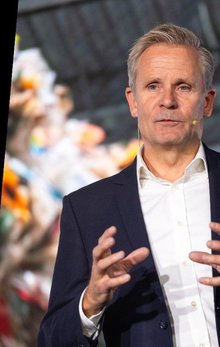
Karl Johan Ingvaldsen, CEO at Plastretur, explains: “Områ gives municipalities and the entire value chain a clear signal: there is now a scalable, high-quality route for plastic packaging.
“It provides the infrastructure needed to meet EU recycling targets and supports our shared ambition to build a truly circular plastics economy.”
A blueprint for collaborative infrastructure
The joint venture combines the strengths of both parent companies.
TOMRA, holding a 65% stake, provides the technological foundation with its extensive experience in sensor-based sorting systems for resource recovery. Founded in 1972, the firm now operates in more than 100 countries.
Plastretur, part of Green Dot Norway and holding the remaining 35% stake, is the producer responsibility organisation for plastic packaging in the country. It works to ensure compliance with recycling obligations and promote innovation.
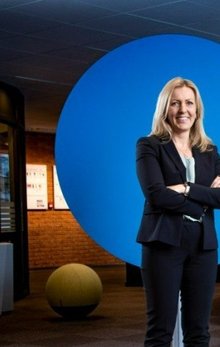
“Områ represents a defining moment for how we handle plastic waste in Norway and serves as a scalable blueprint for countries across Europe,” says Tove Anderson, CEO and President of TOMRA.
She notes that the infrastructure allows for the sorting of nearly all household plastic packaging so it can be given a new life.
“This is what circularity looks like in practice: technology, industry and policy working together to turn waste into value,” Tove says.
"Our hope is that Områ becomes a model for how nations can build a truly closed loop for plastics – one that keeps resources in play and keeps decarbonisation a priority.”
Company portals


Executives
Karl Johan Ingvaldsen
Member of the Board
Tove Andersen
President and CEO