NVIDIA & Agility: First Full Stack Safety System for Robots
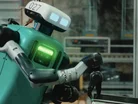
NVIDIA has announced NVIDIA Halos for Robotics, which it calls ‘the industry’s first full-stack, comprehensive safety system for robotics and physical AI that unifies AI compute and safety’.
The company's Halos was originally an autonomous vehicle safety system that brings together vehicle architecture, AI models, chips, software, tools and services. NVIDIA is extending its system to humanoid robotics.
Agility, a humanoid robotics and physical AI company, is the first to use NVIDIA Halos for Robotics to build safety into its humanoids working in factories, warehouses and logistics operations.
NVIDIA Halos for robotics
Deepu Talla, Vice President of robotics and edge AI at NVIDIA, says: “Physical AI is transforming how factories, warehouses and logistics operations work, and robotics teams need a unified safety architecture to scale autonomous systems into these environments.”
Halos for Robotics is built on three key layers: NVIDIA IGX Thor and Holoscan Sensor Bridge for AI compute and sensor connectivity, the Halos OS software stack for safety functions and applications and the NVIDIA Halos AI Systems Inspection Lab for third-party certification.
Deepu adds: “With NVIDIA Halos for Robotics, developers and system builders can harness NVIDIA’s proven autonomous vehicle safety foundation to develop safer robots faster and bring them into industrial operations alongside workers with greater confidence.”
Agility’s humanoid robots in factories
Agility has built elements of NVIDIA Halos for Robotics into its humanoids, helping serve its customers like Amazon, GXO, Schaeffler and Toyota Motor Manufacturing Canada.
The company says its humanoid, Digit, is the first humanoid robot in production deployment with Arc, a multi-cloud management platform by Microsoft, being the cloud platform that runs it.
Peggy Johnson, CEO of Agility, says: “For humanoids to deliver value at scale, safety has to be built into the robot and validated across the entire system.
“Partnering with NVIDIA to implement and optimise the Halos for Robotics system extends our leadership in responsible automation, which is a nonnegotiable requirement for bringing humanoids safely into industrial workflows.
“This collaboration unlocks true human-robot teamwork, driving the long-term returns that will power next-generation manufacturing and logistics operations.”
Working with its partners, it says it is bringing advanced automation to facility floors.
NVIDIA says that for Digit, NVIDIA IGX Thor delivers industrial-grade AI compute with built-in safety capabilities, while Halos Core supports the software layer for safety-related operating functions.

Robotics safety in manufacturing
Increasingly, robots and humanoid robots are being deployed on the factory floor. The International Federation of Robotics World Robotics 2025 statistics on industrial robots showed 542,000 robots installed in 2024, which is more than double the number 10 years ago.
As robots and humanoid robots continue to expand in the manufacturing sector, more questions are asked about the safety of the robots, especially as there have been well documented issues with deployments of autonomous vehicles.
In a June 2026 interview with McKinsey, Daniela Rus, the Director of the Massachusetts Institute of Technology’s Computer Science and Artificial Intelligence Laboratory, said: “AI models that control robots are typically not closed-form solutions.
“There is always a chance that they will make a mistake. How will the robot respond if the AI brain tells it to do something wrong?”
Company portals


Executives
Deepu Talla
Vice President and General Manager - Robotics & Edge AI
Peggy Johnson
Chief Executive Officer