
Overhauling Inbound Logistics for a Resilient Supply Chain
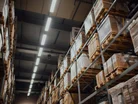
For years, manufacturing organisations have been focused on outbound logistics, optimising the final delivery to protect customer satisfaction. However, a volatile global landscape defined by fluctuating tariffs, strict emissions regulations and persistent labour shortages has forced a strategic pivot.
As companies look to secure vital wins such as cost efficiency, resilience and decarbonisation, a battle is being fought at the very beginning of the supply chain: inbound logistics.
Managing the influx of raw materials and components into manufacturing plants has historically been plagued by fragmented supplier schedules, erratic cargo volumes and a lack of real-time transparency. Those leading manufacturers are treating the inbound network not merely as a cost centre, but as a strategic asset. By focusing on three core pillars, infrastructure electrification, algorithmic optimisation and operational consolidation, the industry is transforming the highly complex first mile.
- Manufacturers are shifting focus to the first mile to improve cost efficiency and resilience.
- This transformation relies on electrification, algorithmic optimisation and operational consolidation.
- Companies are building dedicated EV charging networks directly at their loading docks to ensure reliable zero-emission transport.
- Advanced data analytics are used to optimise routing, maximise cargo space and predict supply disruptions.
- Manufacturers are using centralised hubs to combine fragmented supplier shipments into a predictable, unified flow.
Decarbonisation and infrastructure
Decarbonising the supply chain requires moving beyond carbon offsetting toward direct emissions reduction. Because inbound routes between component suppliers and primary manufacturing facilities are frequently short-to-medium-haul, highly repetitive and entirely predictable, they serve as the ideal testing ground for zero-emission heavy transport.
The challenge is no longer the availability of electric commercial vehicles, but the infrastructure required to keep them moving. Leading manufacturers are establishing dedicated charging networks directly at the loading docks and factory gates. By controlling these fixed endpoints, companies bypass the limitations of public charging networks, ensuring high-capacity power is available exactly when and where components are unloaded. This integration of energy infrastructure into manufacturing hubs transforms zero-emission inbound transport from a sustainability target into a reliable, day-to-day operational reality.
Algorithmic optimisation
The sheer complexity of modern assembly networks, where thousands of unique parts must arrive from a vast matrix of domestic and international suppliers, demands a level of precision that traditional planning systems cannot provide. The industry is subsequently transitioning from historical, reactive models to predictive, prescriptive execution.
Advanced data analytics and specialised logistics software are being deployed to dynamically map entire supplier networks. By running continuous scenario analyses, these platforms identify the most efficient routing configurations, maximise container utilisation and eliminate empty running miles before a vehicle even departs the supplier facility.
This data-driven visibility enables companies to anticipate potential upstream disruptions, mitigate supply shocks and reduce total fuel consumption through pure mathematical efficiency.
Operational consolidation
Managing thousands of independent tier-one and tier-two suppliers inherently introduces friction, often resulting in fragmented, half-empty shipments arriving at receiving docks simultaneously. To combat this congestion, major operations are rewriting the rules of supplier integration through automated consolidation.
Instead of requiring individual vendors to dispatch fragmented purchase orders to multiple regional distribution points, organisations are establishing centralised consolidation hubs.
By strengthening our first-mile capabilities, we’re reducing complexity and keeping goods moving, so we can deliver even more value every day.
Suppliers ship unified loads to a single location, where advanced automation and automated sorting systems manage the internal routing. This consolidation simplifies the process for small-to-medium enterprise partners, reduces freight handling costs and guarantees a structured, predictable flow of inventory straight to the assembly line.
The trajectory for manufacturing supply chains is clear. True operational resilience cannot be achieved by focusing exclusively on the final delivery. By building robust infrastructure, leveraging prescriptive algorithms and consolidating supplier networks, manufacturers are successfully insulating their inbound logistics from external volatility, setting a new benchmark for sustainable industrial efficiency.
Walmart
To support its Everyday Low Prices commitment, Walmart US has launched a new supply chain strategy called Prepaid Consolidation. Designed to simplify inbound logistics for prepaid suppliers, the initiative aims to build a faster, more scalable, tech-enabled supply chain that improves service levels while lowering overall costs.

The programme expands Walmart's first-mile capabilities by utilising its national network to merge shipments, creating significant transportation efficiency. Instead of navigating multiple drop-offs, suppliers send products under a single national purchase order to one Automated Consolidation Center. From there, Walmart combines the inventory and distributes it across its 42 regional distribution centres.
Crucially, the program offers operational flexibility without requiring changes to existing prepaid freight terms. Suppliers pay a transparent, price-per-case rate covering handling and outbound transit, managing shipments either directly through Walmart or via approved third-party providers like C.H. Robinson, Hub Group and RJW Logistics.
By consolidating inbound freight, Walmart reduces network variability and improves flow consistency. This enhanced replenishment precision ultimately drives stronger in-stock performance across stores.
“We’re focused on making our supply chain simpler, faster and more efficient for suppliers, while also keeping products in stock for our customers,” says Mike Gray, Senior Vice President of Supply Chain at Walmart US.
“By strengthening our first-mile capabilities, we’re reducing complexity and keeping goods moving, so we can deliver even more value every day.”
Toyota Motor Europe
Toyota Motor Europe (TME) has entered into a long-term contract with advanced supply chain optimisation software provider Agillence. Following the successful completion of an initial pilot programme, TME will continue utilising the proprietary Agillence Lean Logistics Optimizer (ALLO) software to drive strategic planning across its inbound parts logistics network.

The automotive manufacturer’s European logistics operations are highly complex, demanding immense precision. During the pilot phase, the ALLO platform successfully demonstrated its ability to improve inbound planning performance, significantly compress planning cycle times and directly support TME’s broader carbon neutrality objectives.
Under the new formalised agreement, the software will provide ongoing support for strategic network planning and scenario analysis. This data-driven approach allows TME to simulate different routing and logistics configurations, enhancing the overall efficiency, resilience and sustainability of its inbound operations.
Jean Christophe Deville, Vice President of Supply Chain at TME, says: "ALLO has proven to be a strategic asset in our pursuit of a sustainable, cost-efficient logistics network across Europe. We are confident that this long-term partnership will continue to drive meaningful progress toward our carbon neutrality goals while delivering real operational value."
MAN Truck & Bus
Logistics provider Kloiber has deployed 15 fully electric MAN eTGX trucks into MAN’s inbound transport network. Operating on a 328-kilometre round trip between manufacturing plants in Nuremberg and Munich.
Powered by 100% green electricity, this saves up to 566 tonnes of CO2 annually per vehicle – central to the manufacturer's decarbonisation and cost-efficiency goals.
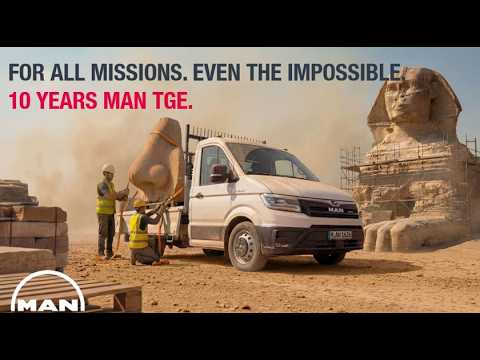
Michael Kobriger, Member of the Executive Board of MAN Truck & Bus responsible for Production and Logistics, says: "With the first MAN eTrucks in our inbound transport operations, we are demonstrating in live operation how powerful and economical the MAN eTGX already is today – and thus making the benefits for the environment and its practicality immediately tangible."
To support the fleet, dedicated charging infrastructure has been expanded.
Ferdinand Kloiber, Managing Director of Kloiber GmbH, adds: "For us, it's clear: the future of transport logistics is electric. With the MAN eTGX and our new charging park, we are bringing sustainability and reliability to the road and thus supporting the decarbonisation of MAN's inbound logistics.”
Company portals


Executives
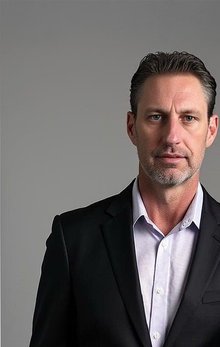
Mike Gray
SVP of Supply Chain at Walmart US