Reshoring Regrets: The US Supreme Court's Tariffs Decision
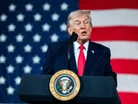
Manufacturers have poured millions of dollars into relocating factories, moving heavy machinery and signing costly new domestic leases to escape US President Donald Trump's April 2025 tariffs.
Now, the US Supreme Court's decision to invalidate those tariffs has suddenly made cheaper, global supply routes more viable again.
This could leave domestic producers stranded in higher-cost production models.
In a 6-3 decision, the Supreme Court invalidated the International Emergency Economic Powers Act (IEEPA) tariffs, ruling the President lacked the explicit congressional authority to impose such sweeping taxes.
Chief Justice John Roberts, writing for the majority, stated: "When Congress has delegated its tariff powers, it has done so in explicit terms and subject to strict limits.
"Had Congress intended to convey the distinct and extraordinary power to impose tariffs, it would have done so expressly, as it consistently has in other tariff statutes."
Within hours of the ruling, President Trump issued a new Proclamation, replacing the invalidated duties with a global surcharge under Section 122 of the Trade Act of 1974, a mechanism designed to address balance-of-payment problems.
The new global surcharge takes effect on February 24, 2026 and while the initial surcharge is set at 10%, the President has already used social media to propose an increase to 15%, the statutory maximum.
Unlike the indefinite IEEPA duties, Section 122 tariffs are legally capped at 150 days unless Congress votes to extend them.
The reality for factories
For supply chain and procurement teams, the focus must shift immediately to bills of materials and supplier contracts.
The removal of the previous 10% baseline levy and the instant application of a new Section 122 surcharge fundamentally changes costs for imported components, raw materials and subassemblies.
Domestic factories rely heavily on these imported inputs to build finished goods.
Procurement teams must now rapidly re-evaluate the landed cost of goods currently in transit and renegotiate vendor contracts that previously used the IEEPA tariffs to justify vendor surcharges.
Rob Burdett, Head of Multi Manager at Nedgroup Investments in London told Reuters: "This ruling has major implications for the limits of US presidential power and the division of power between the legislative branch and the executive branch, but also as a macro catalyst across equities, bonds, currencies and global trade flows."
Microchips and metals
The Supreme Court ruling alters the character of trade risk, shifting it from a blanket global environment to a highly fragmented landscape.
The decision did not impact tariffs imposed under alternative legal frameworks, creating a divide in how different manufacturing sectors will fare.
Manufacturers reliant on components like imported microchips may see immediate margin improvements as the overarching IEEPA restrictions are lifted.
Heavy industry and automotive manufacturers remain heavily burdened.
Section 232 duties on imported steel and aluminium are still entirely intact, meaning heavy industry will continue to face inflated material costs.
Trade volatility
The operational whiplash is prompting a reassessment of capital allocation across the sector.
Alex Saric, Smart Procurement Expert at Ivalua, says: "The damage is already done. Companies have restructured sourcing networks, absorbed margin pressure and invested heavily in diversification.
"A Supreme Court reversal does not undo past disruptions, or eliminate the risk of new tariffs under a different authority. Businesses that retreat back to single-region sourcing to chase short-term cost relief risk repeating the same vulnerability.
"Trade volatility isn't an occasional shock anymore; it's a permanent operating reality. Businesses should treat this moment not as relief, but as validation of the need for dynamic supply chain planning."
Refunds and the workforce impact
While the court invalidated the old tariffs, it did not provide a manual for refunds.
The Court of International Trade (CIT) is now expected to become a massive legal battleground for companies trying to claw back the estimated US$160bn (£105bn–£120bn) paid since the April 2025 rollout.

If refunds are to go ahead, an influx of capital will impact the factory workforce.
Given that the administration is widely anticipated to seek alternative legal mechanisms to reintroduce targeted duties, many manufacturers may view expanding human capital as too risky.
Instead, this money could be reinvested into robotics and automation, allowing facilities to insulate themselves against the next wave of trade volatility.
Company portals


Executives
Alex Saric
CMO