
Reverse Toyota Production System: Recycling 10,000 Vehicles
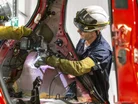
Toyota has selected Toyota Motor Manufacturing UK’s (TMUK)’s Burnaston plant in Derbyshire to be home to a first of its kind project for recycling end-of-life vehicles under its Toyota Circular Factory (TCF) initiative.
TCF is a new recycling initiative that disassembles and processes end-of-life vehicles to reuse parts, help remanufacture components and recycle materials
The UK plant is already establishing methods and standards that will be used for a future network of circular facilities across the region, and Toyota says a second TCF site will open in Poland later in 2026.
Toyota’s circular process in Burnaston
Toyota says its UK operation is already demonstrating how the new circular approach works.
Aluminium recovered from alloy wheels at TCF Burnaston is processed, prepared for re-use, then supplied to Toyota’s Deeside plant in North Wales where it is used in engine component production.
These hybrid power units are then shipped back to Burnaston for installation in new Corolla vehicles. The first car made using this circular process came off the line on 19 March 2026.
Umit Sengezer, Toyota Motor Europe (TME) Head of Toyota Circular Factory, says: “In the first year of its launch, TCF Burnaston is already delivering excellent results and giving us valuable insights, not just in how we handle vehicle end-of-life processes, but also how we can build circularity into the planning and design of future vehicles.
“This will enable us to secure even stronger rewards, helping us maximise the potential of the materials, resources and parts we use.”
TMUK Burnaston was chosen as an ideal location to initiate the circular factory concept as the UK has one of Europe’s largest end-of-life-vehicle markets
Efficiency in Toyota’s manufacturing
Toyota says that by using Toyota Production System (TPS) principles, the TCF goes beyond optimising the recovery of parts and materials from end-of-life vehicles.
The Japanese carmaker says the process evaluates how circular approaches can support more efficient vehicle design, manufacture and lifecycle management in the future.
Toyota has already announced a second location in Europe at Toyota Motor Manufacturing Poland’s Wałbrzych plant.
Leon Van Der Merwe, TME Vice President Circular Economy and Energy Business, says: “Toyota has a proud history of establishing the Toyota Production System, principles that have become the global standard for manufacturing efficiency.
“Now we are applying the same concept to circularity, designing systems that will help ensure the maximum benefits are realised from end-of-life vehicle feedstock.
“Ultimately, the ambition is to progressively establish a circular economy model where resources flow through multiple lifecycles, reducing environmental impact, improving material security and supporting Toyota’s long-term environmental commitment.”
Toyota’s sustainability strategy
Toyota says the TCF directly supports the goals of the Toyota Environmental Challenge 2050.
Its environmentally focused targets were announced in 2015 to provide a framework for achieving carbon neutrality in all its global products and operations by 2050.
In Europe, Toyota says it is committed to achieve full carbon neutrality by 2040.

Toyota’s 2026 financial results
Toyota recently reported its 2025/2026 financial results.
It recorded a ¥1.4tn (US$8.9bn) hit from tariffs in the financial year 2025/26, as well as a projected negative ¥670bn (US$4.3bn) Middle East impact as a result of the Iran war for the current fiscal year.
Despite this, the world's largest car maker posted record sales of 10,477,000 units across its Toyota and Lexus brands. The company’s hybrid sales were particularly strong and the company recorded strong growth in battery electric vehicle (BEV) sales.
Despite this, NHK World Japan recently reported that Toyota is set to halt development of a "next-generation" electric sedan that it had hoped to start producing in 2027.
Company portals

Executives

Ali Umit Sengezer
Toyota Motor Europe Head of Circular Economy & Energy
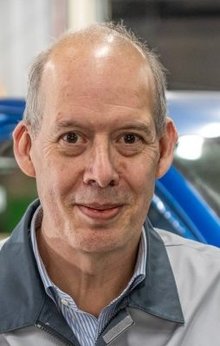
Leon van der Merwe
Vice President at Toyota Motor Europe