
Silicon: Why Apple Locked in Broadcom for Another Five Years
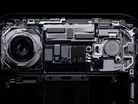
Broadcom says it has agreed to expand its collaboration with Apple through 2031.
In a US SEC filing, the company says it has entered into new multi-year long-term agreements for developing and supplying a range of custom ASIC silicon products.
In 2023, the companies entered a deal for Broadcom to develop and manufacture 5G radio frequency components including FBAR filters.
Apple said these components were to be designed and built in "several key American manufacturing and technology hubs", including Fort Collins, Colorado.
The company designs its own application processors and has worked on bringing modems in-house, but it still relies on Broadcom for custom radio frequency chips that connect devices to cellular networks.
US manufacturing
In Apple's second quarter FY2026 earnings call, CEO Tim Cook discussed how the company is "advancing American supply chain innovation", including work on advancing an end-to-end silicon supply chain across the US.
"At TSMC's Arizona facility, for example, Apple is on track to purchase well over 100 million advanced chips," he said.
In Peoria, Arizona, near the new TSMC plant, Apple is also investing in a new advanced chip packaging and testing facility run by Amkor.
Its American Manufacturing Program is supporting tool installations at Texas Instruments’ facility in Lehi, Utah and a new facility in Sherman, Texas.
Apple has been facing supply issues for a number of its products, Tim said, including iPhones and Mac products like the Mac Studio and Mac mini.
He attributed this to "higher than expected demand", in part due to customers recognising the potential of these devices for "AI and agentic tools".

Silicon supply chains
While Broadcom operates its own fabs for specialised technologies like RF filters, the majority of its high-volume, digital and logic silicon is made by partners like TSMC and GlobalFoundries.
By committing early and long-term, Apple is securing its supply of Broadcom components.
Broadcom wireless products were first used in the iPhone 3GS in 2009, with a chip that combined Wi-Fi and Bluetooth features into a single piece of silicon.
Many of the components Apple has previously bought from the company are US-made, insulating them from geopolitical risks, tariffs and shipping bottlenecks.
Outside of Broadcom, most of Apple's in-house-designed silicon is made by TSMC. The volume of chips Apple purchases makes it a significant customer, likely giving it priority access to the company's advanced manufacturing.
PwC projects that global semiconductor chip demand will grow at a CAGR of 8.6% to 14.8% through 2030.
In March, Taiwan's Economic Daily reported that TSMC is fully booked until 2028.
While Apple already has a strong relationship with TSMC and has previously sourced more specific silicon from Broadcom, this new commitment could provide the opportunity for it to proxy-book further TSMC capacity and further insulate itself from industry-wide chip supply issues.
Company portals



Executives

Tim Cook
Executive Chairman