
Sir James Dyson: A Global Enterprise Built on Failure

It took 5,127 prototypes before Sir James Dyson succeeded at creating the first bagless vacuum cleaner. Nearly half a century later, his company sold more than 20 million products in 2024 alone.
In the landscape of British industry, few figures have occupied the space between design and manufacturing like Dyson. Now 78, the inventor has spent five decades dismantling the way household products are built and sold. His trajectory, from a drafty Wiltshire coach house to a global tech empire centred in Singapore, is a case study in how a singular, often difficult, engineering philosophy can change global markets.
See the full story in the May 2026 edition of Manufacturing Digital.
Prototypes and persistence
Dyson’s career began at the Royal College of Art in the late 1960s, where design was often treated as an aesthetic pursuit rather than a structural necessity. Under the influence of structural engineer Anthony Hunt.
One of the fathers of high-tech architecture seen in buildings like the Waterloo International Terminal in London and the Eden Project in Cornwall, Hunt taught Dyson that, if engineering is elegant, it shouldn't be hidden. His influence, which Dyson noted “did more than anyone to turn me on to engineering”, inspired him to follow a combination of visual form and rigorous mechanical discipline.

His early inventions include the Sea Truck, the Ballbarrow and the Wheelboat, all of which solved problems in an unconventional way, ignoring established industry blueprints to engineer rugged, high-performance tools.
When his vacuum cleaner kept losing suction, Dyson’s most famous work came to be. But not until he had first failed thousands of times. When he finally succeeded in creating a bagless vacuum cleaner, he faced rejection from the consumer electronics giants of the day. Dyson finally launched the DC01 commercially in 1993, which became the fastest-selling vacuum cleaner in British history.
Writing about these experiences in his 2021 memoir, Dyson said: “No doer can be successful without failing. If you never fail, you aren’t experimenting or taking risks. And if you aren’t taking risks, you will never make progress.”
Scaling and relocation
In 1979, after losing control of his Barrowball company, Dyson retreated to a Cotswolds coach house. “I was covered in dust for five years”, he says of the period spent working through 5,127 cardboard and plywood prototypes, supported by his wife Deirdre’s salary as an art teacher.
"People think failure is a badge of honour now, but at the time, it felt like a disaster,” says Dyson. “I was a 30-something-year-old man with three children, no income and a shed full of 5,000 things that didn't work."
In 1992, Dyson bought a factory site in Malmesbury, WIltshire from which he grew a £2.75bn (US$3.7bn) enterprise. That growth required a series of cold-eyed decisions that tested Sir Dyson’s reputation as a champion of British industry.
The first major rupture happened in 2002 when he moved manufacturing to Malaysia. This shift was met with accusations of betrayal from unions and politicians. Dyson’s defense was unsentimental: production costs were 30% lower and the proximity to Asian suppliers and emerging markets was a logistical necessity. While assembly went offshore, R&D and high-level engineering remained in Malmesbury.
By 2019, the move was complete with the relocation of corporate headquarters to Singapore. With more than half of sales coming from the Asia-Pacific region, Dyson positioned himself at the centre of his future market. Today, the St James Power Station factory in Singapore produces 13 million digital motors a year for everything from vacuums to hair dryers.
In his memoir, Dyson wrote of the move: “Manufacturing companies need to be very close to their suppliers for speed of technology development, and Asia is the home of consumer electronics. Dyson is a manufacturing company, and it too needed to be close to its suppliers. Furthermore, our big growth markets are in Asia too. It would be arrogant to think that Dyson could be successful without being there.”
‘Wrong thinking’
The company’s shift to global scale required a unique approach to talent. Dyson prefers recent graduates over industry veterans. “Experience means that you’ve seen how something’s worked in the past or you’ve seen solutions to problems,” he told The Wall Street Journal. “But the world is changing so rapidly, and we’re trying to innovate and pioneer anyway. So, actually, experience doesn’t help us very much and, in fact, it can get in the way.”
This philosophy resulted in the Dyson Institute of Engineering and Technology, launched in 2017. Dyson’s undergraduate engineers pay no tuition fees and earn a full salary working on projects alongside world-experts in Dyson’s global engineering, research and technology teams. By having students work on live projects while earning their degrees, Dyson created a pipeline of engineers who aren't afraid of doing the wrong thing. This culture helps the company to survive high-profile failures that might sink other firms. The first cohort graduated in 2021 and all chose to remain at Dyson.
This culture of "wrong thinking" allows the company to absorb high-stakes gambles that could sink a publicly traded firm. Not every venture has succeeded: the ContraRotator washing machine failed commercially and a £500m (US$680m) investment in an electric vehicle was abandoned in 2019. Yet, Dyson treats these as expensive research phases. The EV project alone yielded advances in solid-state battery technology and robotics that informed a £2.75bn (US$3.74bn) five-year investment plan. Nearly half of Dyson’s engineers now work in software and connectivity, managing a fleet of four million connected purifiers.
On the unveiling of new products in 2025, Dyson said: “Over the years we have re-imagined the format of products through design, technology and state-of-the-art research. Developing new technology motors, heaters, separation systems and aerodynamics has enabled us to radically change the format yet make high performing products.”
Engineering agriculture
In 2013, Dyson turned his attention to agriculture, a sector that appears very different to high-end electronics. Dyson Farming is now the UK’s largest farming operation, covering 36,000 acres across Lincolnshire, Oxfordshire and Gloucestershire. The flagship 26-acre glasshouse in Carrington, Lincolnshire, applies engineering methodology to food production.
Dyson Farming approaches a strawberry as Dyson would a motor. The facility houses 1.25 million strawberry plants on a hybrid vertical growing system, a rotating carousel that maximises light exposure whilst minimising land use. Powered by renewable electricity and surplus heat from an adjacent anaerobic digester, the glasshouse produces 1,250 tonnes of strawberries annually, yields 250% higher than conventional greenhouse farming. Robotic systems manage pest control through beneficial insect release and UV treatment, eliminating chemical pesticides. During peak season, 16 robotic arms equipped with machine vision harvest 200,000 strawberries monthly.
“Material science, energy creation and energy storage are at the core of this and farming has much to give – growing materials and creating energy which can be used in a wider range of products,” Dyson said when his strawberries first hit shelves in 2021. “The parallels between the two businesses are greater than you might think since the future for both is dependent on investment in research, development and continual improvement.”
Dyson Farming is now one of the largest and most technologically advanced agricultural businesses in the UK, with Dyson spending much of his time focused on innovation in circular, closed-loop agricultural systems and technologies.
The company’s success demonstrates the power of Dyson’s approach, which lies less in specific products or industries and more in reimagining established norms through design, technology and state-of-the-art research.
“I never intended to build a vacuum company,” he wrote in his memoir, reflecting on his journey. “I am an inventor, and I happened to get frustrated with a vacuum. I don’t see us as a vacuum company even today; we are a technology company that solves problems by changing the format of everyday objects.”
See the full story in the May 2026 edition of Manufacturing Digital.
Did you know?
Company portals

Executives
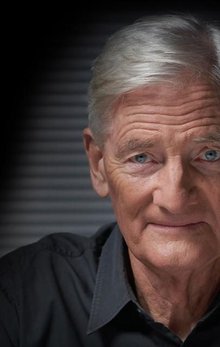
Sir James Dyson
Founder