Rolls-Royce Advances Manufacturing with Sustainable Tech
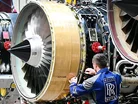
Rolls Royce (RR) has demonstrated remarkable performance in the first half of 2025, highlighting its strategic shift in manufacturing towards more sustainable and efficient processes.
Despite challenges such as supply chain constraints and inflationary pressures, the company reported a 50% increase in operating profits and a free cash flow of £1.6bn (US$2.13bn).
This financial success is driven by a focused approach on enhancing manufacturing efficiency through low-carbon technologies and long-term resilience strategies.
Expanding Low-carbon manufacturing initiatives
Central to RR's manufacturing evolution is its role as a key player in the UK's Great British Energy – Nuclear programme, where its Small Modular Reactor (SMR) technology stands out.
This manufacturing venture, slated to initiate positive cash flow by late 2025, aims for full profitability by 2030.
The project not only boosts local manufacturing in the UK but also signifies potential manufacturing expansion in Europe, supported by strategic Czech utility operator ČEZ Group's investment.
Global interest, such as from Sweden’s Vattenfall, further underscores the potential for clean, modular nuclear power production to aid decarbonisation and grid stability.
Battery storage and green manufacturing growth
Another area where RR is reshaping its manufacturing capabilities is in the development of battery energy storage systems (BESS).
This segment supports RR's revenue growth across its Power Systems division, with expectations for 20% annual revenue growth driven by increased demand for data centre backup power, crucial for digital infrastructure and energy security.
By integrating sustainability into product development, RR is paving the way for lower emissions and improved fuel efficiency through next-generation engines projected to enter service by 2028.
Simultaneously, military engine upgrades underscore manufacturing innovations focused on enhancing energy performance with minimal environmental impact.
Strategic objectives and sustainable manufacturing
Rolls-Royce's efforts to align its manufacturing processes with sustainability goals have also led to substantial achievements.
The company has reduced energy use in operations and facilities by 50%, normalised by revenue and is progressing towards a significant reduction in greenhouse gas emissions and solid and liquid waste.
These efforts reflect its commitment to creating a sustainable future through manufacturing excellence and reducing operational expenses.
Further advancements in RR's sustainable aviation efforts have culminated in testing and validating the use of 100% Sustainable Aviation Fuel (SAF) in all civil aero engine types.
"This is an important milestone, not just for Rolls-Royce, but also for the wider civil aerospace industry," said Simon Burr, Group Director of Engineering, Technology and Safety at Rolls-Royce plc.
These developments demonstrate a clear pathway for manufacturing engines that meet future environmental standards while enhancing performance and reducing waste.
Operational resilience and climate commitment
RR's manufacturing transformation is deeply rooted in operational efficiency and simplification.
Leading these initiatives has resulted in over £850m (US$1.13bn) in cost savings, with a goal of exceeding £1bn (US$1.33bn) by 2025.
These savings fuel further investments in research and development, site decarbonisation and innovative product manufacturing.
The company's new financial strategies and adoption of zero-based budgeting facilitate its ongoing transition towards sustainability, ensuring that resources are aligned with its manufacturing and environmental priorities.
This careful management of climate-related financial risks positions Rolls-Royce as a leader in the manufacturing industry’s shift toward sustainable and efficient operations.