Sustainability & Regulations: The Future of Packaging
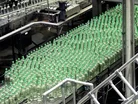
The packaging industry is valued at around US$1bn, but it also produces a significant amount of waste.
As companies navigate evolving regulatory landscapes while maintaining profitability, action is needed.
Bain & Company's 2026 Paper & Packaging Report provides crucial intelligence for executives seeking to balance environmental responsibility with commercial viability.
The challenges are multifaceted: low profitability, overcapacity and subdued demand levels create a testing operational environment.
Ilkka Leppävuori, the Leader of Bain’s Global Packaging sector, says: “Paper and packaging executives today face a complex set of challenges, including low profitability, overcapacity and subdued demand levels.
“Stiff price competition is the norm and markets have diverged.
“Paper and packaging companies are spending less time marketing their sustainability efforts and doing more of the hard work to meet sustainability targets and evolving regulations.”
Navigating regulatory frameworks
Navigating regulatory frameworks demands investment in circular economy models rather than superficial green messaging.
According to Bain's research, 59% of packaging market respondents indicated they would switch suppliers within three years if sustainability criteria were not met.
Europe's Packaging and Packaging Waste Regulation (PPWR) is just one of the regulatory shifts occurring globally, with comparable initiatives emerging across the US and Asia.
The regulation introduces plastic levies and recycling mandates that directly impact cost competitiveness.
The PPWR encompasses measures to help standardise packaging regulations and cut greenhouse gas and fossil fuels:
- Plastic packaging must be made partly from recycled content
- All packaging must be recyclable by 2030
- Packaging must be clearly labelled with its material and how to recycle it or return it for reuse
- Deposit and return systems for packaging will be expanded and companies must make reuse or refill options available whenever possible.
Critically, organisations using non-recyclable or environmentally harmful materials will bear disposal costs.

Chemical recycling
Forward-thinking executives should position their organisations to capitalise on chemical recycling as the technology matures.
Bain's analysis says that technologies including gasification, pyrolysis and glycolysis could transform plastic waste into raw materials for new plastics and products by altering chemical compositions.
The immediate action for competitive advantage involves securing access to low-cost, high-quality recycled feedstocks while establishing partnerships with waste management companies.
However, expectations must remain realistic.
According to the report, achieving cost parity with virgin production in Europe could require 20 to 30 years and more than €400bn (US$478bn) in cumulative global capital expenditures.
Peter Meijer, Head of the Global Energy and Materials Centre at Bain & Company, said on LinkedIn: “The question for plastics producers is no longer whether chemical recycling will scale – it’s who will secure the critical positions in the value chain when it does.
“Early leaders are crafting flexible strategies and investing in feedstocks, strategic partnerships and advanced recycling technologies and capabilities.”
AI integration
Artificial intelligence offers tangible operational improvements for packaging manufacturers.
Machine learning models can develop predictive maintenance algorithms for machinery, while maintenance copilots deliver real-time instructions to employees, reducing both downtime and maintenance expenditure.
The financial case for AI adoption is compelling.
According to Bain's report, companies prioritising maintenance optimisation can increase tool-in-hand time by 15%, translating to overall maintenance cost reductions per tonne of between 17% and 23%.
For executives focused on margin improvement, equipment maintenance through AI represents a quantifiable value creation opportunity that enhances machine output while controlling operational costs.
Company portals
Executives
Ilkka Leppävuori
Senior Partner, Global Packaging Leader
Peter Meijer
Vice President, Head of Global Energy and Materials Center