
Tariffs & Supply Chains: Apple's US Manufacturing Expansion
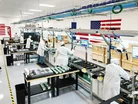
Global demand shifts and regulatory changes and policy implementation have left Apple, and many others, looking to establish a US manufacturing presence.
Throughout 2025, the company increased investment in its US manufacturing capabilities.
It has now announced further developments in its American Manufacturing Program (AMP).
This initiative involves partnerships with suppliers including Samsung, Applied Materials, Amkor and Texas Instruments. Through these collaborations, the company is working to source and produce materials domestically, demonstrating commitment to American-made products.
The expansion announcement brings additional companies to AMP including Bosch, Cirrus Logic, TDK and Qnity Electronics.
These businesses will manufacture materials and components essential to Apple products domestically and a dedicated US$400m will be allocated to these new programmes.
"At Apple, we believe in the power of American innovation and manufacturing, and we're proud to partner with even more companies to produce critical components and cutting-edge materials for our products right here in the US," says Tim Cook, Apple's CEO.
"We're joining with world-class partners like Bosch, Cirrus Logic, TDK and Qnity Electronics to further expand Apple's US supply chain through our American Manufacturing Program. This is another powerful example of what is possible when we invest in American ingenuity, and we're excited to build the future together."
Supply chain vulnerabilities
AMP represents a US$600bn, four-year commitment to US innovation and manufacturing.
Since its inception, initial partners, including Amkor, Corning, MP Materials and Samsung, have achieved significant milestones across American manufacturing.
Strengthening domestic supply chains was a priority for Apple, particularly as trade tensions have disrupted supply chains.
Ongoing geopolitical instability could mean manufacturers relying on international sourcing and production face risks of disruption or additional costs through tariff pressures.

In 2025, Apple pledged to relocate its iPhone manufacturing to the US following threats from US President Donald Trump regarding higher tariffs on Apple products.
Following this initial pledge, the company announced accelerated US investment and introduced the AMP.
Apple's commitment to supporting employment and manufacturing includes the Apple Manufacturing Academy.
The academy, launched in Detroit, provides small and medium-sized manufacturers hands-on training across automation, artificial intelligence (AI) and smart manufacturing. According to the company, it has supported almost 150 businesses through various virtual programming and in-person training sessions.
Through this programme, the company is upskilling the workforce, helping ensure people remain in these roles as the sector becomes increasingly digitised.
Advanced production capabilities
The new AMP members are receiving support during their transition to US manufacturing.
TDK has supplied Apple for more than 30 years, but is now manufacturing sensors in the US for the first time.
Their collaboration has encompassed various technologies, proving particularly important for advanced tunnel magnetoresistance (TMR) sensors which stabilise cameras.
The US facility will supply sensors to products worldwide and increase the volume of chips that Apple sources from US silicon supply chains.
Integrated circuits (ICs), essential for Apple's Crash Detection and Activity Tracking, will be produced by Apple, Bosch and TSMC in Washington.
Semiconductor innovation
Apple is collaborating with Cirrus Logic and GlobalFoundries for new semiconductor process technologies at GlobalFoundries' facility in Malta, New York.
The latest silicon process will be available in the US for the first time, enabling key technologies for Apple products.
It allows development of mixed-signal solutions such as advanced ICs to power Face ID systems.
The partnership with Qnity Electronics and HD MicroSystems will focus on providing materials and technologies essential for semiconductor manufacturing and advanced electronics.








Executives
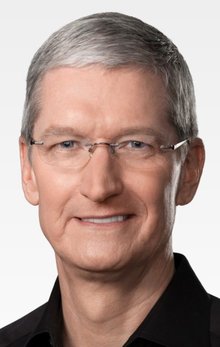
Tim Cook
Executive Chairman