Tariffs: What the Canada-China Deal Means for EV Makers
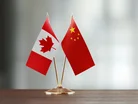
Canada and China have agreed to a preliminary trade arrangement that could significantly reduce tariffs on electric vehicles (EVs) and some agricultural products.
The agreement was finalised during Canadian Prime Minister Mark Carney's visit to Beijing on 16 January 2026, the first trip to China by a Canadian leader since June 2017.
Under the terms, Canada will permit an annual quota of 49,000 Chinese-manufactured EVs to enter the country at a tariff rate of just 6.1%, a substantial reduction from the 100% tariffs imposed in 2024.
It looks to represent a pragmatic reset to a long-strained relationship, but could also signal Canada is serious about its shift away from the US.

Reduced barriers for Chinese vehicles
Canada's EV quota could expand to 70,000 units over the next five years.
The policy could reduce costs for Canadian consumers and potentially accelerate the country's transition to green technology.
Companies that could benefit in the early stages include Tesla, which has previously imported tens of thousands of Chinese-manufactured vehicles to Canada, as well as Geely-owned brands such as Volvo and Polestar.
The domestic automotive sector has expressed reservations, however.
Doug Ford, the Premier of Ontario, has raised concerns that the decision could damage the economy and result in job losses by allowing an influx of lower-priced Chinese-manufactured EVs into the market.
To address these concerns, the agreement includes a provision requiring 50% of the import quota to be priced below US$35,000 by 2030.
This could theoretically encourage the arrival of affordable mass-market vehicles from manufacturers such as BYD.
North American uncertainty
The deal has arrived during growing instability in the established Canada-US trade corridor.
Following US President Donald Trump's re-election, officials in Ottawa say they have encountered intermittent tariffs and challenges to the United States-Mexico-Canada Agreement (USMCA) free trade pact.
While the US remains Canada's largest trading partner, the Carney government appears to be increasingly viewing China, the world's second-largest economy, as a counterbalance.
This shift could represent a response to a global environment where multilateral frameworks have been, as the Canadian Prime Minister observes, "eroded".
By establishing direct access to Chinese markets and manufacturing capacity, Canada appears to be seeking protection for its economy from protectionist movements in Washington.
Canola and agricultural provisions
As a direct trade-off for the EV concessions, Beijing has agreed to reduce punitive tariffs on Canadian canola seed from 85% to 15%.
This could provide critical support to farmers in Western Canada who have been affected by trade disputes since 2019.
According to industry figures, canola supports roughly 35,000 jobs in Manitoba alone.
The deal does not represent a complete victory for the sector, though.
Canola oil continues to face a 100% tariff, a point that industry leaders say requires further discussion.
Beyond canola seed, China has pledged to eliminate anti-discrimination duties on Canadian lobster, crab and peas until at least the year's end.
The diplomatic environment in Beijing was described as realistic and respectful, although Prime Minister Carney was cautious to acknowledge that considerable red lines persist concerning human rights and foreign interference.
"We take the world as it is – not as we wish it to be," he stated when questioned on China's human rights record.
This stance was mirrored by Chinese President Xi Jinping, who says: "The healthy and stable development of China-Canada relations is conducive to world peace, stability, development and prosperity."
US President Donald Trump told reporters at the White House: "That's what he should be doing. It's a good thing for him to sign a trade deal. If you can get a deal with China, you should do that."