Tesla Partners with Samsung for Next-Gen AI Chip Production
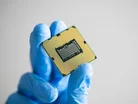
Samsung has secured a US$16.5bn contract to manufacture AI chips for Tesla at its Texas-based semiconductor plant, marking a major step in reshaping global supply chains for advanced chip production.
The South Korean manufacturer has revealed the agreement in a regulatory filing, though names no specific client.
Confirmation came from Tesla CEO Elon Musk, who discloses the partnership publicly on his social media platform X.
He said that Samsung will produce Tesla’s upcoming A16 chips at the new facility in Taylor, Texas, just outside Austin. "The strategic importance of this is hard to overstate," Musk wrote on X, making clear the role this deal plays in Tesla’s push toward driverless vehicle technologies.
Strategic win for Samsung’s US operations
Samsung’s Taylor facility, has so far struggled to secure major customers since its initial conception.
The Tesla contract brings critical volume to a site that has seen delays and questions over demand since its launch. For Samsung, the deal not only validates its American manufacturing investment but also helps establish its Texas plant as a competitive site for advanced semiconductor fabrication.
Industry observers have long speculated about the facility’s future due to limited activity. Ryu Young-ho, a Senior Analyst at NH Investment & Securities, described the site as having "so far had virtually no customers", calling the Tesla agreement "quite meaningful" for Samsung’s plans in the US.
In October, reports from Reuters indicated that Samsung delayed delivery of key chip-manufacturing equipment from Dutch supplier ASML, citing a lack of committed clients.
The plant’s official opening is now scheduled for 2026, a delay that highlights the broader challenges chipmakers face when expanding production capabilities in unfamiliar markets.
Musk’s comment that Tesla will "assist in maximising manufacturing efficiency" and his promise to "walk the [manufacturing] line personally to accelerate the pace of progress" suggest the collaboration includes more than just a supply agreement.
It points to a shared effort to optimise yield and timelines at the Taylor facility, possibly shaping how automotive manufacturers approach future chip development.
US investment context and chip security
The Tesla-Samsung partnership builds on a broader US government initiative aimed at reinforcing domestic semiconductor production.
In December, the Biden administration allocated $4.75bn under the Chips Act to Samsung’s Texas operations.
The legislation was designed to reduce reliance on overseas suppliers and strengthen critical US technology infrastructure.
Former Commerce Secretary Gina Raimondo says the Chips Act funding will help maintain a "steady stream" of semiconductors necessary for artificial intelligence and national security applications. With Tesla now signed on as an anchor client, Samsung appears better positioned to deliver on that expectation.
The partnership serves as a case study in how public funding and private sector demand can combine to support domestic manufacturing.
For policymakers and semiconductor executives alike, the deal shows how long-term investment strategies are starting to align with commercial needs.
Automotive AI and supplier strategy
Samsung already produces Tesla’s AI4 chips, which are used in its full self-driving driver assistance features.
But Tesla’s supply chain strategy has so far avoided single-source reliance. Taiwan Semiconductor Manufacturing Company (TSMC) is set to produce the AI5 generation, starting with fabrication in Taiwan before transitioning to Arizona.
The new A16 contract with Samsung suggests Tesla is planning for several future AI chip generations, using a split-sourcing model that reduces dependency and enhances strategic flexibility.
For the manufacturing sector, this reflects a more complex and competitive supply environment, where companies like Tesla pursue parallel relationships to guarantee resilience.

From a manufacturing perspective, Tesla’s $16.5bn commitment to chip development sends a message about the long-term centrality of artificial intelligence in vehicle systems.
It also highlights the changing nature of automotive production, where semiconductors are now core components rather than auxiliary electronics.
As automakers integrate more AI capabilities, demand for high-performance chips is reshaping factory planning, supplier engagement and technology partnerships. For Samsung, the contract validates both its process technology and its ambitions to become a key player in US-based advanced manufacturing.
The broader context of the deal speaks to more than just product supply. It touches on economic policy, trade security and the transformation of the vehicle industry into a software-driven sector where chip availability can define commercial success.
Tesla's move to work closely with Samsung and its willingness to invest heavily in manufacturing infrastructure shows how critical in-house semiconductor capability is becoming for leading automotive firms.