US-Israel-Iran Conflict: The Manufacturing Impacts
The escalation of military conflict between the United States, Israel and Iran has triggered an immediate crisis across global supply chains.
The effective closure of the Strait of Hormuz is disrupting maritime trade and air cargo supplying manufacturing operations worldwide.
The Islamic Revolutionary Guard Corps has issued radio warnings prohibiting vessel passage through the strait, reportedly trapping nearly 170 container ships and halting movement of 20% of the world's seaborne oil supply.
This development could have significant implications for manufacturers reliant on just-in-time delivery systems and raw material imports from the region.
"The speed and scope of escalation in the Middle East will have taken many businesses by surprise and has highlighted just how unstable the region can become in as little as 48 hours," says Simon Geale, Executive Vice President at Proxima.
"What will concern companies is that we may just be at the start of a prolonged conflict and there may be much more to come in terms of the impact on global supply chains."
According to analysis by Pole Star Global of 3,878 vessel zone events in the Persian Gulf during the seven-day period surrounding the February 28 military strikes, maritime activity has shown dramatic shifts.
Traffic surged 162% on the day of operations, with the peak occurring at 5:00am UTC when 138 vessel zone events were recorded, representing a seven-fold increase over baseline hourly traffic.
Iranian-flagged vessels showed a reduction in activity, declining from 940 events in the pre-strike period to just 41 events in the six hours following military operations, a 95.6% decrease.
Shipping lines respond to crisis
Major shipping lines responded swiftly to the developing situation.
Maersk announced suspension of all vessel crossings through the Strait of Hormuz, with services calling ports in the Arabian Gulf experiencing delays, rerouting or schedule adjustments.
The company stated it is rerouting its ME11 and MECL services around the Cape of Good Hope.
Hapag-Lloyd cited the official closure of the Strait by relevant authorities in suspending all transits, noting: "This measure is therefore not discretionary but a necessary response to the current conditions and regulatory restrictions."
MSC has instructed all vessels currently operating in the Gulf region to proceed to designated safe shelter areas.
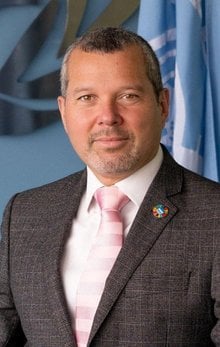
The International Maritime Organization's Secretary-General, Arsenio Dominguez, issued a statement: "No attack on innocent seafarers or civilian shipping is ever justified. These crews are simply doing their jobs and must be protected from the effects of wider geopolitical tensions."
The diversions around the Cape of Good Hope add approximately 3,500 nautical miles and roughly US$1m in fuel costs per voyage, expenses expected to be passed to customers.
Operations at Jebel Ali Port, the Middle East's largest container hub, were temporarily suspended after debris from an aerial interception caused a fire within the port area.
While Dubai Civil Defence brought the fire under control and operations resumed after safety assessments, the incident highlights the growing spillover of regional conflict into critical commercial infrastructure.
Industry analysts expect container freight rates from Asia to Europe to increase by 30-50% as carriers absorb additional fuel and operational costs.

Air freight capacity
The conflict has severely impacted air freight capacity, with data from Netherlands-based consultancy Rotate showing global air cargo capacity down 18% from the previous week.
Emirates SkyCargo, the fourth-largest cargo airline by traffic, suspended flights until 3:00pm UAE time on March 2, while also placing temporary restrictions on booking and acceptance of all new shipments for 24 hours.
FedEx suspended flights to and from Bahrain, Iran, Iraq, Israel, Jordan, Kuwait, Lebanon, Oman, Qatar, United Arab Emirates and Saudi Arabia, with pickup and delivery services in several of these markets temporarily halted.
Qatar Airways, which operates 29 Boeing 777 freighter aircraft offering more than 3,000 tonnes of capacity per day, temporarily halted flights due to Qatar's airspace closure.
The reduction in air cargo capacity has created a bottleneck for time-sensitive shipments, with pharmaceutical companies and technology manufacturers particularly affected.
Freight forwarders report that available cargo space is being prioritised for medical supplies and critical components.
Airfreight rates on key routes have reached record levels, with some shippers reporting costs exceeding pre-pandemic peaks as demand outstrips the severely constrained capacity.
Manufacturing challenges
The disruption could create particular challenges for manufacturers across multiple sectors.
Just-in-time delivery for microchips and consumer technology components has been severely disrupted, with electric vehicle (EV) batteries and semiconductors stranded in the Gulf.
Air freight costs have reportedly spiked, affecting manufacturers dependent on components and Active Pharmaceutical Ingredients from India.
The construction sector faces delays in delivery of Chinese structural steel and specialised materials like heat-reflective glass, which cannot be airlifted.
Multiple companies are invoking force majeure clauses with potential multi-month stop-work orders on major projects.
Simon says: "Just what does happen next now depends on the intentions and actions of several actors and the composition of the next Iranian regime. But for businesses, there is a need to enact contingency plans immediately and begin working through the implications of this conflict lasting weeks or months, rather than days."
Briefings delivered by DP World COO Tiemen Meester have emphasised: "The Middle East is a vital trade route... our focus is on providing superior infrastructure and security to ensure the global supply chain can thrive even in a volatile environment."
As manufacturers worldwide assess the implications of sustained conflict, the immediate priority remains implementing contingency plans and preparing for potential weeks or months of disruption to global trade routes that serve as critical arteries for international manufacturing supply chains.





Executives
Arsenio Dominguez
Secretary General

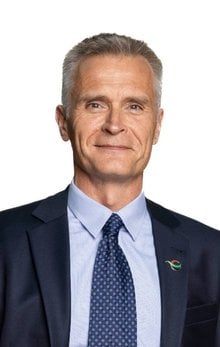
Rafael Grossi
Director General
Simon Geale
Tiemen Meester
Group COO Ports & Terminals