How Are Global Oil Firms Uniting to Cut Emissions?
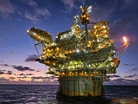
Twelve of the world's largest oil and gas companies release updates on their environmental efforts in the Oil and Gas Climate Initiative (OGCI) 2025 Progress Report.
The group, which includes Chevron, Shell, BP, Aramco and CNPC, sets out how each member contributes to emissions reductions and supports global climate ambitions.
The progress outlined in this report is especially relevant for manufacturers seeking to understand energy industry shifts and emissions policies affecting future supply chains and operational sustainability.
OGCI members state they "work individually and collectively to accelerate action to achieve net zero emissions by 2050." These efforts span carbon capture, low-carbon investments and global coordination across both state-owned and private enterprises.
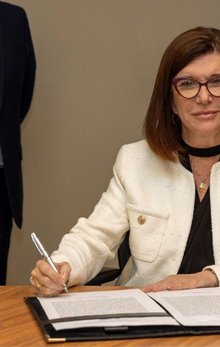
Petrobras Chief Executive Officer Magda Chambriard, who writes the report’s foreword, highlights how this collaboration plays out in practice: "We are a diverse group of companies that have already demonstrated what’s possible when we work together toward shared ambitions."
She adds that OGCI’s reach across Europe, the United States, China, the Middle East and South America "allows us to connect ideas with action at scale."
Emissions metrics and low-carbon investments
The report reveals several measurable outcomes across the group’s combined operations.
Carbon intensity for upstream operations, measured in kilograms of carbon dioxide equivalent per barrel of oil equivalent (kg CO2e/boe), sits at 17.2kg CO2e/boe. This shows a 24% reduction since 2017. The group aims to reach 17kg CO2e/boe by 2025.
Methane intensity for upstream operations, expressed as a percentage of gas produced, is now at 0.12%, reflecting a 62% drop since 2017. This result already surpasses OGCI’s target of 0.20%.
Routine flaring, the controlled burning of natural gas at production sites, is down by 72% compared to 2018 levels. OGCI maintains its aim to eliminate routine flaring by 2030.
In 2024 alone, the group commits $30bn to low-carbon investments, including projects, acquisitions and research and development. Since 2017, these investments total $125bn.
OGCI companies also take part in more than 50 carbon capture, utilisation and storage (CCUS) projects.
CCUS involves capturing CO2 emissions from industrial sources and either storing it underground or reusing it, thereby preventing it from entering the atmosphere.
Other activities highlighted include efforts to cut transport-related emissions and to promote high-quality carbon credits.
These credits, traded internationally, fund natural climate solutions such as reforestation or conservation, offering a mechanism to offset emissions elsewhere.
Chief executives weigh in on results
OGCI positions itself as a "CEO-led" initiative, and its members speak openly about their strategies and performance.
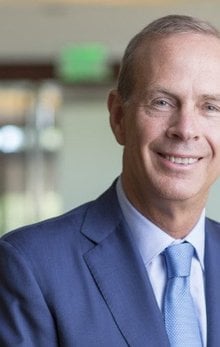
Mike Wirth, Chairman and Chief Executive Officer of Chevron, focuses on practical measures: "Chevron remains focused on lowering the carbon intensity of our operations through energy efficiency, methane management and flaring reduction. Our Colorado facility retrofits exemplify these efforts."
He also stresses the value of working through OGCI to share best practices across the industry.
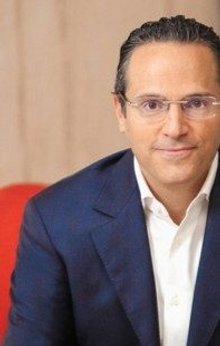
Shell Chief Executive Officer Wael Sawan highlights the company’s early achievements: "By the end of 2024, we had reduced total methane emissions from assets under our operational control by 76% compared with 2016."
Sawan adds: "We have also met our target to eliminate routine flaring from our upstream-operated assets, five years ahead of the World Bank Zero Routine Flaring Initiative deadline."
Aramco President and Chief Executive Officer Amin Nasser echoes the emphasis on partnership: "As a founding member of OGCI, Aramco values the sharing of best practices and working alongside peers across the industry to help develop solutions to support emissions reduction."
He explains how Aramco’s use of cogeneration, a process that produces both electricity and heat from a single fuel source, improves efficiency and helps it meet its goal to achieve net-zero Scope 1 and Scope 2 greenhouse gas emissions across wholly owned operated assets by 2050.
Scope 1 covers direct emissions from owned sources, while Scope 2 relates to indirect emissions from purchased energy.

Strategic pillars for the decade ahead
Looking ahead, OGCI outlines its updated direction through three strategic goals. Magda Chambriard explains: "OGCI’s three strategic pillars remain meaningful and will guide our updated priorities to 2030 through an action-oriented approach that remains focused on outcomes."
The first pillar aims for net-zero operations within the Paris Agreement timeframe. This includes a nearer-term target of near-zero methane emissions and an end to routine flaring by 2030.
The second pillar supports industry-wide collaboration, referencing OGCI’s involvement in the Oil and Gas Decarbonization Charter and other global initiatives.
The third pillar focuses on scaling up climate solutions, supporting emissions reductions beyond the oil and gas sector and contributing to society-wide decarbonisation.
Chambriard concludes that OGCI's work represents "major emissions reduction opportunities and reinforces the important role of the oil and gas sector in supporting a net-zero emissions future."
She says: "The long-term challenge is that the world needs more energy, but with lower emissions. As the world advances toward net zero, it’s critical that we continue to work across sectors to provide solutions that balance addressing climate change and reducing energy poverty."
She adds: "We are encouraged by what we have achieved and motivated to do more."
For manufacturers, the message is clear: energy suppliers are changing, emissions targets are being monitored and public commitments carry consequences. As oil and gas firms adapt, so too must their customers and partners.
Company portals



Executives
Anders Opedal
President and CEO
Claudio Descalzi
Chief Executive Officer
Dai Houliang
Chairman
Magda Chambriard
CEO
Mike Wirth
Chairman of the Board and CEO
Murray Auchincloss
Chief Executive Officer
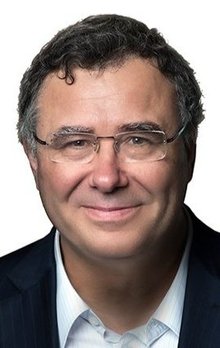
Patrick Pouyanné
Chairman and CEO
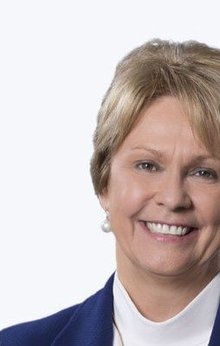
Vicki Hollub
President and Chief Executive Officer
Wael Sawan
Chief Executive Officer