
What France's Forever Chemicals Ban Means for Manufacturers
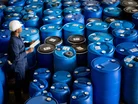
France is introducing some of Europe's most stringent regulations on 'forever chemicals', implementing rules to ban Perfluoroalkyl and Polyfluoroalkyl Substances (PFAS) in a range of consumer products.
Beginning 1 January 2026, manufacturers, importers and brands selling products in the French market need to comply with new requirements across textiles, cosmetics, waxes, footwear and waterproofing agents.
Understanding forever chemicals
Forever chemicals, widely known as PFAS, are a group of more than 10,000 man-made substances that have been in widespread use since the 1950s.
The two regulated PFAS compounds are Perfluorooctanoic acid (PFOA) and Perfluorooctane sulfonate (PFOS).
Their characteristic feature is the carbon–fluorine bond, one of the strongest in chemistry, which makes PFAS exceptionally resistant to degradation.

This strength means they persist in the environment and accumulate in soil, water, air and living organisms.
PFAS are present in everyday products such as food packaging, cookware, clothing, stain-resistant carpets and firefighting foams, with people most frequently exposed through contaminated food or drinking water.
One report by the Centres for Disease Control and Prevention (CDC), using data from the National Health and Nutrition Examination Survey (NHANES), found PFAS in the blood of 97% of tested Americans.
Scope of the French regulation
The decree applies Articles within the French Environmental Code and formally defines PFAS as any substance containing at least one fully fluorinated carbon atom.
It prohibits placing products containing PFAS above defined thresholds on the market, including imports.
These thresholds are set at 25 ppb for individual PFAS, 250 ppb for the sum of targeted PFAS and 50 ppm for PFAS including polymers, with additional proof requirements if total fluoride exceeds 50 mg F/kg.
The ban targets sectors where PFAS have been commonly used for non-stick, water-resistant and performance functions, including cosmetics, textiles, footwear, waxes and waterproofing agents.
"Go France," writes Elena Doms, CEO at Earth Plus, on LinkedIn. "Now we need other countries to follow!"
Exemptions and thresholds
Certain exemptions are built into the regulation where alternatives are not currently available.
These include personal protective equipment, defence and civil security equipment, technical textiles for industrial use and sanitary textiles for medical purposes.
Products incorporating at least 20% recycled material from post-consumer waste could also benefit from exemptions, provided PFAS are limited to the recycled fraction and remain proportionate to that content.
The decree says that all threshold values may be revised in line with future changes to EU chemicals legislation, signalling potential tightening over time.
“France has banned PFAS in cosmetics,” writes Alix Willemez, Environmental and Climate Finance Specialist at the Global Environmental Facility, Expert for the World Ocean Assessment 2 & 3 (part of the United Nations) and International Union for Conservation of Nature (IUCN) Member.
“Yes, the chemicals in your mascara, your lipstick and your “long-lasting” foundation, gone.
“They are synthetic molecules designed to never break down, not in nature, not in water, not in your body.
“Sometimes, the most powerful environmental decisions are the quiet ones, this will last longer than PFAS ever should have.”
Implications for business and enforcement
The rules entered into force on 1 January 2026, with a 12-month transition period allowing companies to sell or export existing stock manufactured before that date.
After this window, non-compliant products will be fully prohibited.
For businesses, this creates an immediate need to review formulations, supply chains and testing protocols to ensure compliance with residual limits and exemption criteria.
For regulators, customs authorities and enforcement bodies, the decree provides clearer definitions, thresholds and documentation requirements to support monitoring, enforcement and penalties.
Company portals

Executives
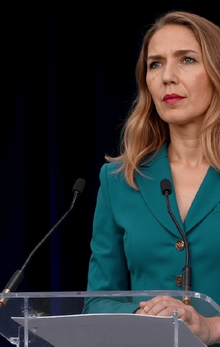
Alix Willemez
Expert for the World Ocean Assessment II and III

Elena Doms
CEO