
How New BYD Means a Brazilian Car Manufacturing Boom

BYD's latest hybrid technology represents an advancement in automotive manufacturing, combining the company's electric vehicle expertise with biofuel compatibility through a specialised production approach developed for Brazil's unique market requirements.
The Chinese manufacturer unveiled a new version of its Super Hybrid system at the official inauguration of its final-assembly line in Camaçari, Brazil, where the SONG PRO is produced.
The innovation debuts in the SONG PRO COP30, a special edition that will be donated to the forthcoming UN climate summit in the country.
Engineering cross-continental collaboration
The SONG PRO's hybrid system requires collaboration between Chinese and Brazilian engineers who work together to develop a modified version of the Super Hybrid system's 1.5-litre engine.
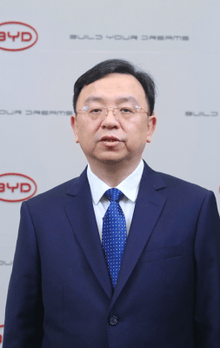
According to BYD founder and CEO Wang Chuanfu: "After two years of effort by more than 100 Chinese and Brazilian engineers, today our 14 millionth vehicle rolls off the production line equipped with the world's first plug-in hybrid engine dedicated to biofuel."
The engine is manufactured to run on any ratio of petrol and ethanol, Brazil's most popular green fuel, while maintaining strong performance and high efficiency.
This flex-fuel capability represents a manufacturing challenge that requires adapting the existing DM-i (Dual Mode Intelligent) technology, similar to systems seen in European-market models such as the SEAL U DM-i and the SEAL 6 DM-i.

Rapid production facility expansion
The new Brazilian factory commences operations in July after being constructed in 15 months.
The facility can produce 150,000 vehicles per year in its first phase, with planned expansion to 300,000 units in the later stage. The plant already employs more than 1,500 people and is the largest electric vehicle production facility in Latin America and BYD's largest facility outside Asia.
During a meeting with Brazil's Brazil's President Luiz Inácio Lula da Silva, Wang confirmed a new investment to expand the factory and double its annual production capacity from the planned 300,000 vehicles to up to 600,000 units per year.
The SONG PRO COP30 that rolls off the production line at the ceremony becomes BYD's 14 millionth new-energy vehicle globally, with 30 examples of the special edition being manufactured for donation to COP30.
Localised manufacturing strategy
BYD's approach to the Brazilian market demonstrates a commitment to localised production and technology development rather than simply exporting existing designs.
"This is not just a technological breakthrough – it is a green and sustainable solution tailor-made for Brazil," Mr Wang explains. He adds that the decision to develop flex-fuel capability comes after recognising ethanol's potential during a visit to Brazil two years prior.
Tyler Li, CEO of BYD Brazil, said: "Ethanol is one of Brazil's greatest strategic advantages in the energy transition. Incorporating it into our DM-i architecture represents a historic advance: we value the national renewable energy matrix and offer consumers a vehicle with greater efficiency, lower environmental impact and aligned with the country's energy reality."
Stella Li, Global Executive VP and CEO of BYD for the Americas and Europe, said: "This factory is 100% Brazilian, created so that Brazilians have access to better, more modern, connected, technological and sustainable cars."
When completed, the complex will manufacture the brand's main models, supporting an expanded dealer network that has grown to more than 200 stores across Brazil, with plans to reach 250 outlets in early 2026.
Company portals

Executives

Stella Li
Executive Vice President
Wang Chuanfu
CEO