Why KUKA Thinks European Manufacturers are Behind on AI
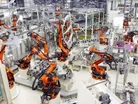
KUKA’s CEO has warned that European industrial companies have been too slow to adopt AI compared to China and the US in an interview with Bloomberg.
KUKA, a German-Chinese leader in industrial robots and autonomous mobile robots, is prioritising investments in the US and Asia, citing Europe’s slow adoption of AI as a key reason.
McKinsey has previously argued there is a US$1tn opportunity for AI in industrial sectors.

What was said?
Speaking to Bloomberg, Christoph Schell, CEO of KUKA, argued that many of Europe’s industrial companies are too slow to adopt AI, putting faster-moving global rivals in a position to overtake them.
Christoph told Bloomberg that the burden of legacy systems and a reluctance to change mean many factories remain disconnected and make poor use of their data. He said this is particularly the case in Germany, where a strong engineering-led mindset favours incremental over transformational shifts.
Christoph explained that as a result, KUKA is prioritising investments in the US and Asia.
He told Bloomberg: “In Germany, a lot of companies still believe this is just a temporary thing, we’re going to come back out of this, in particular in automotive.”
KUKA is a world leader in supplying automotive companies with production systems, with clients including Mercedes-Benz and Volkswagen.
“The problem is that a lot of the competition products, they’re not just cheaper, they’re better.”
“The problem in Europe is there are so many companies that are fighting right now for fewer opportunities,” Christoph said to Bloomberg. “It’s almost like who is more desperate today? Who is willing to lose 20%, 30% gross margin?”
Manufacturing leaders won’t want to miss Sustainability LIVE: The US Summit, taking place at Navy Pier, Chicago, on April 21–22.
Co-located with Procurement & Supply Chain LIVE, the event unites senior decision-makers at a time when supply chains, sustainability and business performance are more interdependent than ever.
Secure your place now for The US Summit – group booking discounts available.
KUKA is now more globally oriented than ever
German robotics company KUKA was acquired by Midea, a Chinese listed appliance company, in 2016.
The company is headquartered in Augsburg, Germany.
Currently, KUKA is more globally orientated than ever before, with 2025 revenue evenly split, at around one third each, across EMEA, the Americas and Asia-Pacific.
Speaking to Bloomberg, Christoph argued America is more attractive for spending because of import tariffs driving domestic manufacturing. Schell argued that China, India and Southeast Asia are fuelled by technology adaptation and infrastructure build-out.
European adoption of robotics
China is the world’s largest robotics market, accounting for more than 50% of global demand. KUKA is ranked among the top robotics companies operating in China.
For the first time in the company’s history, revenue from its China business has exceeded the EUR€1bn (US$1.168bn) threshold.
According to the International Federation of Robotics’s (IFR) World Robotics 2025 report, 295,000 industrial robots have been installed in China - the highest annual total on record.
IFR data also shows industrial robot installations in Europe fell 8% to 85,000 units in 2024. In Germany, the largest robot market in Europe, installations fell 5% to 26,982 units in 2024.
The IFR data from 2024 also showed Italy's installations fell 16% and France was down 24%. In the UK, industrial robot installations were down 35% to 2,500 units in 2024.
McKinsey has argued that AI is expected to herald a new age of efficiency in operations. In manufacturing and supply chain alone, it says AI could reduce expenses by up to half a trillion dollars. McKinsey has previously argued there is a US$1tn opportunity for AI in industrial sectors.
Company portals

Executives
Christoph Schell
Chief Executive Officer (Kuka Group)