
Why P&G and 3M are Outsourcing Logistics to Amazon
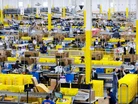
Amazon has opened its supply chain services to businesses that do not sell on its platform, giving manufacturing firms access to logistics capabilities previously reserved for Amazon sellers.
The company has launched Amazon Supply Chain Services (ASCS), offering freight, distribution, fulfilment and parcel shipping to businesses across sectors.
Manufacturing operations can now use the same network that handles hundreds of millions of packages annually.
According to Amazon, the service aims to provide logistics support from first mile to last.
This could help to streamline distribution of raw materials and finished goods while reducing the complexity of managing multiple logistics providers.

Building the logistics network
Amazon created its logistics infrastructure almost three decades ago to prove fast delivery could align with reliability.
The company built a network spanning air, land and sea freight, alongside fulfilment centres and a parcel shipping system.
The network now includes more than 200 US fulfilment centres and 100,000 in-network trailers, containers and aircraft.
Amazon has been building these capabilities for more than 20 years. This infrastructure development represents significant investment in creating an integrated logistics ecosystem capable of handling diverse supply chain requirements.
The scale of Amazon's operations provides advantages in negotiating freight rates and optimising delivery routes.
Manufacturing businesses accessing ASCS can benefit from these economies of scale without needing to build equivalent infrastructure themselves.
Amazon Web Services (AWS) transformed how organisations use software. The company is now applying the same approach to supply chain services.
ASCS makes these capabilities available to retail, manufacturing, healthcare and automotive businesses. Companies do not need to be Amazon sellers to access the services.
Supply chain operations
Peter Larsen, Vice President of Amazon Supply Chain Services, leads the division. He says the company is bringing infrastructure proven over decades to businesses across sectors.
"Supply chain wasn't just a function at Amazon—it was core to providing an exceptional shopping experience. Our differentiator," Peter says. "The reason we could offer fast, dependable delivery that nobody else could.
"And with the launch of ASCS, we're confident we can give any other business access to the same cost efficiency, reliability and speed that we've built for Amazon customers."
The service portfolio includes four main areas. Businesses can select individual services based on operational needs.
Offerings include:
- Multimodal ground freight with GPS-powered tracking.
- Air freight support for time-critical and specialised cargo.
- Storage and fulfilment capabilities.
- Two to five-day ground shipping with photo on delivery assurance and returns support.
ASCS builds on Fulfillment by Amazon (FBA), which has handled picking, packing, shipping and returns for independent sellers since 2006. The earlier service had limitations in getting products to fulfilment centres initially.
Amazon has expanded its technology and network capabilities since then. The company now moves billions of items globally each year..
Manufacturing sector applications
Procter & Gamble is using Amazon's freight services to transport raw materials to production facilities.
3M is moving products from manufacturing sites to distribution centres globally through Amazon's services.
Lands' End is using ASCS to fulfil orders across multiple sales channels with unified inventory.
Andrew McLean, CEO of Lands' End, says the service positions inventory closer to customers.
"Amazon is one of our key ecommerce partners, and we're excited to leverage Amazon Supply Chain Services to position inventory closer to customers so we can reach them even faster," Andrew says.
"This consistency is central to our solutions-based approach, enabling us to serve customers with confidence and agility, especially during peak seasons."
ASCS offers flexibility for businesses to choose specific services. This includes raw material distribution for manufacturing operations or expanding customer reach for commercial businesses.
Amazon's work with selling partners has enabled the company to expand its capabilities. The services are now available to retail, wholesale and commercial businesses of all sizes.
For enterprise businesses, the service could streamline costs and supply chain touchpoints. For small and medium-sized businesses, it could unlock growth opportunities through access to established logistics infrastructure.
Company portals


Executives

Peter Larsen
Vice President of Amazon Multichannel Commerce & Fulfilment