
Why thyssenkrupp is Cutting Steel Output in France
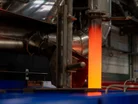
German steelmaker thyssenkrupp is in a period of production reductions in France, placing thousands of jobs under threat.
Following a rise in steel imports entering the European market, domestic production is being sidelined, reducing the requirement for high manufacturing output.
The company has been experiencing pressure since early 2024, with challenges in stabilising European production.
Global steel trade
Global trade has been experiencing a turbulent phase, with companies and governments worldwide implementing changes to their sourcing strategies.
Trade tensions have resulted in core commodities, such as steel, being used as a mechanism to reshape supply chain relationships.
Persistent oversupply from China has displaced UK steelmakers from their own domestic manufacturing, resulting in financial difficulties and operational closures for the UK steel industry.
This pattern is now being reflected across Europe, with German steelmaker thyssenkrupp reducing production.

thyssenkrupp's steel production
thyssenkrupp is an international industrial and technology group, operating across automotive technology, decarbonisation technologies, material services, steel and marine systems.
thyssenkrupp Steel Europe (TKSE) develops innovations in steel for various applications, operating across customer-specific materials solutions and materials-related services.
thyssenkrupp Electrical Steel is one of Europe's two manufacturers of grain-oriented electrical steel, an essential material for transmitting electricity from power plants to household outlets.
It is a critical component of the energy transition, making European manufacturing of it essential to the region's strategic autonomy.
Since January 2026, its Isbergues site in Northern France has been functioning at half capacity, following reduced demand for European manufactured steel.
In December 2025, the company announced it would temporarily halt production of electrical steel in Europe, which is used in wind turbines and power grids.
This was due to imports from Asia being cheaper and being progressively purchased for manufacturing.
"Grain-oriented electrical steel is indispensable for Europe's energy infrastructure and the energy transition," TKSE CEO Marie Jaroni said at the time.
"We are strongly committed to maintaining production in Europe and are currently working to ensure effective market protection in order to guarantee fair competition for this strategically important product."
At the time, the plant was going to be functioning at 50% capacity for at least four months.
This is being prolonged as the company faces further challenges.
Extended cuts
In March 2025, thyssenkrupp Electrical Steel has revealed extended reductions at its Isbergues site, indicating a worsening import crisis for grain-oriented electric steel.
The company has confirmed total closure for the Isbergues site from June to September 2026.
"In view of the ruinous flood of imports in the market for grain-oriented electrical steel, we see no alternative but to temporarily shut down our French site once again," says Angelo di Martino, CEO of thyssenkrupp Electrical Steel.
"This measure is necessary to stabilise our company amid further deterioration in order intake. We are faced with import prices that in some cases lie well below production costs in the EU. We therefore urgently need appropriate trade protection to establish fair competitive conditions for this strategically important product.
"This also concerns around 1,200 skilled jobs, which we aim to safeguard at our sites in Gelsenkirchen and Isbergues. We are engaged in intensive and constructive dialogue with the European Commission and hope for the prompt introduction of effective safeguards.
"Currently, there is no effective protection. At the same time, we are doing everything within our control to strengthen our competitiveness."
Grain-oriented electrical steel is essential for the manufacturing of energy-efficient transformers and large, high-performance generators.
Despite this, the European market is experiencing significant pressure, following rises in import volumes of cheaper materials.
These imports are entering, unchecked, at prices considerably below EU production costs, making them a cheaper alternative.
Imports have tripled since 2022, with an additional increase of 50% in 2025.
Now, it is estimated that more than 50% of the European market originates from imports.
Company portals

Executives

Angelo di Martino
CEO thyssenkrupp Electrical Steel

Marie Jaroni
CEO