GIC Forms Worlds First Automotive Plastics Circularity Pilot
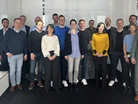
The Global Impact Coalition (GIC), a CEO-led collaborative platform originally created by the World Economic Forum has launched the world's first Automotive Plastics Circularity pilot.
Included in this endeavour are seven global leaders from the chemical and recycling industries: BASF, Covestro, LyondellBasell, Mitsubishi Chemical Group, SABIC, SUEZ and Syensqo.
This ground breaking pilot will address the ongoing challenge of recycling plastics from End-of-Life Vehicles (ELVs) and has emerged amid a climate of significant debate surrounding the sustainable future of plastics.
This debate has led to the introduction of new regulations, like the EU's Packaging and Packaging Waste Regulation (PPWR) and Single-Use Plastics (SUP) Directive which fully went into effect last year.
However it has also been marked by stalled progress- like the failure of the 2024 Global Plastics Treaty to materialise.

These delays are a reflection of the scale of the challenge.
Plastics are an integral material across myriad manufacturing industries, with the global production of thermoplastics alone estimated to increase to 445.25 million metric tons this year.
Replacing them with sustainable alternatives, including bioplastics, is not as simple as viable a solution as some might think.
Many of these alternatives do not match the cost effectiveness and performance of plastic, lacking the scalability necessitated for mass adoption.
As plastic is non-biodegradable, the second option is recycling- which is challenging to achieve across the board.
This is especially evident with ELV's, with the GIC's Automotive Plastics Circularity pilot seeking to create an comprehensive, scalable approach.
Why is recycling plastics from ELV's so challenging?
In 2022, the reuse and recycling rate for end-of-life vehicles in the EU stood at 89.1%.
In 2025, this number has not shifted significantly.
Why is this the case? Well, it is partly due to plastic.
Only 19% of plastics from ELVs is recycled. Electronics and composite materials rarely if ever recycled as well.
This is critical untapped potential for the environment, economy and automotive manufacturers.
Central to the challenge of recycling ELV plastics is due to the complexity of materials used in modern car manufacturing.
Vehicles contain a variety of plastic types which are blended in with other materials including adhesives, metals and glass fibres, making processing and separation difficult.
On top of this, the plastics in many ELVs degrade over time to exposure to chemicals, UV radiation and heat, limiting their recyclability.
The presence of hazardous substances including heavy metals and flame retardants further complicates the process, necessitating specialised treatment methods to ensure the safety of workers and the environment.
Automotive plastics also lack a system of standardised labelling, which hinders efficient sorting and reprocessing, making recycling a less economically viable option.
Subsequently we see a significant proportion of ELV plastic waste heading to landfill or incineration, highlighting the urgent need for a reformed approach.
The Automotive Plastics Circularity pilot is designed to provide this approach, furthering EU regulatory targets and making meaningful progress on plastic circularity.
"Each year, over 800 million metric tons of ELV plastics in the EU alone are incinerated or landfilled, resulting in significant environmental and economic losses," says Charlie Tan, CEO of the Global Impact Coalition.
"This pilot is a key first step to transform this waste into valuable resources, enabling the automotive industry to significantly increase the rate of closed-loop recycled plastics.
"This collaboration represents a turning point for the industry."
“Recycling ELV plastics has long been a challenge, with less than 20% of these materials recycled today.
"By uniting players from across the automotive value chain—from auto makers to dismantlers, sorters, recyclers and the chemical industry—we are connecting the links to close the loop on plastics.”
Inside the pilot
The pilot will take place in the Netherlands and Germany and focus on the bulk aggregation of ELV plastics, serving to test and optimise new approaches to dismantling, sorting and recycling plastic fractions under real conditions.
Plastic fractions will be dismantled, shredded and sorted from 100 ELV's, clustering them into 10 organised types of polymers and automotive parts.
These sorted plastic fractions will then be recycled by collaborating organisations utilising their specific technologies.
To streamline and organise this process, the project partners have engaged dismantlers, shredding companies, and sorting facilities to build a interconnected recycling network.
All the companies involved have dedicated significant resources to building new, efficient methods to recycle plastic.
BASF for example has its ChemCycling project, which you can read more about here.
Representing a significant portion of the global plastics industry, these organisations are highly committed to creating a more sustainable industrial future.
If successful this pilot will shape the future of sustainable regulation within the EU and the rest of the world, proving the economic feasibility of large-scale closed-loop recycling systems.
“The goal of this pilot is to move beyond theoretical discussions and test real-world solutions for ELV plastics recycling," says Dr. Lars Kissau, President, Net Zero Accelerator, BASF.
"By focusing on advanced sorting and recycling technologies, we aim to prove that high-quality, closed loop systems are not only possible but scalable for global impact."
Furthering EU targets & sustainable scalability
The Automotive Plastics Circularity project aligns with evolving regulatory frameworks, including the EU’s proposed ELV regulations.
These regulations currently mandate that by 2030, 25% of plastics in new cars must come from recycled materials, with 25% of those derived from closed-loop recycling.
This pilot aims to reduce manufacturers current reliance on landfilling and incineration by validating the scalability of solutions capable of achieving these targets.
Through creating purer polymer fractions and optimising recycling processes, the pilot intends to showcase a scalable, sustainable business model that can be applied globally.
This model, introduced with the pilot's valuable data, is expected to guide manufacturers future approaches to plastic circularity.
Once concluded the initiative will scale its efforts up in Europe before expanding to other key markets for ELV plastics recycling and production.
The GIC invites manufacturers across the automotive and recycling value chains to take part in this effort.
“Automotive sustainability hinges on addressing materials that have long been overlooked,” said Yves Rannou, Co CEO of SUEZ & Chief Operating Officer of Recycling & Recovery.
“Recycling ELV plastics isn’t just a technical challenge—it’s a chance to redefine how we view waste as a resource and ensure we can make it economically sustainable for each party involved.
"This pilot is the beginning of a transformative journey for the entire automotive and plastics value chain.”
Explore the latest edition of Manufacturing Digital and be part of the conversation at our global conference series, Manufacturing LIVE.
Sign up to our weekly newsletter here.
Discover all our upcoming events and secure your tickets today.
Manufacturing Digital is a BizClik brand.