Manufacturing & Mobility LIVE: Helena Jochberger Keynote
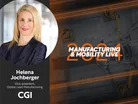
At Manufacturing & Mobility LIVE, Helena Jochberger, Vice President and Global Lead of Manufacturing at CGI delivered a keynote on the pivotal role of collaborative ecosystems in shaping the future of manufacturing.
In her engaging session, Helena explored how manufacturers can adapt to global macro trends, leverage data, and thrive through interdependence.
To watch Helena's keynote, click here.
Understanding collaborative ecosystems
Helena begins her presentation with a compelling quote: “If you want to walk fast, walk alone. But if you want to walk far, walk together.”
This wisdom underpins the concept of ecosystems, a model inspired by nature where interconnected entities work towards mutual sustainability and growth.
Similarly, manufacturing ecosystems function as networks of players – suppliers, integrators and collaborators – working cohesively to create value and innovate while tackling challenges such as economic slowdowns or demographic shifts.
Drawing an analogy to natural ecosystems, Helena explains that survival and adaptability hinge on symbiosis and cooperation.
She likens this to the mycelium network in the soil, a complex system that facilitates communication and resource-sharing across species. This example emphasises the importance of robust data-sharing frameworks in manufacturing ecosystems, as effective communication is key to agility and resilience.
Manufacturing ecosystems: The why and how
Exploring the need for collaborative ecosystems, Helena points to the intricate value chains within manufacturing. For example, an aircraft engine manufacturer can rely on up to 9,000 suppliers. No single entity can master every required specialisation, making collaboration essential.
In addition to fostering innovation, ecosystems allow manufacturers to diversify resources – a critical response to macroeconomic disruptions, demographic changes or regulatory challenges.
Helena highlights agility as a core benefit, noting that ecosystems enable early warnings for market fluctuations, making industries more adaptable.
A growing enabler of this adaptability is Gen AI. According to Helena, AI reduces product development cycles, enhances resource allocation, and helps diversify operations – key tools for manufacturers navigating current economic challenges.
Strategic partnerships amplify these benefits, aligning with her opening sentiment about the power of collective effort.

Technology and sustainability in focus
Helena underlines sustainability as a central theme for modern ecosystems. Initiatives like Gaia-X and its automotive offshoot, Catena-X, are pioneering collaborative solutions for secure, data-driven innovation.
She notes how the EU’s regulations, such as the Digital Product Passport and eco-design requirements, push industries to embrace circular economies and sustainability measures.
Catena-X, she explains, promotes shared infrastructure and best practices, offering smaller enterprises the tools and guidance needed to join these ecosystems.
For SMEs, now is the time to act, leveraging resources provided by larger partners to access new markets, improve efficiency, and meet regulatory demands.
The future of collaborative ecosystems
Closing her keynote, Helena outlines three key pillars – technology, the environment and the economy – essential for navigating uncertain times.
She encourages businesses to embrace data-driven ecosystems, which hold immense potential for innovation, resilience and sustainability. However, achieving this requires trust, clear standards, and a commitment to shared goals.
For manufacturers of all sizes, Helena’s advice is clear: collaboration is not optional.
Ecosystems are the pathway to thriving in a rapidly evolving world, whether through technological innovation, regulatory compliance or collective resilience.
As Helena aptly summarises, “Collaborative ecosystems are a necessity to navigate supply chains and tackle uncertain times, offering transformative opportunities at every scale.”
To watch Helena's keynote, click here.
Essential diary dates for 2025
Discover the essential diary dates for Manufacturing Digital, as well as its sister publications – Procurement Magazine, Supply Chain Digital and Sustainability Magazine.
To follow Manufacturing LIVE on LinkedIn, click here.
To enter for the Global Procurement & Supply Chain Awards, click here.
2025 diary dates:
- Procurement & Supply Chain LIVE Singapore | 11 February
- Procurement & Supply Chain LIVE: Sustainability | 5-6 March
- Sustainability LIVE: Net Zero | 5-6 March
- Procurement & Supply Chain LIVE Dubai | 29 April
- Sustainability LIVE Chicago | 28-29 May
- Procurement LIVE Chicago | 28-29 May
- Supply Chain LIVE Chicago | 28-29 May
- Manufacturing & LIVE Chicago | 28-29 May
- Procurement & Supply Chain LIVE London | 23-24 September
- Procurement & Supply Chain Awards | 24 September
Explore the latest edition of Manufacturing Digital and be part of the conversation at our global conference series, Manufacturing LIVE.
Discover all our upcoming events and secure your tickets today.
Manufacturing Digital is a BizClik brand.