Top 10: Aerospace & Aviation Manufacturers
The global aerospace and aviation manufacturing sector is navigating one of its most complex chapters in decades. Battling backlogs and escalating defence budgets, as well as the race to increase R&D investment into decarbonisation and sustainable aviation fuel, the industry is being forced to transform fast.
Digital transformation, AI-driven predictive maintenance, digital twins and advanced additive manufacturing are reshaping factory floors and supply chains.
The result is an industry defined by both extraordinary opportunity and pressure, where only the most agile and financially robust operators will thrive.
Manufacturing Digital has ranked 10 of the top aerospace and aviation manufacturers.
10. Howmet Aerospace
Market Cap: US$100.7bn
CEO: John Plant
Founded: 2020
Howmet Aerospace is a specialist in the aerospace supply chain, manufacturing the superalloy castings, titanium forgings and fastening systems for commercial and military aircrafts.
Its investment in facilities, operating across the US, UK and Europe, produce the nickel superalloy turbine blades and vanes that operate inside the hottest sections of aero-engines.
Howmet's Arconic Fastening Systems division produces billions of aircraft fasteners annually from its facilities in California and Alabama, while its engineered structures business manufactures titanium and aluminium structural components.
9. Northrop Grumman
Market Cap: US$107.9bn
CEO: Kathy Warden
Founded: 1994

Northrop Grumman's defining manufacturing achievement of this decade is the B-21 Raider stealth bomber, produced at its Palmdale, California facility.
Building an aircraft thats stealth characteristics demand near-zero manufacturing tolerances represents the pinnacle of precision aerospace fabrication.
Its Melbourne, Florida facility produces advanced radar systems and electronic warfare suites, while its Space Park facility in Redondo Beach, California manufactures satellite payloads and strategic missile components.
Northrop is also a leader in autonomous systems manufacturing, producing the MQ-4C Triton unmanned maritime patrol aircraft.
8. Rolls-Royce Holdings
Market Cap: US$140.2bn
CEO: Tufan Erginbilgic
Founded: 1906
Rolls-Royce manufactures its Trent family of wide-body engines at its Derby facility, which functions as a complete engine manufacturing ecosystem.
Rolls-Royce's Dahlewitz facility in Germany produces the BR700 series engines for business jets and regional aircraft, while its facility in Mount Pleasant, Pennsylvania assembles engines for North American customers.
The company is also leading development of the UltraFan demonstrator, a next-generation engine architecture targeting a 25% fuel efficiency improvement over the original Trent.
7. Safran
Market Cap: US$153.5bn
CEO: Olivier Andriès
Founded: 2000

At Safran's engine plants in France, the CFM LEAP, co-produced with GE, is assembled at facilities in Villaroche and Châtellerault.
The Villaroche plant utilises proprietary 3D-woven resin transfer molding to produce carbon-fiber fan blades that are exceptionally light and durable.
At Châtellerault, Safran deploys automated ceramic matrix composite production lines, creating parts that can withstand extreme internal temperatures.
6. Lockheed Martin
Market Cap: US$155.4bn
CEO: Jim Taiclet
Founded: 1995
Lockheed Martin's Fort Worth, Texas facility produces the F-35 Lightning II, one of the most complex combat aircraft to be built.
The plant employs more than 18,000 people and deploys an advanced digital thread that connects design, manufacturing and sustainment data across the aircraft's entire lifecycle.
The plant utilises robotic coatings applications to maintain stealth requirements and 3D optical scanning for real-time quality validation.
By linking design data directly to the factory floor, Lockheed achieves high-level consistency in its manufacturing.
5. Honeywell Aerospace
Market Cap: US$158.6bn
CEO: Jim Currier
Founded: 1906

Honeywell Aerospace manufactures the systems that make modern aircraft function: auxiliary power units, turboprop and turboshaft engines, wheels and brakes, flight management computers and environmental control systems.
Its Phoenix, Arizona facility is the global hub for avionics production, manufacturing cockpit systems and navigation equipment for commercial aircraft.
Its Torrance, California plant produces TPE331 and HTF7000 engines.
Honeywell has invested substantially in manufacturing automation and digital quality systems, and its Aerospace Technologies division is embedding sensing and connectivity hardware directly into its aircraft components, turning them into intelligent, data-generating assets.
4. Airbus
Market Cap: US$160.7bn
CEO: Guillaume Faury
Founded: 1970
Airbus has built a sophisticated multi-country aircraft manufacturing system, with assembly lines operating in Toulouse, Hamburg, Tianjin and Alabama.
The company’s A350 programme showcases Airbus manufacturing at its most advanced, with more than 50% of the airframe by weight made of carbon fibre-reinforced polymer.
Its Nantes facility has pioneered the automated drilling and riveting of composite centre wing boxes, reducing manual operations and improving repeatability at scale.
3. Boeing
Market Cap: US$181.5bn
CEO: Kelly Ortberg
Founded: 1916

In recent years, Boeing has returned to its roots centred in engineering excellence and manufacturing discipline.
The strategic reintegration of Spirit AeroSystems brings critical Tier-1 production back under direct Boeing oversight.
In Renton, the 737 line utilises a digital thread to track every fastener, ensuring high-fidelity precision.
In Everett, the 777X’s carbon-fibre wings are cured in the world’s largest autoclaves before being joined using automated orbital drilling.
2. RTX
Market Cap: US$281.6bn
CEO: Christopher Calio
Founded: 2020
RTX operates one of the most diverse aerospace manufacturing portfolios, with production facilities spanning more than 180 sites globally.
Through Pratt & Whitney, it manufactures the Geared Turbofan engine at facilities in East Hartford and Middletown, Connecticut where machined titanium and nickel superalloy components are assembled.
Collins Aerospace adds a vast second tier of manufacturing capability, from actuation systems and cockpit avionics to aircraft interiors and nacelles, produced at more than 300 locations across 27 countries.
The company has invested substantially in digital manufacturing tools, deploying AI-assisted quality inspection systems and robotic assembly on its GTF production lines to increase throughput and reduce defect rates.
1. GE Aerospace
Market Cap: US$340.8bn
CEO: H. Lawrence Culp Jr.
Founded: 1892

GE Aerospace operates one of the most sophisticated manufacturing networks in the world, spanning facilities across the United States, Europe and Asia.
Its Durham, North Carolina facility is famous for assembling the LEAP and GE9X engines with self-managed teams and no traditional supervisory hierarchy.
The company's Muskegon, Michigan plant produces complex titanium fan blades using advanced forging techniques, while its Lynn, Massachusetts facility has been producing military jet engines continuously since the Second World War.
Across its global footprint, GE Aerospace operates more than 50 manufacturing and assembly sites, employing in excess of 44,000 people in engineering and production roles.
In 2025, GE Aerospace delivered LEAP engines at a record pace, up 40% year-on-year.
Company portals










Executives
Guillaume Faury
Member of the Board of Directors
James Currier
President and CEO - Honeywell Aerospace
Kathy Warden
Chair, Chief Executive Officer and President
Olivier Andriès
Chief Executive Officer
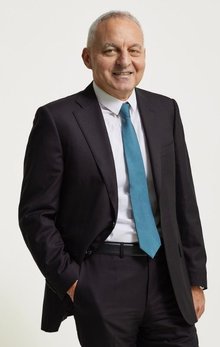
Tufan Erginbilgic
CEO