Top 10: Automotive Companies
The global automotive manufacturing market is valued at nearly US$3tn, contributing approximately 3% to the world’s total GDP, according to the International Monetary Fund.
However, the sector is facing its biggest disruption in a century as value shifts from traditional hardware to software and batteries.
Factories around the world are being reinvented into digital, efficient and vertically integrated hubs to tackle these challenges.
Manufacturing Digital has ranked the top automotive companies by vehicles sold in 2024.
10. Suzuki
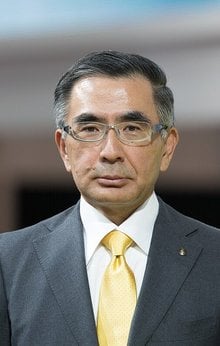
CEO: Toshihiro Suzuki
Headquarters: Hamamatsu, Japan
Founded: 1909
Sold vehicles: 3,240,385
For nearly 30 years, Suzuki built weaving looms for Japan’s silk industry before moving into cars.
It operates five main plants in the Shizuoka prefecture of Japan, serving as the production hubs for global models and high-precision components.
Its network covers more than 200 countries, following a philosophy of local manufacturing to produce where its products sell.
It has major manufacturing subsidiaries in India, Hungary, Indonesia, Brazil and Colombia among others.
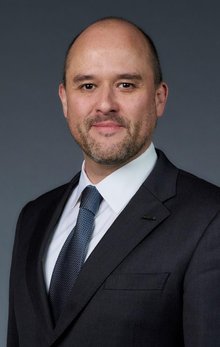
9. Nissan
CEO: Ivan Espinosa
Headquarters: Yokohama, Japan
Founded: 1933
Sold vehicles: 3,346,248

Nissan follows the philosophy of "Monozukuri", the art of making things, blending traditional Japanese craftsmanship with digital innovation.
Its primary domestic production hubs include the Oppama, Tochigi and Kyushu plants, which serve as mother plants for its global network.
The company’s Re:Nissan recovery plan, initiated in May 2025, focuses on rightsizing its manufacturing footprint to restore profitability by the end of fiscal year 2026 through consolidating its plants and rolling out intelligent factory initiatives.
8. Honda
CEO: Toshihiro Mibe
Headquarters: Tokyo, Japan
Founded: 1946
Sold vehicles: 3,716,295
Honda adheres to a philosophy of "building products close to the customer," which drove it to become the first Japanese automaker to manufacture cars in the US.
Its domestic factories, such as the Saitama and Suzuka plants, develop manufacturing technologies that are then rolled out globally.
Honda is retooling its manufacturing base through its Honda EV Hub project in Ohio, US, which is serving as the blueprint for its global electric vehicle production
The company’s approach involves converting existing plants to produce both internal combustion and electric vehicles on the same line to maintain flexibility.
7. BYD
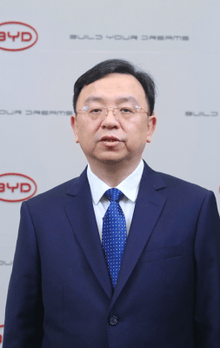
CEO: Wang Chuanfu
Headquarters: Shenzhen, China
Founded: 1995
Sold vehicles: 4,272,145

BYD relies on extreme vertical integration, manufacturing its own batteries, semiconductors and motors in-house to control costs and supply chains.
Its primary manufacturing bases are located in Shenzhen, Xi'an, and Changsha, China, with a focus on new energy vehicles.
It has aggressively expanded its global footprint with new plants in Thailand, Brazil, Hungary and Uzbekistan to serve international markets directly.
By creating a wide range of vehicles across a range of prices, BYD is scaling rapidly and overtook Tesla as the world’s top EV seller in 2025.
6. Ford
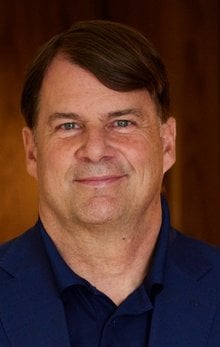
CEO: Jim Farley
Headquarters: Michigan, US
Founded: 1903
Sold vehicles: 4,470,165
Ford pioneered the moving assembly line and today splits its operations into ICE and EV through Ford Blue and Ford Model e.
Its historic Rouge Complex in Michigan, US remains a flagship facility, sitting alongside massive truck plants in Kentucky and Kansas City.
Internationally, it operates key manufacturing hubs in South Africa and Germany, the latter of which has been converted into the Cologne Electric Vehicle Center.
This EV facility uses a digital twin system and employs AI-controlled laser welding to ensure precision.
5. Stellantis
CEO: Antonio Filosa
Headquarters: Hoofddorp, Netherlands
Founded: 2021
Sold vehicles: 5,525,875

Stellantis operates under its Dare Forward 2030 strategic plan, aiming to transform its industrial footprint for carbon net zero emissions by 2038.
Its manufacturing network includes historic Fiat plants in Italy and Peugeot plants in France, combined with massive North American facilities like the Sterling Heights Assembly Plant.
The company uses multi-energy platforms to produce electric, hybrid and combustion vehicles on the same lines to maintain flexibility.
In 2026, the company says it aims to create value through its circular economy business unit, which remanufactures and recycles components to extend vehicle lifecycles and reduce raw material dependency.
4. General Motors
CEO: Mary Barra
Headquarters: Michigan, US
Founded: 1908
Sold vehicles: 6,001,247
GM’s manufacturing strategy is anchored by Factory ZERO in Michigan, US, a facility dedicated entirely to electric vehicle production as part of its "Zero Crashes, Zero Emissions, Zero Congestion" vision.
It operates major US truck and SUV plants in Texas and Michigan, which fund its electric transition.
Internationally, GM relies heavily on its joint venture plants in Shanghai and Liuzhou, China, as well as its manufacturing complex in Ramos Arizpe, Mexico.
GM’s Spring Hill Manufacturing plant in Tennessee, US successfully builds both internal combustion and electric vehicles on the same assembly line, allowing it to adjust to market demand instantly.
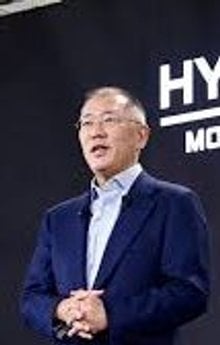
3. Hyundai
Executive Chair: Euisun Chung
Headquarters: Seoul, South Korea
Founded: 1967
Sold vehicles: 7,231,248

Hyundai Motor Group operates the Ulsan Plant, the world’s single largest automobile manufacturing facility, which functions as a self-contained city with its own port and fire station.
Its manufacturing philosophy emphasises smart factory technology, using AI and robotics to maximise efficiency across its global network.
Key overseas production bases include the Hyundai Motor Group Metaplant in the US, Nosovice in the Czech Republic and Chennai in India.
In 2026, the company is expanding its US production capabilities with the Hyundai Motor Group Metaplant America in Georgia, a smart factory using AI and robotics to build Hyundai, Kia and Genesis EVs.
The company is also advancing its domestic capabilities with a new dedicated EV plant in Ulsan that began production in late 2024.
2. Volkswagen
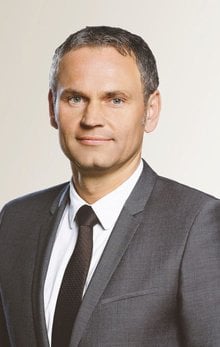
CEO: Oliver Blume
Headquarters: Wolfsburg, Germany
Founded: 1937
Sold vehicles: 9,037,425
The Volkswagen plant in Wolfsburg, Germany is one of the largest manufacturing complexes on earth, occupying an area as large as the Principality of Monaco.
The company is actively converting its network for the "Way to Zero" electric strategy, with Zwickau, Germany serving as its primary EV production hub.
It maintains a massive global presence with major assembly plants in China, Mexico and the US.
A key pillar of its 2026 strategy is PowerCo, a subsidiary dedicated to unifying battery cell production.
PowerCo has commenced series production at its first gigafactory in Salzgitter, Germany. This is the first time VW has produced its own battery cells in-house in Europe.
This move to in-house battery manufacturing is designed to reduce dependence on Asian suppliers and standardise cells across 80% of its vehicles.
1. Toyota
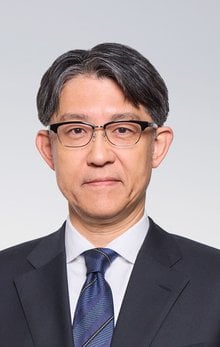
CEO: Koji Sato
Headquarters: Toyota City, Japan
Founded: 1937
Sold vehicles: 11,011,375

Toyota is the creator of the Toyota Production System (TPS), a philosophy based on just-in-time production and jidoka, automation with a human touch.
Its domestic operations are centred in Toyota City, Japan, including the Motomachi and Tsutsumi plants.
Toyota has deployed its own version of gigacasting at the Motomachi plant for its next-generation EVs, allowing moulds to be changed in just 20 minutes.
Globally, it operates massive facilities in the US, UK and China, all of which implement TPS to ensure identical quality standards regardless of location.
Toyota announced in late 2025 that starting in 2026, it will begin exporting US-made vehicles, like the Tundra and Highlander, from the US to Japan to meet demand.
Toyota’s strategy uses a multi-pathway approach, producing hybrids, plug-ins and hydrogen fuel cell vehicles alongside EVs on flexible lines to meet diverse regional needs.
The company is rolling out its new Arene operating system platform, which integrates software development directly into the vehicle manufacturing process, debuting in the RAV4.
Company portals






Executives
Antonio Filosa
Chief Executive Officer
Euisun Chung
Executive Chair
Ivan Espinosa
CEO
Jim Farley
Chief Executive Officer
Koji Sato
CEO

Mary Barra
CEO
Oliver Blume
CEO

Toshihiro Mibe
CEO
Toshihiro Suzuki
CEO
Wang Chuanfu
CEO