Top 10: Chemical Companies
The chemical industry provides materials for 95% of all manufactured goods according to the World Economic Forum.
From fertilisers for agriculture to high-purity chemicals for semiconductor manufacturing, the industries creating chemical building blocks contribute to a significant portion of global GDP.
The leaders in this multi-trillion dollar industry are creating new processes and products alongside keeping wider manufacturing supplied.
Manufacturing Digital has ranked 10 of the top chemical manufacturing companies by market cap.
10. LyondellBasell
CEO: Peter Vanacker
Headquarters: Rotterdam, Netherlands
Founded: 2007
Market cap: US$15.51bn
LyondellBasell’s chemical manufacturing began with discoveries in the creation of polyethylene and polypropylene in the 1950s.
Now focussed on circular solutions, the company’s first commercial-scale MoReTec facility is in Wesseling, Germany and is expected to begin operations in 2026.
This plant is designed to recycle the amount of plastic packaging waste generated by more than 1.2 million German people each year into valuable raw materials.
Peter Vanacker, CEO at LyondellBasell, says: “If we continue the open and trustful dialogue between industry, politics and society, the continent could develop a strategically unique position to become the leader in a sustainable, circular economy with LYB steering the way.”
9. DuPont
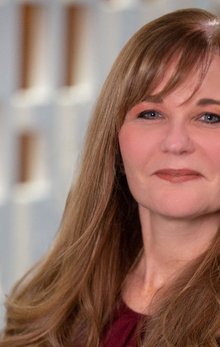
CEO: Lori Koch
Headquarters: Delaware, US
Founded: 1802
Market cap: US$18.2bn

Since its beginnings as a gunpowder mill, DuPont has developed many technologies including polymers nylon, Teflon and Mylar.
In 2025, more than two centuries after its founding, the company continued to develop with more than 125 innovations.
Alongside these innovations, the company won four Edison Awards for its material technologies.
Alexa Dembek, DuPont’s Chief Technology and Sustainability Officer, says: “This achievement reflects the ingenuity and commitment to innovation of our teams and demonstrates the meaningful impact of our close customer collaboration to bring cutting-edge technologies to market.”
8. Dow
CEO: Jim Fitterling
Headquarters: Michigan, US
Founded: 1897
Market cap: US$18.84bn
Dow manufactures materials for diverse industries including mobility, packaging, electronics and agriculture.
Founder H.H. Dow’s first commercial success came in 1891 with using electric current to separate bromides from brine.
The company was founded in 1897 and first began commercial-scale production of bleach a year later.
Its largest segment is now producing materials for flexible and rigid packaging, alongside solutions for hygiene and medical applications.
By 2030, the company aims to reduce its carbon emissions by five million tonnes as part of its 2050 carbon neutrality goal.
7. Sika
CEO: Thomas Hasler
Headquarters: Baar, Switzerland
Founded: 1910
Market cap: US$30.78bn

Sika produces technologies locally in more than 400 factories across 102 countries.
Its solutions are used for bonding, sealing, damping, reinforcing and protecting applications across the construction and industrial sectors.
In 2026, the company received the German Sustainability Award for its SikaBaffle AutoStack system, cavity-sealing parts used during coating and painting processes.
"This award proves how targeted engineering can unlock real sustainability gains across the automotive value chain,” says Patricia Heidtman, Chief Innovation and Sustainability Officer at Sika.
6. Henkel
CEO: Carsten Knobel
Headquarters: Düsseldorf, Germany
Founded: 1876
Market cap: US$35.19bn
Chemical and consumer goods company Henkel began creating sodium silicate and detergents in 1876 and developed the world’s first glue stick in 1967.
The company is the world’s top adhesives producer and the market leader in bonding, sealing and coating solutions.
Henkel operates more than 170 production sites where it aims to accelerate digitalisation and sustainability, creating smart factories that use a centralised digital backbone.
Several of its plants have been recognised by the World Economic Forum as Global Lighthouses for advanced use of AI, sensors and data.
5. Wanhua Chemical
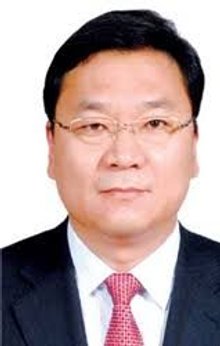
CEO: Kou Guangwu
Headquarters: Yantai, China
Founded: 1998
Market cap: US$35.62bn

Wanhua Chemical is a leader in the production of polyurethanes and has developed a large manufacturing footprint across Asia and Europe.
In partnership with tech leaders like Huawei, Wanhua uses AI and digital twins to optimise catalyst synthesis and production processes.
The Yantai Industrial Park is its primary production hub, featuring the world’s largest single-unit Methylene Diphenyl Diisocyanate (MDI) plant.
In Hungary, Wanhua’s BorsodChem Complex is the centre of is European manufacturing and has undergone continuous capacity upgrades for MDI, TDI and PVC.
4. Givaudan
CEO: Gilles Andrier
Headquarters: Vernier, Switzerland
Founded: 1895
Market cap: US$37.22bn
Givaudan manufactures flavours, fragrances and active cosmetic ingredients and pioneered using organic chemistry to develop synthetic fragrances, such as replicating the scent of violets.
The company expanded from perfumery into the flavours business in 1948 through its acquisition of Esrolko.
It has manufacturing sites around the world, including 31 in Europe, 13 in North America and nine in Latin America.
Givaudan broke ground on a new fragrance and beauty facility in Guangzhou, China in 2025 that will include a highly automated production site.
3. SABIC
CEO: Abdulrahman Al-Fageeh
Headquarters: Riyadh, Saudi Arabia
Founded: 1976
Market cap: US$43.91bn

SABIC is one of the world’s largest petrochemical manufacturers, headquartered in Riyadh, Saudi Arabia.
It was established in 1976 with the primary objective of converting oil-associated gases into valuable industrial chemicals.
In 2002, SABIC expanded its footprint in Europe by acquiring the petrochemical operations of the Dutch company DSM, which included manufacturing sites in the Netherlands, Germany and the UK.
SABIC operates in more than 50 countries with 60 manufacturing and compounding plants supporting its four business units.
In 2024, SABIC’s total production reached 53.9 million tonnes and it holds more than 11,000 patents and pending applications related to chemical formulations and material applications.
Each year, the company’s Global Application Technology organisation develops, on average, around 95 new products.
2. BASF
CEO: Markus Kamieth
Headquarters: Ludwigshafen, Germany
Founded: 1865
Market cap: US$46.75bn
In 1913, BASF put the world’s first ammonia synthesis plant into operation in Germany, using the Haber-Bosch process to produce synthetic nitrogen.
Around the world it operates seven major “Verbund” sites, meaning integrated systems, that link production, technology and markets for resource efficiency.
Its Verbund site in Ludwigshafen, Germany, is the world’s largest chemical complex owned by a single company that was developed as an integrated network.
BASF’s newest Verbund site is located in Zhanjiang, China and began production in November 2025.
“This remarkable achievement of our team is a strong testament to BASF’s strategy to strengthen our presence in Asia and support our customers on their path toward sustainability,” says Dr. Stephan Kothrade, member of the Board of Executive Directors and Chief Technology Officer at BASF.
“It reflects our long-term commitment to invest where our customers are and to grow together with the region.”
1. Shin-Etsu Chemical
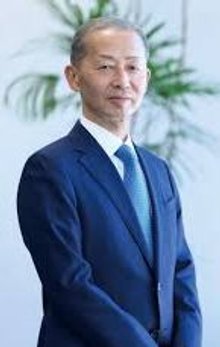
CEO: Yasuhiko Saitoh
Headquarters: Tokyo, Japan
Founded: 1926
Market cap: US$68.27bn

In 1926, Shin-Etsu Chemical constructed its first major manufacturing facility, the Naoetsu Plant, which initially produced carbide and lime nitrogen fertiliser.
It began manufacturing PVC and silicone materials in 1953 before expanding to semiconductor silicon in 1960.
The company also developed and commercialised the first photoresist for use with short-wavelength excimer lasers.
Shin-Etsu is the largest manufacturer of PVC and has plants around the world, including in the US, Europe and Japan.
Shin-Etsu’s manufacturing model links sales, R&D and production departments at the same site to accelerate product development, allowing for hands-on development and prototyping using plant facilities.
At its Shintech facilities in Louisiana, the company operates an integrated system that includes rock salt mining, salt electrolysis to produce chlorine and the production of vinyl chloride monomer.
In November 2025, the company announced that it has developed a recyclable thermoplastic silicone that can be tailed for a range of uses, from rubber-like elastic materials to plastic-like rigid materials.
Company portals


Executives
Abdulrahman Al-Fageeh
Chief Executive Officer
Carsten Knobel
Chief Executive Officer
Gilles Andrier
CEO
Jim Fitterling
Chair, Board of Directors
Kou Guangwu
CEO
Lori Koch
Chief Executive Officer
Markus Kamieth
CEO
Peter Vanacker
Chief Executive Officer
Thomas Hasler
CEO
Yasuhiko Saitoh
CEO