The manufacturing industry is facing an unprecedented cybersecurity landscape driven by rapid digital transformation and persistent threats.
McKinsey says that enhancing operational technology cybersecurity is challenging, as it presents barriers in multiple areas: technical, operational and investment.
Manufacturing and industrial sectors are particularly targeted by malicious hackers due to the high financial impact of downtime and the strategic value of intellectual property and operational data.
Manufacturing Digital has ranked the Top 10 industrial cybersecurity solutions looking at the best companies offering innovative and secure solutions across production and operations.
10. CrowdStrike Falcon
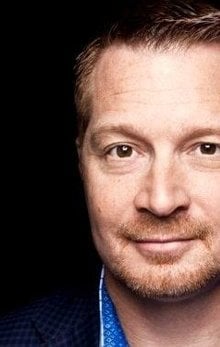
CEO: George Kurtz
Headquarters: Texas, US
Founded: 2011

CrowdStrike Falcon’s cloud-native AI-powered endpoint detection and response platform is widely adopted in manufacturing for protecting critical devices, including industrial PCs, workstations and connected IoT endpoints.
For AI applications, it offers real-time detection of AI components during development, comprehensive scanning of AI models across cloud platforms and continuous runtime inventory of AI workloads in production.
Manufacturers leverage Falcon to detect ransomware and unauthorised access attempts targeting production technology and intellectual property.
9. Tenable OT Security
Co-CEOs: Mark Thurmond and Steve Vintz
Headquarters: Maryland, US
Founded: 2002
Tenable OT Security is an operational technology (OT) security solution that can help manufacturers address the unique challenges of complex OT environments.
It provides four capabilities in a single platform.
These are asset discovery, prioritisation, intrusion detection and baseline tracking.
Tenable’s intrusion detection system engine identifies threats lurking in industrial environments. It monitors for anomalies and policy deviations, such as a controller setting that deviates from an approved parameter.
8. Fortinet
CEO: Ken Xie
Headquarters: California, US
Founded: 2002

Fortinet’s Security Fabric provides a unified platform that can protect IT, OT and physical security, with broad visibility and integrated control through an important, unified security view.
The company recently announced FortiSOC which brings together six security operations functions into a single SaaS experience.
It embeds agentic AI to autonomously investigate and correlate alerts across assets and identities, then recommend or execute response actions under analyst oversight.
Organisations can use it to establish a streamlined entry into SecOps, modernise legacy approaches, or scale large or mature environments.
7. Armis Centrix
CEO: Yevgeny Dibrov
Headquarters: California, US
Founded: 2015
Armis says its solution, Centrix, integrates with hundreds of existing IT and security solutions to quickly discover and prioritise all exposures, including risks, vulnerabilities and misconfiguration, without disrupting current operations or workflows.
Delivered as an agentless SaaS platform, Armis Centrix for asset management and security discovers all a business’ assets: including IT, IoT, cloud and virtual and managed or unmanaged.
With Armis network traffic analysis and deep packet inspection, IT and security teams can visualise network communications and display asset risks.
6. Palo Alto Networks
CEO: Nikesh Arora
Headquarters: California, US
Founded: 2005
Palo Alto Networks offers integrated cybersecurity tailored for manufacturing with a focus on automated detection and response across IT and OT environments.
Palo Alto’s solutions protect critical operational assets against ransomware, supply chain attacks and insider threats.
Its firewalls and segmentation tools isolate production systems to prevent lateral threat movement, ensuring cyberattacks don’t compromise entire factory floors.
Its Cortex XDR platform unifies endpoint, network and cloud data to deliver advanced threat detection using AI and machine learning.
5. Cisco Security
CEO: Chuck Robbins
Headquarters: California, US
Founded: 1984

Cisco Security provides industrial operations with secure, software-defined networking solutions integrated with OT cybersecurity capabilities.
It offers a wide range of solutions for manufactures spanning supply chain operations, advanced operations, workforce enablement and industrial security.
The company’s cloud-delivered suite of services, Cisco Umbrella, provides multiple security functions for manufacturers, including DNS layer protection, secure web gateway, firewall and cloud access security broker functionality.
Earlier this year, Cisco expanded its Secure AI Factory with NVIDIA to work not just in large data centers, but at local edge sites like warehouses.
4. Microsoft Defender and Sentinel
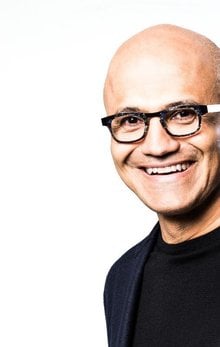
CEO: Satya Nadella
Headquarters: Washington, US
Founded: 1975
Microsoft Sentinel and Defender provide manufacturers with integrated, AI-powered cybersecurity across OT and IT infrastructures.
Microsoft Sentinel delivers intelligent security analytics and threat intelligence across an enterprise, bringing together signals that include Microsoft Purview, Defender for Cloud and data logs across an environment.
Defender extends this with endpoint detection and response, automated investigation and real-time threat hunting.
Businesses can use Defender for Cloud to protect Microsoft for Manufacturing.
Manufacturers use these solutions to detect cyberattacks on operational systems that could disrupt production or compromise sensitive designs and data.
3. Dragos
CEO: Robert M. Lee
Headquarters: Maryland, US
Founded: 2016

Dragos says its OT cybersecurity platform addresses what makes security challenging in industrial control systems: legacy equipment, proprietary protocols, air-gapped networks and zero-downtime requirements.
It describes its solution as a purpose-built industrial cybersecurity solution for industrial operators who need visibility while minimising operational risk.
The platform allows businesses to build and maintain a complete, accurate inventory of assets south of the firewall, including OT, IT, IoT and IIoT.
As of June 2026, Accenture acquired a majority stake in Dragos, though it continues to operate as Dragos, under CEO Robert M. Lee.
Robert said at the time: “Our energy and water systems, manufacturing plants, data centers and other operational environments need cybersecurity built from the ground up for xOT and designed to keep pace as threats evolve. The consequences of getting it wrong become societal threats.”
2. Nozomi Networks
CEO: Edgard Capdevielle
Headquarters: California, US
Founded: 2013

The Nozomi Networks platform is purpose-built for production environments. It unites OT operators and cybersecurity teams with real-time visibility, asset inventory, AI-powered continuous monitoring and threat intelligence.
The company says by using the platform businesses can detect cyberthreats and process anomalies before they cause disruption.
It describes it as the platform of choice for manufacturing cybersecurity teams who need to protect complex, interconnected environments.
It has over 1,000 customers worldwide and claims a 96% customer retention rate on its website.
Nozomi Networks is now a subsidiary of Mitsubishi Electric, having been acquired in 2025.
Edgard Capdevielle, President and CEO of Nozomi Networks, said at the time: “This marks an exciting new chapter for Nozomi Networks.”
Some of its partners on OT and IoT security include ABB, GE Vernova, Schneider Electric and Hitachi Energy.
1. Claroty
CEO: Yaniv Vardi
Headquarters: New York, US
Founded: 2015

Claroty says its protection is trusted by the world's largest manufacturers, utilities and critical infrastructure operators. It serves more than 40 industries at over 8,000 sites.
The Claroty platform features asset management, exposure management, network protection, secure access and threat detection.
Claroty says its platform continuously monitors an environment for the earliest indicators of both known and emerging threats. It says all alerts are contextualised to optimise response and remediation before a threat can impact operations.
The company says for industrial operations it reduces cyber risk, boosts operational integrity and simplifies compliance, adding the Claroty Platform helps industrial operators overcome barriers, close knowledge gaps and stay resilient against an evolving threat landscape.
In 2025, Claroty announced it had achieved the Amazon Web Services Manufacturing and Industrial Competency for OT Security.
Grant Geyer, Chief Strategy Officer at Claroty, said at the time: “Achieving AWS Manufacturing and Industrial Competency status is a testament to Claroty’s commitment to providing customers with highly scalable, specialised solutions that meet the complex needs of the digital transformation occurring across manufacturing sites.”
Company portals



Executives
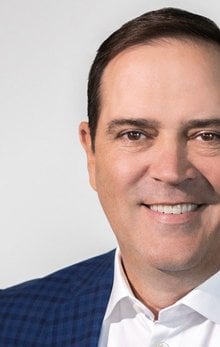
Chuck Robbins
Chair and CEO
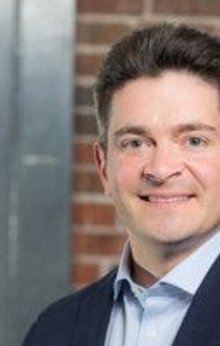
Edgard Capdevielle
CEO
George Kurtz
President / CEO & Founder
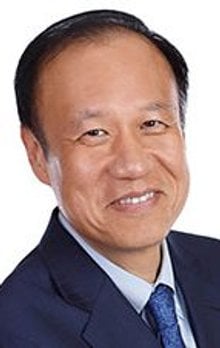
Ken Xie
Founder, Chairman of the Board, and Chief Executive Officer (CEO)
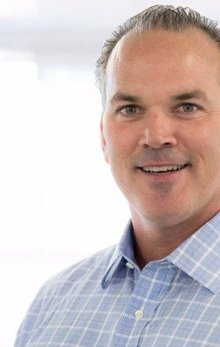
Mark Thurmond
Co-CEO
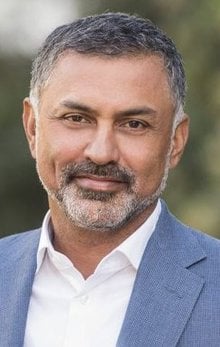
Nikesh Arora
Chairman CEO
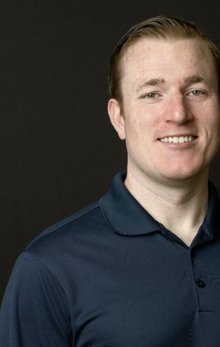
Robert M. Lee
Founder and CEO
Satya Nadella
Chairman and CEO

Steve Vintz
Co-CEO
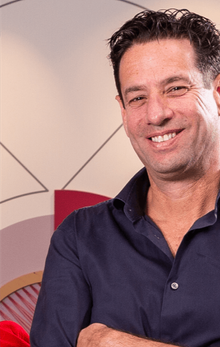
Yaniv Vardi
CEO
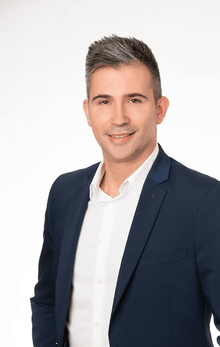
Yevgeny Dibrov
Co-Founder and CEO