Top 10: Electronics Manufacturers
While software and AI are taking over the world, neither can make progress without hardware.
Deloitte projects that worldwide IT spending will surpass US$6tn for the first time in 2026, with AI-optimised hardware and data centre infrastructure being the fastest growing segments.
The companies leading electronics manufacturing today have diversified their geographic footprints, vertically integrated their operations and achieved visibility into their supply chains.
Manufacturing Digital has ranked 10 of the top electronics manufacturers by market cap.
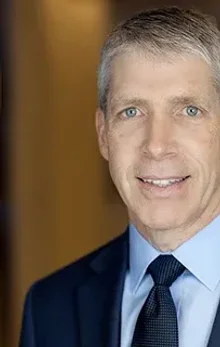
10. Garmin
CEO: Cliff Pemble
Headquarters: Kansas, US
Founded: 1989
Unlike many of its competitors, Garmin owns its own factories and is vertically integrated.
Most of its production takes place in specialised plants in Taiwan, but it has also operationalised a US$92m facility in Thailand designed to diversify the supply chain.
Its high-spec aviation manufacturing takes place in Kansas and Oregon, and a new 75,000 square foot hangar in Arizona expanded its footprint in February 2026.
Because Garmin manufactures for the FAA and military, its factories operate under ISO 9001 and IATF 16949 standards.
9. AMETEK
CEO: David A. Zapico
Headquarters: Pennsylvania, US
Founded: 1930

AMETEK has two differentiated operating groups, one focussed on electronic instruments and another on electromechanical devices.
These business units operate with a lot of autonomy, allowing each to collaborate closely with customers.
The company holds more than 3,800 patents protecting its specialised processes.
Across AMETEK’s more than 150 sites worldwide, its business units comprise more than 100 brands including FARO Technologies, Hamilton Precision Metals and Orion Instruments.
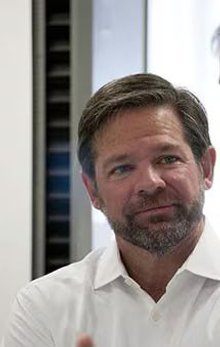
8. TE Connectivity
CEO: Terrence Curtin
Headquarters: Galway, Ireland
Founded: 2007
TE Connectivity supplies connectivity and sensor solutions used across sectors.
The company runs advanced automated factories, such as its Nantong, China base for automotive electronics that produces 220 billion components each year.
Its 130 manufacturing and engineering centres enable co-design with OEMs and rapid prototyping.
TE exceeded its corporate responsibility goals in 2025, sourcing 87% of electricity from renewable sources and increasing the number of zero waste to landfill sites to 56.
7. Mitsubishi Electric
CEO: Kei Uruma
Headquarters: Tokyo, Japan
Founded: 1921

Mitsubishi Electric makes a wide range of products from satellites to air conditioners.
It uses its own MELFA industrial robots and MELSERVO motion controllers to run automated, flexible production lines.
Rather than aiming for lights-out manufacturing, Mitsubishi Electric focuses on human-machine collaboration with investments in internal training facilities.
The company has invested in a variety of AI and technology startups to support manufacturing, including Sakana AI and Tulip Interfaces.
6. Foxconn
CEO: Michael Chiang
Headquarters: New Taipei City, Taiwan
Founded: 1974
Foxconn produces a huge amount of consumer electronics, including the iPhone, Nintendo Switch and Google Pixel.
The company is adopting fully automated factories and diversifying its manufacturing base to include Southeast Asia and the Americas.
Nicknamed iPhone City, Foxconn’s Technology Park in Zhengzhou was established in 2010 and produces roughly half of Apple’s smartphones.
During peak production seasons, it employs up to 350,000 workers.
The facility is the largest exporter in the Henan province, accounting for roughly 60% of exports at some times.
5. Seagate Technology
CEO: Dave Mosley
Headquarters: Dublin, Ireland
Founded: 1979

Seagate Technology manufactures data storage, specialising in hard disk drives and solid state drives.
It operates across seven manufacturing sites around the world and has delivered more than four and a half billion terabytes of data storage capacity.
The company says it uses a wide range of AI tools in its operations to create smarter, faster and more resilient production environments.
Seagate’s Factory team used AI for an enhanced automated vision system (EAVS) which reduced defects by 60% and saved millions in operational costs.
4. Western Digital
CEO: Irving Tan
Headquarters: California, US
Founded: 1970
Western Digital makes data storage solutions for both consumers and businesses.
It has more than a dozen manufacturing and product assembly facilities and around 50,000 employees across 36 countries.
Its hard disk drive products contain up to 40% recycled content and it has transitioned six of its sites to use 100% renewable energy.
Western Digital’s proprietary helium-sealing technique uses cleanroom environments where air is replaced with helium and the casing is hermetically sealed to reduce turbulence and friction.
3. Sony
CEO: Hiroki Totoki
Headquarters: Tokyo, Japan
Founded: 1946

With plants across countries like the UK, Malaysia and Japan, Sony operates international facilities specialised in 4K technology, image sensors and broadcasting equipment.
Its image sensors, laser diodes and OLED displays are used in a range of products including smartphones, medical imaging systems and industrial robotics.
Sony’s UK Technology Centre in Wales makes broadcast cameras, medical devices and more on high-precision lines.
Its Kohda Site in Japan specialises in cameras and lenses and features Sony Forest.
This is a biodiversity initiative which was opened for the public to enjoy in 1993.
2. Amphenol
CEO: R. Adam Norwitt
Headquarters: Connecticut, US
Founded: 1932
Amphenol operates a global network of manufacturing facilities across North America, Asia and Europe, specialising in interconnected systems, sensors and cable assemblies.
Rather than a top-down command structure, it operates as a collection of roughly 200 independent business units.
Each facility is responsible for its own profit and loss, production scheduling and research and development.
It has in-house capabilities for CNC machining, precision stamping and injection molding, reducing its reliance on other businesses.
In New York, Amphenol Aerospace produces cylindrical and rectangular connectors in a 307,000 square foot facility.
This site specialises in high-reliability connectors for defence and aerospace applications.
In China alone, the company has around 50 manufacturing locations.
1. Samsung Electronics
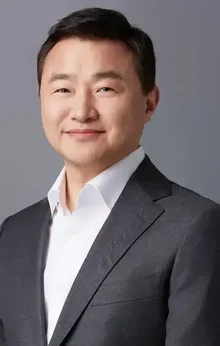
Co-CEOs: Young-Hyun Jun and Tae-Moon Roh
Headquarters: Seoul, South Korea
Founded: 1938

Samsung entered the electronics industry in the late 1960s and has since become the world’s largest electronics manufacturer.
Its components, like lithium-ion batteries and displays, are used by clients including Apple and Sony.
Samsung also makes devices including refrigerators, air conditioners and smartphones.
The company has assembly plants in 76 countries and employs more than 260,000 people.
By 2030, it aims to transition to AI-driven factories that use AI across its entire manufacturing value chain from inbound material logistics to final shipment.
“The next phase of manufacturing innovation lies in building autonomous environments where AI truly understands operational contexts in real time and independently executes optimal decisions,” says YoungSoo Lee, Executive Vice President and Head of Global Technology Research at Samsung Electronics.
“We are committed to leading the transformation toward AI-powered global manufacturing innovation.”
Company portals








Executives
Clifton Pemble
CEO
R. Adam Norwitt
President and Chief Executive Officer
Terrence Curtin
CEO
TM Roh
President and Acting Head of the Device eXperience DX Division
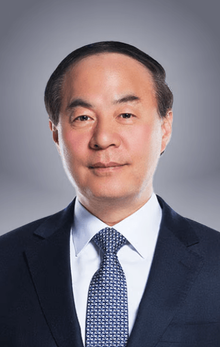
Young-Hyan Jun
Vice Chairman, CEO and Head of Device Solutions (DS) Division