Top 10: Global Manufacturers
From semiconductors to heavy machinery, manufacturing in 2025 has been defined by speed and precision.
Geopolitical shocks are driving manufacturers to regionalise production, while digitisation tightens tolerances from nanometres to megapascals.
AI now sits in the control loop, catching drift early and rebalancing lines within minutes. Electrification is rewriting the bill of materials in vehicles and aircraft systems, and energy efficiency is now a board-level metric.
Advances from high-NA lithography to composite curing are converging with vertical integration to secure quality and cost. While regulators and customers expect credible Scope 3 plans, they demand continuous data from supplier to shopfloor.
This Top 10 highlights organisations that are turning operational discipline into an advantage.
10. Amphenol
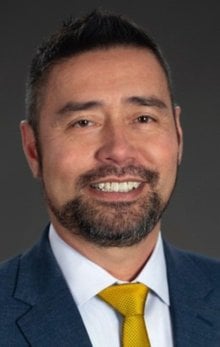
CEO: R. Adam Norwitt
Founded: 1932
Headquarters: Wallingford, Connecticut, US

Amphenol is a leading manufacturer of interconnect solutions, including connectors, cable assemblies and antennas used across automotive, industrial, aerospace, telecoms and consumer devices.
Its portfolio spans high-speed, ruggedised and miniature products engineered for signal integrity, power delivery and harsh environments.
Decentralised operations enable rapid customer service and customisation while maintaining global scale. Engineering strengths include materials science, precision stamping and overmoulding.
Growth is driven by electrification, data centre expansion, 5G and factory automation. Operational focus on quality, reliability and short lead times supports design-in wins.
Sustainability efforts address energy use, waste reduction and responsible sourcing across diverse sites.
9. Boeing
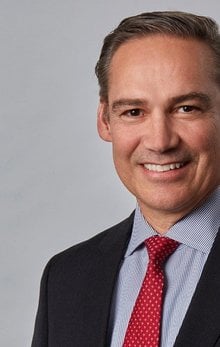
CEO: Kelly Ortberg
Founded: 1916
Headquarters: Arlington, Virginia, US

Boeing manufactures commercial aircraft, defence systems and space platforms with a global production and supplier footprint.
The 737, 787 and 777 families anchor commercial operations, supported by services for maintenance, training and parts. The company applies advanced materials, aerodynamics and digital engineering to improve efficiency and lifecycle value.
Programme execution, supply chain quality and safety remain top priorities in a tightly regulated industry. Boeing invests in sustainable aviation fuels, operational efficiency and future propulsion concepts to reduce emissions.
Data analytics and predictive maintenance enhance reliability for airlines. Collaboration with partners and regulators supports certification and continuous product improvement.
8. Intel
CEO: Lip-Bu Tan
Founded: 1968
Headquarters: Santa Clara, California, US

Intel designs and manufactures microprocessors, accelerators and platforms for client, data centre and edge markets.
Its integrated device model combines architecture, process technology and packaging under one roof.
Intel’s roadmap targets advanced nodes with high-performance and efficient cores, complemented by 3D packaging such as Foveros and EMIB to mix chips and tiles.
The firm is expanding its foundry services to manufacture for external customers. Manufacturing priorities include EUV adoption, yield improvement and geographic diversification.
Software optimisation, security features and AI acceleration support performance across workloads. Sustainability efforts focus on renewable energy, water stewardship and responsible sourcing in complex supply chains.
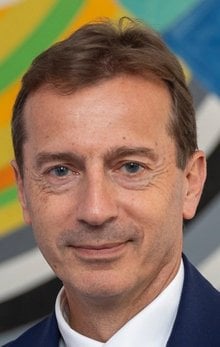
7. Airbus
CEO: Guillaume Faury
Founded: 1970
Headquarters: Blagnac, France

Airbus designs and manufactures commercial aircraft, helicopters, defence platforms and space systems. The A320neo and A350 families focus on fuel efficiency, advanced materials and passenger comfort.
Airbus operates a trans-European industrial system with global final assembly lines and an extensive supplier network. Digital design, model-based systems engineering and composite expertise underpin product development.
The company is investing in sustainable aviation fuel compatibility, hydrogen concepts and electrified flight for long-term decarbonisation. Services include training, maintenance and fleet optimisation powered by data analytics.
Rigorous certification, safety culture and programme management define operations in a complex, highly regulated aerospace environment.
6. Foxconn
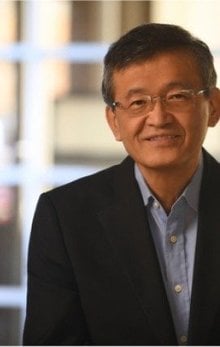
CEO: Young Liu
Founded: 1974
Headquarters: New Taipei City, Taiwan

Hon Hai Technology Group (Foxconn) is the world’s largest electronics manufacturing services provider, producing devices and components for leading brands.
Its strength lies in high-volume precision assembly, rapid ramp-ups and design-for-manufacture expertise. Foxconn’s capabilities span PCB, optics, mechanics and enclosures through to final integration and testing.
The group is expanding into semiconductors, electric vehicles and digital health to diversify revenue. Smart factory initiatives leverage robotics, vision systems and data platforms to enhance yield and quality.
Supply chain scale supports competitive cost structures and responsiveness. Sustainability programmes address energy efficiency, waste reduction and responsible labour practices across a broad footprint.
5. Caterpillar
CEO: Joe Creed
Founded: 1925
Headquarters: Irving, Texas, US

Caterpillar manufactures heavy equipment, engines and power solutions used in mining, construction and energy.
Its product lines emphasise durability, uptime and total cost of ownership, supported by a large dealer network for parts, service and remote monitoring.
The company integrates telematics, autonomy and analytics to improve productivity and safety in demanding environments. Electrification and alternative fuels are expanding across compact and large machines, alongside hybrid systems.
Manufacturing operations focus on flexible assembly, precise machining and rigorous quality standards. Rebuild and remanufacturing programmes extend asset life while reducing waste. Strong aftermarket services create recurring revenue and deepen customer relationships.
4. Toyota
CEO: Koji Sato
Founded: 1937
Headquarters: Toyota City, Aichi, Japan

Toyota is a benchmark in lean manufacturing and continuous improvement, with the Toyota Production System shaping global best practice.
The company’s portfolio spans hybrids, internal combustion and emerging battery electric platforms, supported by strong reliability and quality engineering.
Modular architectures, just-in-time logistics and supplier development underpin efficiency and resilience. Toyota invests in solid-state batteries, software-defined vehicles and safety systems, while expanding connected services.
The firm’s global footprint balances regional production with localisation of key components. Sustainability programmes target lifecycle emissions, renewable energy and circularity in parts and materials.
Consistent discipline in manufacturing enables predictable output and customer trust worldwide.
3. Samsung
CEO: Jun Young-hyun
Founded: 1969
Headquarters: Suwon, South Korea

Samsung is a diversified manufacturer spanning semiconductors, consumer electronics and displays. Its memory business leads in DRAM and NAND, while foundry services target advanced logic nodes.
On the consumer side, Samsung produces premium smartphones, TVs and appliances supported by extensive R&D and a global manufacturing footprint.
The firm invests in OLED and QLED displays, along with next-generation microLED. Operational excellence is underpinned by scale, supplier partnerships and robust quality control.
In semiconductors, focus areas include EUV adoption, advanced packaging and power-efficient architectures.
Sustainability initiatives cover energy management, circular design and responsible sourcing with targets addressing emissions, water use and waste reduction.
2. Tesla
CEO: Elon Musk
Founded: 2003
Headquarters: Austin, Texas, US

Tesla designs and manufactures electric vehicles, battery storage and energy products at scale. Its vertically integrated approach spans powertrain engineering, battery cell development and in-house software, enabling rapid iteration and over-the-air updates.
Gigafactories focus on high-throughput automation, casting technologies and simplified architectures to reduce parts and cost.
Tesla’s energy business delivers utility-scale storage and solar solutions that integrate with its software for grid services and home management.
Safety, autonomy and manufacturing speed are core priorities.
The company’s supply chain emphasises critical minerals, recycling and localisation where feasible, supporting growth across North America, Europe and Asia while advancing EV adoption.
1. TSMC
CEO: C. C. Wei
Founded: 1987
Headquarters: Hsinchu, Taiwan

Taiwan Semiconductor Manufacturing Company (TSMC) is the world’s leading pure-play foundry, fabricating cutting-edge chips for customers across smartphones, data centres, AI and automotive.
Its advanced nodes, including 3 nm and below, set benchmarks for performance and power efficiency. TSMC’s robust ecosystem of electronic design automation partners and IP libraries helps its customers move from design to volume quickly.
TSMC’s geographic expansion aims to balance resilience with proximity to clients. The company invests heavily in yield engineering, EUV lithography and advanced packaging such as CoWoS and InFO.
Sustainability priorities include energy efficiency, water recycling and supplier engagement across a complex global chain.
Company portals





Executives
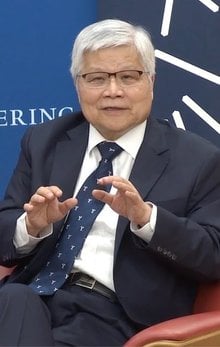
C. C. Wei
CEO
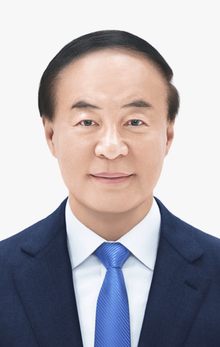
Dr. Young Hyun Jun
CEO
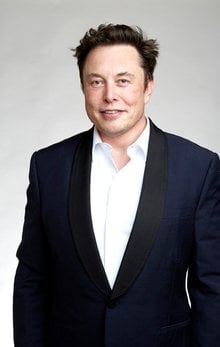
Elon Musk
Tesla CEO
Guillaume Faury
Member of the Board of Directors
Joe Creed
Chief Executive Officer
Kelly Ortberg
President and Chief Executive Officer
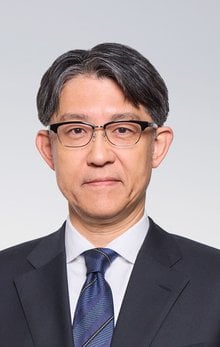
Koji Sato
CEO
Lip-Bu Tan
Chief Executive Officer
R. Adam Norwitt
President and Chief Executive Officer
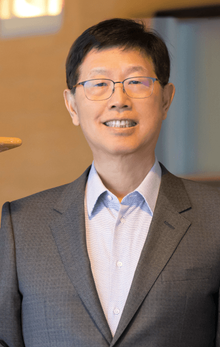
Young Liu
CEO (Chairman)