Machinery manufacturers provide key equipment globally across various sectors spanning mining, construction, recreation and engine design and production.
While the sector is currently dealing with shifting trade and tariff landscapes, geopolitical uncertainty and higher costs, the majority of firms remain proactive, agile and forward-looking, investing in smart manufacturing tools and agentic AI.
According to Deloitte, investment in smart manufacturing is likely to continue in 2026 as manufacturers seek to improve competitiveness and resilience in the face of uncertainty and complexity.
This week, Manufacturing Digital has ranked 10 of the top machinery manufacturers looking at technological innovation, markets, locations and employment.
10. Kubota
CEO: Shingo Hanada
Headquarters: Japan
Founded: 1890
Market Cap: US$18.56bn
Kubota manufactures a wide variety of machinery including tractors, combine harvesters, implements, utility vehicles, construction machinery, engines, pumps, valves and rice transplanters.
With more than 5.9 million tractor units sold worldwide are a major manufacturer. Kubota employs more than 40,000 people across the globe.
Based in Osaka, Japan, the company has sites in a network of over 120 areas, including Sri Lanka, China, Myanmar, Canada, Belgium, Poland and the US.
9. Volvo CE
CEO: Melker Jernberg
Headquarters: Sweden
Founded: 1832
Market Cap: US$69.951bn (AB Volvo)
Volvo CE is a key company in construction manufacturing, present in more than 140 countries across the globe. It employs 13,000 people.
Volvo began in Sweden 190 years ago but now has sites in countries including in the UK, Brazil, India, China, France, Germany and Poland. It has 10 R&D facilities and 12 production facilities.
Volvo CE has a target to reach net zero emissions by 2024. Malker Jernberg, Volvo CE CEO, says: “We also have a very big responsibility for our CO₂ footprint, this is why we set our ambitious goal to be fossil free by 2040.”

8. XCMG
CEO: Wang Min
Headquarters: China
Founded: 1943
Market Cap: US$19.4bn
In recent years, XCMG has become a global leader in the development, production and support of machinery for construction, mining, material handling and infrastructure.
Based in China, it has over 80 years of engineering history.
XCMG employs over 20,000 people across the globe and supplies a range of equipment including excavators, forklifts, MEWPs, cranes, telehandlers and specialist machinery.
XCMG has established a global R&D system with a total of six centres across China, the US, Germany, Brazil and India.
It has held the top position in China's construction machinery industry for 35 consecutive years.
7. Epiroc
CEO: Helena Hedblom
Headquarters: Sweden
Founded: 1873
Market Cap: US$29.49bn
Epiroc develops and produces drill rigs, rock excavation tools and construction equipment.
The firm currently employs more than 19,000 people worldwide at sites spanning North America, Asia, and Europe. It also manufactures equipment for surface and underground applications.
Epiroc can trace its roots back to 1873, when it was founded as AB Atlas in Sweden. It continued to trade under that name for 145 years, until it was distributed to Atlas Copco's shareholders and became a standalone listed company in 2018.
6. FANUC
CEO: Kenji Yamaguchi
Headquarters: Japan
Founded: 1972
Market Cap: US$35.14bn
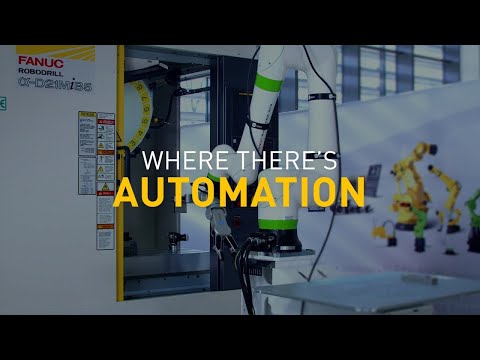
FANUC is the leading global manufacturer of factory automation systems, specialising in cutting edge CNC and motion control systems, as well as standard production machinery.
It operates in more than 260 locations worldwide and has around 8,000 employees.
Today, FANUC's range of smart, automated industrial robots contains more than 100 models. In 2023, accumulated robot production volume reached 1,000,000 units.
5. Komatsu
CEO: Takuya Imayoshi
Headquarters: Japan
Founded: 1921
Market Cap: US$38.57bn
Komatsu has a history dating back 100 years when it was founded to provide mining equipment for the Yusenji Copper Mine.
It focuses on the manufacturing and selling of construction, mining, utility, forestry and industrial machinery.
The company, based in Japan, currently employs over 65,000 people. Its manufacturing operations consisting of construction and mining and utility equipment operate across 62 global locations.
Locations that Komatsu operates in include Japan, North America, Latin America, Europe and China.
Under its Strategic Growth Plan launched in 2025, Komatsu continues to set targets for reduction of environmental impact, including CO₂ emissions.
4. Sandvik
CEO: Stefan Widing
Headquarters: Sweden
Founded: 1862
Market Cap: US$47.3bn
Sandvik offers equipment and tools, service, digital solutions and technologies for the mining and infrastructure industries. These include automated and electric mining equipment and eco-efficient rock processing.
While Sandvik is based in Sweden, it employs roughly 42,000 people in more than 150 countries.
They also have a focus on intelligent manufacturing and software solutions for design and planning as well as industrial metrology.
Sandvik’s goal is to have net-zero greenhouse gas emissions in its value chain by 2050.
Stefan Widing, President and CEO of Sandvik says: “Sustainability is integrated into our business model and a major opportunity for Sandvik since our solutions help our customers improve productivity, safety, and resource efficiency in their operations.”
3. Cummins
CEO: Jennifer Rumsey
Headquarters: US
Founded: 1919
Market Cap: US$75.3bn
With more than 69,000 employees worldwide, Cummins designs and manufactures a broad portfolio of power solutions including diesel engines, EV components, batteries and fuel cell products.
It operates a large global manufacturing network across the US, Asia, Europe, Canada and Africa.
The company is based in Columbus, Indiana, but operates from a variety of locations in the US.
In North Carolina, its Rocky Mount Engine Plant is a 1.3 million square foot facility that employs more than 2,000 people and produces mid-range engines for a multitude of markets.
In 2025, Cummins signed a memorandum of understanding with Komatsu to collaborate on the development of hybrid powertrains for surface haulage heavy mining equipment.
Jennifer Rumsey, Chair and CEO of Cummins, says of Cummins 2025 performance: “Cummins delivered strong operational results in the fourth quarter and full year despite continued weakness in North America truck markets.
“Our Distribution and Power Systems segments achieved record full-year sales and profitability as a result of disciplined execution and robust demand for data centre back-up power.”
2. Deere & Co
CEO: John May
Headquarters: US
Founded: 1868
Market Cap: US$154.6bn
Deere & Co are a leading manufacturer operating in various industries including agriculture, construction, forestry, turf and power systems.
Deere & Co operate in over 30 countries worldwide. Headquartered in the US, Deere & Co employs 30,000 at over 60 John Deere locations across 16 states
Its primary North American Parts Distribution Centre in Milan, Illinois, has been in operation since 1973 and employs about 1,200 people.
In 2025 it announced an expansion of its US facilities, at a distribution centre near Hebron, Indiana, and an excavator factory in Kernersville, North Carolina. Both are set to open in 2026.
John May, Chairman and Chief Executive Officer of John Deere, says: "Our investment in these new facilities underscores John Deere's dedication to strengthening the backbone of American industry and supporting local economies.”
"We believe in building America, and these projects represent our intent to continue driving innovation and job creation in the United States."
1. Caterpillar
CEO: Joseph E. Creed
Headquarters: US
Founded: 1925
Market Cap: US$325.6bn
Caterpillar is the world’s leading manufacturer of construction and mining equipment, off-highway diesel and natural gas engines, industrial gas turbines and diesel-electric locomotives.
Caterpillar’s primary business segments are power and energy, construction industries and resource industries. It has built over 30 million engines and has 2.1 million active global construction machines.
With 112,900 employees, Caterpillar operates in over 100 countries spanning Australia, Europe, Asia, the Middle East, and the US.
Headquartered in Irving, Texas, Caterpillar has more than 65 US locations in 25 states.

Several of its facilities in the US are single source manufacturing locations for all global sales, including: Large dozers (East Peoria, Illinois), Gas turbines (San Diego, California) and Small dozers (Athens, Georgia).
In 2026, Caterpillar announced an expanded collaboration with NVIDIA, focussed on AI-enhanced customer solutions and manufacturing systems.
Caterpillar also announced the introduction of intelligent machines designed to transform construction operations worldwide.
Caterpillar's Chief Technology Officer, Jaime Mineart, says: “By embedding autonomy into construction workflows, we’re reshaping the industry to achieve safer jobsites, better jobs and easy precision that redefines productivity for the modern jobsite.”
Company portals





Executives
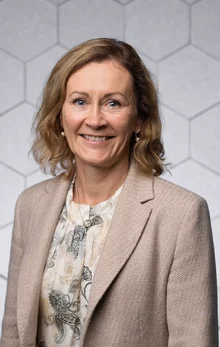
Helena Hedblom
CEO and President
Jennifer Rumsey
Chair & Chief Executive Officer
Joe Creed
Chief Executive Officer
John C. May
Chairman of the Board of Directors and Chief Executive Officer

Kenji Yamaguchi
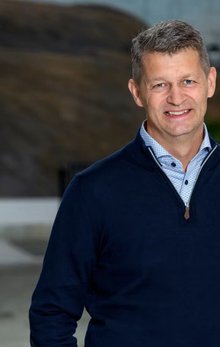
Melker Jernberg
President
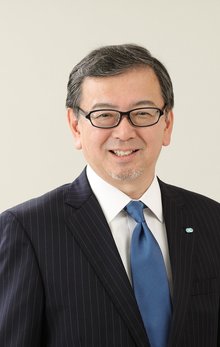
Shingo Hanada
Executive Officer
Stefan Widing
President and CEO

Takuya Imayoshi
CEO