Top 10: Manufacturers Using Digital Twins
Unplanned production stoppages cost manufacturers more than a trillion dollars each year, according to Siemens.
Digital twins can help to increase efficiency, improve product quality and even cut energy use and carbon emissions.
As AI tools become more capable, digital twins provide a way to both test technologies and train new tools before rolling them out across global manufacturing networks.
Manufacturing Digital has ranked 10 of the manufacturers changing production with digital twins.
10. Schneider Electric
CEO: Olivier Blum
Headquarters: Paris, France
Founded: 1836
Schneider Electric tests and showcases its digital twin capabilities in its own advanced manufacturing plants, which the World Economic Forum has designated as Advanced Lighthouse factories.
In its Le Vaudreuil, France facility, digital twins have supported a 25% reduction in both energy use and CO₂ emissions.
In the US, Schneider’s Lexington, Kentucky factory uses real-time dashboards and digital representations of its assembly lines to monitor efficiency metrics like OEE and FPY, cutting unplanned downtime.
9. Johnson & Johnson
CEO: Joaquin Duato
Headquarters: New Jersey, US
Founded: 1886
In J&J’s MedTech division, digital twins bridge the gap between manufacturing design and the operating room. When the company manufactures complex surgical equipment, the digital blueprints do not stop at the factory door but are extended into clinical use.
Moving a drug from a small laboratory environment to a massive commercial production scale is incredibly risky and expensive.
For advanced treatments, such as recombinant adeno-associated virus (rAAV) gene therapies, J&J's pharmaceutical divisions and the broader industry use digital twins to de-risk this process.
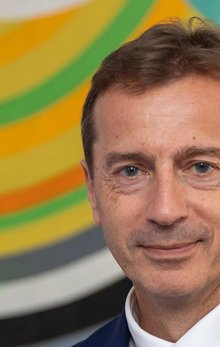
8. Airbus
CEO: Guillaume Faury
Headquarters: Leiden, Netherlands
Founded: 1970
Airbus is undergoing a massive digital transformation aimed at building a full-chain digital ecosystem that spans from initial concept and design to end-of-life service.
In early stages of product development, digital twins allow engineers to simulate aircraft behaviour which reduces the need for physical prototypes.
When refurbishing the former Jean-Luc Lagardère A380 building for new A321 assembly lines, Airbus says detailed industrial flow simulations and 3D modelling were essential. They supported the design of industrial tools for the facility.
7. Procter & Gamble
CEO: Shailesh Jejurikar
Headquarters: Ohio, US
Founded: 1837

In 2022, P&G entered a major partnership with Microsoft to overhaul its digital manufacturing platforms.
AI, machine learning, IoT and digital twins were integrated into its processes, creating high-fidelity virtual replicas of production lines. This allows for predictive maintenance, touchless operations and increased sustainability.
At P&G’s Guangzhou factory in China, it deployed a digital twin specifically to mirror and optimise its warehouse and logistics operations. This has supported a 30% reduction in inventory and a 15% reduction in logistics costs.
6. Tesla
CEO: Elon Musk
Headquarters: Texas, US
Founded: 2003
Before a single physical asset is installed on the factory floor, Tesla uses digital twins to design, simulate and benchmark its Gigafactories.
Building information modelling is used to manage the digital lifecycle of its facilities, making sure that building systems integrate with production lines. Point cloud reality capture is used continuously so the digital twin matches reality.
Through virtual commissioning, Tesla simulates automated conveyor lines, robotic cells and equipment logic before physical deployment.
5. Mercedes-Benz Group
CEO: Ola Källenius
Headquarters: Stuttgart, Germany
Founded: 1926

Mercedes-Benz uses NVIDIA Omniverse to build and optimise production lines in the virtual world before making physical changes. By simulating new production workflows and testing configurations virtually, the company expects its digital twin applications to drive up to a 20% increase in overall production efficiency.
The company’s MO360 data platform integrates supplier data to be a digital twin not just of the factory floor, but of the immediate supply chain and inventory ecosystem feeding it. The platform was co-developed and standardised in collaboration with Microsoft.
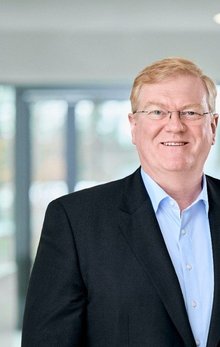
4. Bosch
CEO: Stefan Hartung
Headquarters: Stuttgart, Germany
Founded: 1886
Bosch uses its own Nexeed software suite to create digital representations of manufacturing machinery across its plant network. At its Blaichach plant in Germany, Nexeed collects and homogenises data from more than 60,000 sensors.
Implementing the Nexeed digital twin ecosystem has boosted overall productivity at individual Bosch locations by up to 25% and allowed internal logistics to operate up to 35% more efficiently.
3. Unilever
CEO: Fernando Fernandez
Headquarters: London, UK
Founded: 1929

By connecting factory machines and equipment through Azure IoT, Unilever has created digital models of its physical environments.
In soap manufacturing, the company handed control of machine moisture levels over to a digital twin algorithm. This transition gave operators better control over product consistency and factory staff requested the algorithm be used permanently.
Unilever’s Dove Bar manufacturing site in Mannheim, Germany is part of a four site network that shares data through digital twins. The site also has a warehouse management system that handles finished goods from 30 European plants.
2. BMW Group
CEO: Milan Nedeljković
Headquarters: Munich, Germany
Founded: 1916
As part of its iFACTORY strategy, BMW Group has virtualised more than 30 of its production sites, creating an industrial metaverse powered by NVIDIA Omniverse Enterprise.
For its new EV plant in Debrecen, Hungary, BMW began running real-time virtual planning sessions two years before the physical factory's opening. BMW estimates that scaling its virtual factory approach globally could reduce overall production planning costs by up to 30%.
At Plant Regensburg, ahead of the NEUE KLASSE series launch, BMW implemented 3D human simulation for the first time. This system simulates the exact kinematic movements of employees working on future assembly lines, mapping out individual workflows and manual operations.
Training AI models for automated quality control requires thousands of photos, so the company used its digital twins alongside the SORDI.ai platform to generate photorealistic synthetic images that match possible conditions in the real world.
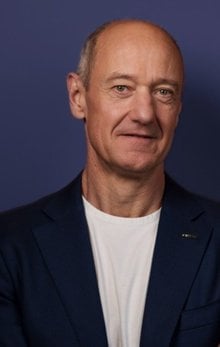
1. Siemens
CEO: Roland Busch
Headquarters: Munich, Germany
Founded: 1847

Siemens uses digital twins in a three-tiered approach, with distinct virtual models for the product, production process and real-time performance.
Before manufacturing begins, Siemens creates a high-fidelity digital replica of the product being designed. This twin simulates mechanics, multiphysics, electronics and software behaviour in a virtual space.
It says that this can save up to 50% in material costs that would otherwise be used on physical prototyping and can cut energy and CO₂ emissions associated with manufacturing.
Siemens’ Electronics Works Amberg in Germany has its entire manufacturing line, including machines, kinematics and material flow, modelled virtually. Since 2016, this plant has achieved a 6% efficiency gain every single year, producing 17 million products per year.
At its Native Digital Factory for motion control in Nanjing, China, a digital twin is combined with more than 50 industrial AI applications to adjust production variables dynamically. Because the factory was simulated and optimised entirely in a virtual environment before physical construction began, the new facility was able to increase its production capacity by nearly 200% and boost production efficiency by 20%.
Company portals











Executives
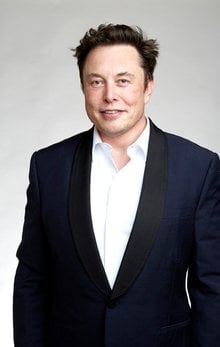
Elon Musk
Tesla CEO
Fernando Fernandez
Chief Executive Officer
Guillaume Faury
Chief Executive Officer
Joaquin Duato
Chairman of the Board and Chief Executive Officer
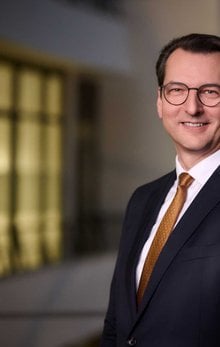
Milan Nedeljković
CEO
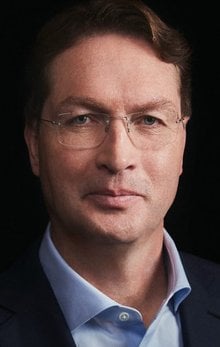
Ola Källenius
CEO
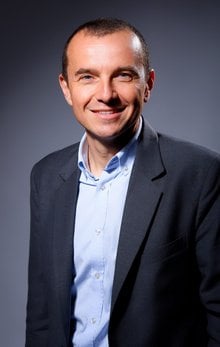
Olivier Blum
Chief Executive Officer
Roland Busch
President and CEO of Siemens AG
Stefan Hartung
Chairman of the Board of Management