Software products and services are increasingly critical to driving success across the entire manufacturing industry.
McKinsey says that many organisations are well positioned to harness this value, with leaders expecting a growing share of their revenue to come from digital and software-enabled solutions in the coming years.
By using AI in core processes, factories are seeing an average 40% increase in labour productivity, according to the World Economic Forum’s Global Lighthouse Network.
Manufacturing Digital has ranked 10 of the top manufacturing software companies.
10. Dassault Systèmes
CEO: Pascal Daloz
Headquarters: Vélizy-Villacoublay, France
Founded: 1981
Dassault Systèmes offers 3D design, realistic simulation and enterprise-wide data management through its brands CATIA and SOLIDWORKS.
Its 3DEXPERIENCE platform provides an integrated environment that spans simulation, design, manufacturing and operations and product lifecycle management.
Philippe Laufer, Dassault Systèmes’ Executive Vice President, 3DS Global Brands, says: “With the virtual twin experience and the collaborative platform, companies can experiment and then apply circular design principles to the product at every step.”
9. Infor
CEO: Kevin Samuelson
Headquarters: Atlanta, US
Founded: 2002

Infor’s manufacturing software spans warehouse management systems, product lifecycle management, industrial manufacturing supply chain management, cloud ERP and includes a cloud technology platform.
Infor’s Industry Cloud Platform brings together advanced technologies and AI-driven intelligence within a multi-tenant cloud environment.
Infor says its industrial software is designed specifically for industrial manufacturers and can help ever-changing market demands by using data-driven insights to increase profitability and growth.
8. PTC
CEO: Neil Barua
Headquarters: Boston, US
Founded: 1985
PTC says that 95% of Fortune 500 discrete manufacturing companies are its customers.
It offers a variety of manufacturing software covering areas such as product lifecycle management, augmented reality, industrial connectivity and industrial internet of things (IIoT).
PTC’s Windchill PLM software assists with real-time information sharing, dynamic data visualisation across a comprehensive range of core PDM and advanced PLM applications.
It says its solutions can help accelerate digital transformations by providing a digital foundation for the entire product lifecycle.
7. AVEVA
CEO: Caspar Herzberg
Headquarters: Cambridge, United Kingdom
Founded: 1967
AVEVA, part of Schneider Electric, says its hybrid cloud approach helps accelerate smart manufacturing while supporting a connected ecosystem.
The company's services combine advanced industrial data, visualisation and analyses services in the cloud with real time plant applications.
AVEVA’s CONNECT, built heavily on Microsoft Azure, aims to be the foundational digital twin platform.
Its service brings data from plant systems, processes and assets together in the cloud to create an operational and scalable digital twin.
6. ABB
CEO: Morten Wierod
Headquarters: Zürich, Switzerland
Founded: 1988

ABB’s manufacturing software aims to support process automation, robotics, electrification and motion, with digital layers like ABB Ability MES providing MES, analytics and optimisation.
The company says its manufacturing execution system enables higher plant efficiency and productivity as well as greater flexibility.
ABB’s Ability Genix Industrial Analytics and AI Suite collects, contextualises and converts operational, engineering and information technology data into actionable insights for manufacturers.
5. Epicor
CEO: Steve Murphy
Headquarters: Austin, US
Founded: 1972
Epicor’s software supports a variety of manufacturing modes including discrete manufacturing, make-to-order manufacturing and process manufacturing.
Its platform Kinetic is a cloud-based ERP software platform designed for manufacturers to streamline production and automate workflows.
It combines a variety of features including product management, supply chain management, planning and scheduling, risk and compliance and IoT.
Epicor was recognised as a Leader in the 2025 Gartner Magic Quadrant for Cloud ERP for Product-Centric Enterprises.
4. Rockwell Automation
CEO: Blake Moret
Headquarters: Milwaukee, US
Founded: 1903

Rockwell’s FactoryTalk software is built for supporting an ecosystem of advanced industrial applications, including IoT.
The company aims to use AI to simplify and scale automation in manufacturing plants.
FactoryTalk Design Studio integrates Microsoft's Azure OpenAI Service, which allows engineers to use natural language prompts to generate code, troubleshoot and speed up design cycles.
FactoryTalk also offers predictive maintenance and production optimisation, while its Verve platform provides manufacturers with asset vulnerability management.
3. Oracle
Co-CEOs: Clay Magouyrk and Mike Sicilia
Headquarters: Texas, US
Founded: 1977
Oracle Cloud Manufacturing supports a wide variety of areas including discrete manufacturing, process manufacturing, mixed-mode manufacturing and production scheduling.
The company positions its Fusion Cloud ERP and Supply Chain & Manufacturing (SCM) as the backbone for enterprise‑level planning, procurement, finance and production planning.
The software is supported by an automated smart operations solution powered by artificial intelligence.
New process manufacturing capabilities in Oracle Fusion Cloud SCM were announced at Oracle AI World 2026, which adds recipe and materials management, batch execution and compliance features.
2. Siemens
CEO: Roland Busch
Headquarters: Munich, Germany
Founded: 1847
Siemens is a global leader in manufacturing software and automation driving smart manufacturing and industrial automation engineering software.
Its MES software allows complete visibility across manufacturing sites, while supporting orchestration track and trace and optimisation based on real time data.
The company is integrating high-fidelity digital twins with generative AI and real-time physics through this Siemens aims to become the leader in what it calls the “Industrial AI Operating System”.
In 2026, Siemens unveiled an industrial engineering agent called Eigen, which operates within real engineering systems to plan, execute and validate tasks.
It is among the first commercially available AI systems that can plan and execute industrial automation engineering tasks.
This is part of the Siemens Xcelerator portfolio, a platform designed to accelerate digital transformation for industrial companies.
1. Microsoft
CEO: Satya Nadella
Headquarters: Washington, US
Founded: 1975

Microsoft’s vast manufacturing solutions aim to accelerate digital transformation, unlock engineering and design innovation, build resilient supply chains, enable intelligent factories and modernise customer experiences.
The company's cloud stack uses Azure AI and Azure OpenAI to embed generative AI into workflows such as design simulation, process optimisation, worker guidance and knowledge search.
Rather than selling its own MES or automation systems, Microsoft co‑develops and co‑markets solutions with industrial OEMs and software providers like Siemens and Rockwell.
This allows the company to cover use cases from CAD and CAM through MES to the supply chain without owning every vertical application.
Microsoft’s Dynamics 365 ERP solution features AI-powered insights, real-time data analytics, automation tools to help companies reduce operational complexity and stay competitive.
The company also provides cybersecurity through Microsoft Defender for IoT, centralising visibility and threat detection for industrial equipment and air-gapped environments.
Mars uses this technology across more than 120 plants around the world.
Company portals








Executives
Blake Moret
Chairman and Chief Executive Officer
Caspar Herzberg
Chief Executive Officer

Clay Magouyrk
CEO
Kevin Samuelson
Chief Executive Officer
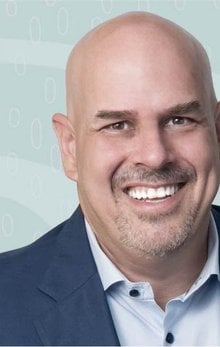
Mike Sicilia
Chief Executive Officer
Morten Wierod
CEO
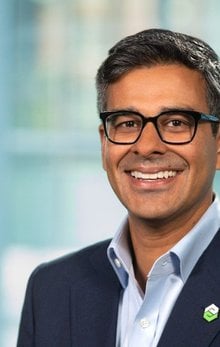
Neil Barua
CEO

Pascal Daloz
CEO
Roland Busch
President and CEO of Siemens AG
Satya Nadella
Chairman and CEO
Steve Murphy
CEO