Top 10: Robotics Companies in Manufacturing
The manufacturing industry is facing an enormous labour shortfall of nearly two million by 2033, according to Deloitte.
Robots could fill these gaps, alongside bringing manufacturers immediate operational improvements and lower error rates.
Between 2014 and 2024, the global factory robot workforce more than doubled according to the International Federation of Robotics.
In 2028, it expects industrial robot installations to pass 700,000.
Manufacturing Digital has ranked 10 of the top robotics companies making an impact in manufacturing.
10. Teradyne
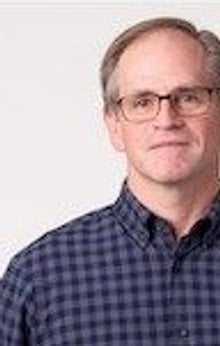
CEO: Greg Smith
Headquarters: Massachusetts, US
Founded: 1960
Teradyne’s AI-powered Robotics Platform can automate manual, repetitive tasks in factories and warehouses.
It owns Universal Robots and Mobile Industrial Robots, top providers of cobots and AMRs.
Many of Teradyne’s robots are designed for low-code or no-code operation, making automation accessible to small and medium enterprises that lack specialised robotic engineers.
The company’s US$32m operations hub in Michigan is scheduled to open in 2026, designed to manufacture Universal Robots cobots locally in the US to meet domestic demand.
9. Palladyne AI
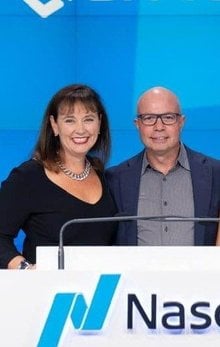
CEO: Ben Wolff
Headquarters: Utah, US
Founded: 1983

Palladyne AI develops software platforms, like Palladyne IQ, that enable robots to observe, learn, reason and act.
This allows machines to perform complex, non-repetitive tasks like painting or inspection without the need for extensive manual programming.
It also lets robots work in unstructured environments where the target may be in a different place each time.
Palladyne’s AI runs directly on the robot rather than in the cloud and its software seamlessly integrates with most commercial robots and UAS.
8. Scott Technology
CEO: Mike Christman
Headquarters: Dunedin, New Zealand
Founded: 1913
Scott Technology designs and builds automated production lines and robotic systems.
Unlike generalist robot manufacturers, Scott is an integrator and solution provider that aims to solve dangerous and repetitive tasks in specific industries.
It uses proprietary X-ray and 3D sensing to allow robots to work on non-uniform materials like meat.
Founded in New Zealand, the company has more than 100 years of engineering history and manufacturing bases in North America, Europe and China.
7. ESTUN
Chairman: Bo Wu
Headquarters: Nanjing, China
Founded: 1993

ESTUN provides end-to-end automation solutions across the entire industrial chain, including core components, robotics and digital tools.
It provides specialised solutions for high-growth sectors such as lithium batteries, photovoltaics and electric vehicles, where traditional robotics often require heavy customisation.
ESTUN develops its own servos, drives and controllers, which allows for better cost control and deeper hardware-software integration.
Through its 2019 acquisition of Carl Cloos Schweißtechnik, the company now provides high-end robotic welding alongside its other solutions.
6. ATS Automation
CEO: Doug Wright
Headquarters: Ontario, Canada
Founded: 1978
ATS designs, builds and services automated manufacturing and assembly systems that looks to bridge the gap between a standalone machine and a fully autonomous factory.
It has a large footprint in highly regulated medical markets, with expertise in clean room robotics.
On his appointment as CEO in January 2026, Doug Wright said: “I’ve been immensely impressed by what I’ve learned thus far about ATS Corporation and its businesses, and I’m looking forward to the opportunity to see firsthand their world-class solutions and meet the global team.”
5. THK Co.
CEO: Takashi Teramachi
Headquarters: Tokyo, Japan
Founded: 1971

THK is a leader in linear motion systems with its primary product the LM Guide, a mechanism that uses rolling contact for movement.
Its caged ball technology reduces noise and extends the life of the machine by retaining lubricant better than traditional systems.
While historically known as a component supplier, the company has moved up the value chain to build complete robotic systems.
These include the Pick and Place Robot alongside the SEED-Mover and SIGNAS autonomous guided vehicles.
4. Yaskawa Electric
President & Representative Director: Masahiro Ogawa
Headquarters: Kitakyushu, Japan
Founded: 1915
Yaskawa Electric coined the term Mechatronics in 1969 and has built its identity on the synchronisation of servos and robots.
Its robot brand, MOTOMAN, is used in arc welding, assembly and semiconductor wafer handling.
Yaskawa also produces its own servo drives and software.
Launched in late 2023 and expanded through 2025, MOTOMAN NEXT is described as the first autonomous adaptive robot.
It uses AI to adapt to changing environments without manual reprogramming.
3. Rockwell Automation
CEO: Blake Moret
Headquarters: Wisconsin, US
Founded: 1903

Rockwell Automation is the world's largest company dedicated exclusively to industrial automation and digital transformation.
It aims to bridge the gap between IT and OT and develops control systems and software that govern robots.
Following its acquisition of Clearpath Robotics, Rockwell also creates its own AMRs.
In late 2025, the company began manufacturing these robots domestically, opening a new OTTO production facility directly within its global headquarters in Milwaukee.
Rockwell’s PLCs and software allow manufacturers to program and control a variety of robotic solutions directly from one unified system.
To further expand its robotics footprint beyond mobile logistics, Rockwell recently made a strategic investment in RightHand Robotics to advance AI-driven robotic piece-picking technologies.
It has also partnered with Chang Robotics to deploy large-scale, integrated robotic systems across North America.
The company heavily leverages its Emulate3D digital twin software, allowing engineers to virtually model, test and optimise systems including industrial robots before any physical hardware is installed on the factory floor.
2. UBTECH Robotics
CEO: Jian Zhou
Headquarters: Shenzhen, China
Founded: 2012
UBTECH designs, manufactures and sells intelligent service and humanoid robots.
The company aims to address labour shortages and rising costs in manufacturing by creating robots that can operate in environments designed for humans.
While many competitors are in the prototype phase, UBTECH claims the world's first mass delivery of industrial humanoids, with orders exceeding CN¥1.4bn (US$200m) in 2025.
Its Walker S2 model is able to autonomously swap its own battery, minimising downtime in 24/7 operations.
UBTECH has announced a roadmap to scale production to 5,000 units in 2026, aiming for 10,000 by 2027.
The company expects that by 2027, its robots will be able to reach 80% of human productivity through iterative real-world learning.
By localising 90% of its supply chain in China, UBTECH is driving down the cost of humanoid robots by 20 to 30% annually.
1. FANUC
CEO: Kenji Yamaguchi
Headquarters: Oshino-mura, Japan
Founded: 1972

FANUC began as a special project team within Fujitsu in 1955 and was established as an independent company in 1972.
Famous for its bright yellow robots, the company also develops CNC systems and servomotors.
It uses lights-out manufacturing for its own operations, where automated robotic systems build other robots 24/7.
FANUC operates on a strict lifetime maintenance policy, guaranteeing repairs on its products for as long as they are used by customers, which significantly lowers the total cost of ownership for manufacturers.
To further minimise factory downtime, the company deploys its Zero Down Time (ZDT) predictive maintenance system.
ZDT collects mechanical and performance data from robots on the factory floor and uses analytics to predict potential failures, allowing for scheduled maintenance rather than unexpected production line stoppages.
Its robotic portfolio is one of the widest in the industry, ranging from high-precision collaborative robots to heavy-duty industrial models capable of lifting more than 2,000 kg.
Through a partnership with NVIDIA, FANUC is embedding advanced AI computing stacks and digital twin simulation into its systems, allowing robots to interpret voice commands, adapt to changing environments in real-time and work safely alongside human operators.
Company portals







Executives
Ben Wolff
Co-Founder, President, CEO and Board Member
Blake Moret
Chairman and Chief Executive Officer

Doug Wright
Chief Executive Officer
Greg Smith
President and CEO
Mike Christman
Chief Executive Officer