Top 10: Manufacturing Supply Chains
Manufacturing supply chains span many stages, from component and packaging suppliers to warehouse teams and delivery drivers.
With disruptions across the world, leaders have focused on keeping their operations resilient. This has meant targeted investment, strategic partnerships and workforce training to strengthen the chain end to end.
Organisations are increasingly adopting AI, data and sustainability solutions to stay competitive.
Manufacturing Digital has ranked 10 of the top global manufacturing supply chains.
10. Nestlé
Employees: ~277,000
Supply Chain Leader: Stephanie Pullings Hart
Founded: 1866

Nestlé manages sourcing, production and distribution for more than 2,000 brands across 187 countries. As a company, it is dedicated to transparency throughout the supply chain, using its Responsible Sourcing programme to map its 14 key ingredients.
Nestlé aims to create value for both shareholders and society, with a dedication to creating a positive impact on the environment and communities around production. It is ensuring supply chain resilience with its regenerative agricultural practices, innovation and water stewardship.
9. Airbus
Employees: 157,000
Supply Chain Leader: Benoît Schultz
Founded: 1970
Airbus prides itself on having environmental and social responsibility embedded throughout the supply chain. In order to build a resilient and responsible chain, it drives high standards throughout its operations, including managing resources safety.
Airbus has more than 8,000 direct and 18,000 indirect suppliers for its parts, components and services. To avoid risk and champion excellence, the company sets high standards of environmental, social and governance that it follows and expects its suppliers to also follow.
8. Boeing
Employees: 170,000
Supply Chain Leader: Charlisha Greene
Founded: 1916
Boeing is focused on anticipating the needs of its customers, planning ahead constantly so it can prepare for shifts rather than react to them.
The aerospace giant uses a total lifecycle management approach, relying on tailored solutions based on mission requirements. Through this, the company experiences greater efficiency, cost savings and reaction time.
Boeing’s management system is consistently using demand planning and forecasting, modelling and simulation, as well as assessment lifecycle management, in order to stay prepared in case of risk.
7. Samsung Electronics
Employees: 260,000+
Supply Chain Leader: Dr Young-Hyun Jun
Founded: 1969
Samsung’s supply chain focus is on sustainability and ethical responsibility. Understanding its reliance on suppliers, it is dedicated to helping its suppliers reach their full potentials.
By establishing strong suppliers and a cohesive ecosystem, Samsung ensures supply chain resilience and sustainability at once. It also has a risk management system in order to minimise human rights issues and environmental impacts. Through supply chain transparency, Samsung champions accountability which engages its stakeholders.
6. Unilever
Employees: 125,00
Supply Chain Leader: Willem Uijen
Founded: 1929
Unilever is turning towards digitalisation and AI to transform its supply chain. As part of this effort, the company is pouring resources into training employees on AI in order to ensure staff are skilled and future-ready.
By combining its strong workforce with technological advancement, Unilever is building resilient and efficient supply chains – and achieving strong business results.
With the help of digital twins and other technology, Unilever is increasing efficiency, productivity and accuracy all at once.
5. PepsiCo
Employees: 319,000
Supply Chain Leader: Karen Jordan
Founded: 1965

PepsiCo adheres to its PepsiCo Positive strategy to continuously transform its business. It injects sustainability across its operations, from innovation to production, marketing to distribution.
The company drives climate action, water stewardship and sustainable packaging across its operations and suppliers, working to reduce its environmental impact across the supply chain.
PepsiCo also promotes regenerative agriculture and restorative or protective practices to ensure its suppliers use responsible farming for all products.
4. P&G
Employees: 109,000
Supply Chain Leader: Luc Reynaert
Founded: 1837
P&G is blending sustainability and innovation, turning towards new technologies and partnerships in order to reduce emissions, from the sourcing of materials to the transportation of products to retailers.
In addition to transforming its own practices, the consumer goods leader is helping consumers reduce their environmental impact and implementing scalable solutions to help the industry through rejuvenation.
Through the Climate Unlock Programme, P&G provides education and resources to suppliers in order to drive real supply chain change.
3. Toyota
Employees: 380,000+
Supply Chain Leader: Chris Nielsen
Founded: 1937
Toyota has a series of strategically-based vehicle distribution hubs which are able to host European-built models as well as those shipped from overseas. These ensure on-time delivery and smooth logistics capabilities.
Its Service Parts Supply Chain Group runs 18 central distribution warehouses across Europe, shipping thousands of components and accessories every day.
As a result, Toyota runs like a well-oiled machine, providing efficiency, speed and reliability to each of its customers.
2. Microsoft
Employees: 228,000
Supply Chain Leader: Carolina Dybeck Happe
Founded: 1975
Since 2023, Microsoft has been integrating AI across its operations, driving innovation and efficiency. It is using AI as a foundation to its digital transformation, from workflow strategies to business infrastructure, as well as final products.
Microsoft recently made a US$7bn investment in new AI data centres in Wisconsin, boosting domestic manufacturing and driving long-term resilience. It also continues to place significant emphasis on education.
Elsewhere, Microsoft is embedding circularity within its supply chain, building self-reliance and sustainability. In reducing material wait-times by lowering the reliance on third-party suppliers, Microsoft is ensuring supply chain strength and efficiency.
1. Apple
Employees: ~164,000
Supply Chain Leader: Sabih Khan
Founded: 1976
Apple’s supply chain strategy has recently focused on expanding its operations across the US, with investments being made across various states. This commitment now totals US$600bn and includes warehouse and facility expansion. Along the way, Apple is seeking to meet sustainability objectives and growing R&D teams.
Apple is dedicated to driving transparency and protecting its people, building a chain that helps employees. The company has a US$50m Supplier Employee Development Fund, investing in programmes that raise awareness surrounding workers’ rights. This is in place to ensure worker safety and security, while providing learning and training opportunities.
With a dedication to innovation, Apple is unlocking new ways to implement sustainability and recycled materials in its products. By the end of 2025, the company is anticipating 100% recycled material in many of its core components.
Company portals







Executives

Benoît Schultz
EVP, Director of Airbus
Carolina Dybeck Happe
EVP & COO
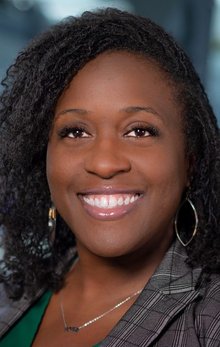
Charlisha Greene
Vice President Supply Chain
Chris Nielsen
Executive Vice President, Chief Supply Chain & Chief Quality Officer
Karen Jordan
SVP, Chief Supply Chain Officer NA- Beverages
Luc Reynaert
Chief Product Supply Officer at Procter & Gamble
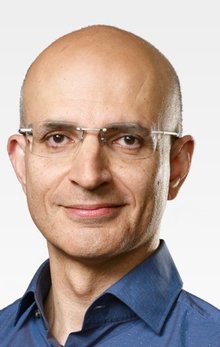
Sabih Khan
Chief Operating Officer

Stephanie Hart
EVP & Chief Operations Officer

Willem Uijen
Chief Supply Chain and Operations Officer
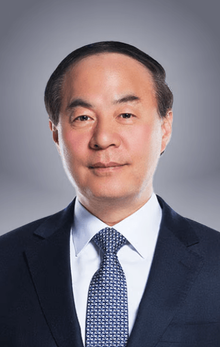
Young Hyun Jun
Vice Chairman, CEO and Head of Device Solutions (DS) Division