
The Manufacturing Impact: UK Gov Action on British Steel
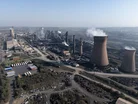
The UK government has intervened to take emergency control of British Steel’s Scunthorpe site after the company’s Chinese owner, Jingye, declined to continue funding its operations.
This decisive action is intended to safeguard the country’s final two working blast furnaces and to shield thousands of jobs from potential redundancy.
Meanwhile, China’s foreign ministry has cautioned the UK against conflating issues of trade with national security. According to AFP, ministry spokesperson Lin Jian has urged Britain to “avoid politicising trade cooperation".

Officials and steelworkers at British Steel’s Scunthorpe site are facing an urgent challenge: securing essential raw materials to keep the blast furnaces running.
Without coking coal – a vital reactant in the steelmaking process – and iron ore, the furnaces could cool to a level from which they cannot be restarted.
James Murray, Exchequer Secretary to the Treasury, has confirmed that these materials are “in the UK” and “nearby” the site. Civil servants are now working at pace to ensure their delivery and maintain furnace operations.
Over the weekend, Parliament passed emergency legislation enabling the government to assume control of the site, though this does not yet amount to formal nationalisation.
Business Secretary Jonathan Reynolds stated that Jingye rejected all offers of assistance, including a proposal to fund the purchase of the raw materials.
“It became clear to me and to the government, no financial offer of any generosity would have been accepted,” he explains.
The Department for Business and Trade is currently coordinating efforts to secure and transport the fuel required to keep the blast furnaces operational. Numerous firms, among them Tata and Rainham Steel, are said to have offered either raw materials or logistical support.
The urgency is driven by the complex nature of blast furnaces. Once shut down, restarting them is both expensive and technically challenging, with a genuine risk of irreversible damage.
The effect on UK/China trade
Some trade union officials have accused Jingye of deliberately sabotaging the plant’s viability.
Roy Rickhuss, General Secretary of the Community Union, told the BBC: “The Chinese owners Jingye unfortunately were seen to be working against the business... they weren’t ordering raw materials… they were actually turning away raw materials and trying to transfer them elsewhere.”
He suggests Jingye’s intention was to shut down the blast furnaces and replace domestic production with imports from China, effectively reducing British Steel to a re-rolling facility.
The Scunthorpe plant is responsible for producing 95% of the steel used on Britain’s railways and remains the UK’s only site capable of manufacturing so-called “virgin steel” – steel created directly from iron ore rather than recycled sources.
Jingye had already begun liquidating stock and declined to purchase further supplies. Ministers maintain that the loss of this facility would leave the UK as the sole G7 nation without primary steelmaking capability, a scenario they warn poses a threat to both economic and national security.
Luke de Pulford, from the Inter-Parliamentary Alliance on China, is more forthright: “It is an explicit strategy of the Chinese Communist Party to undermine the industrial base of foreign countries.”
stockpiles & security concerns
Network Rail, the UK’s rail infrastructure authority, has been bracing for this scenario for the past year.
With over 80% of Britain’s rail tracks produced in Scunthorpe, the organisation established a nationwide stockpile of rails at depots to cushion against disruption. That reserve could maintain operations for up to 12 months should the supply from the blast furnaces cease.
A spokesperson states: “We do not expect the announcement to have any impact on the continued delivery of reliable rail services for passengers and freight users.”
Nonetheless, the urgency to keep the furnaces running remains high. Jingye claims the site is losing US$700,000 daily, blaming “hugely challenging circumstances” including US President Donald Trump’s 25% tariffs on imported steel and the financial burden of transitioning to low-carbon production.
The firm also points to UK energy costs, which reportedly leave steel producers paying as much as 50% more than their counterparts in France and Germany.
Proposals to swap the blast furnaces for cleaner electric arc furnaces – which use scrap metal instead of iron ore – collapsed after Jingye turned down government incentives. Installing these would take years, and Scunthorpe’s output is vital for major infrastructure such as the Hinkley Point C nuclear project.
The government has not dismissed the possibility of full nationalisation, with Reynolds confirming a long-term strategy will be unveiled in the coming weeks.
Explore the latest edition of Manufacturing Digital and be part of the conversation at our global conference series, Manufacturing LIVE.
Discover all our upcoming events and secure your tickets today.
Manufacturing Digital is a BizClik brand.