
The Cataclysmic Impact if British Steel Closes
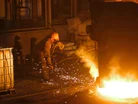
The threatened closure of British Steel has cast a long shadow over the UK's waning industrial sector - raising concerns for both the wider economy and the thousands of workers it employs.
Steelmaking has been in decline in the UK since the 1960s, as the industry has struggled against global competition, growing energy costs and wavering government support.
Its decline speaks volumes about the state of UK manufacturing.
For this industry to survive and thrive in the future, significant intervention and strategic planning is essential.
The outcome if British Steel closes can be extrapolated across the wider industry unless action is taken.

Impact on the workforce & local economies
One immediate consequence of British Steel’s closure would be job losses on an enormous scale.
The manufacturer directly employs around 4,000 workers, with its supply chain supporting many thousands more.
From transportation firms to local businesses dependent on steelworkers’ spending, there will be a severe economic shock, felt particularly in industrial areas like Scunthorpe and Teesside where employment opportunities are limited.
The social impact will be highly damaging.
Communities built around steel have already seen decades of decline and further closures could exacerbate issues such as unemployment, mental health struggles and economic stagnation.
This will not only mean the loss of income for many but also the loss of generational expertise.
Steelmaking is a highly specialised industry requiring skilled labour and knowledge and once jobs disappear, these skills can disappear within the sector forever.
British Steel's plant in Scunthorpe is the only place left in the UK that still makes steel from iron ore, after Tata Steel closed its blast furnaces at Port Talbot in South Wales.
The closure of British Steel will subsequently accelerate the UK’s deindustrialisation and deepen regional inequalities, reinforcing the deep economic divide between the north and south.
While the government may step in with emergency support, this short - term relief will not be sufficient to addressing the root cause of the problem.
What this reveals about steelmaking in the UK
British Steel's possible closure is a reflection of the broader struggles plaguing UK steelmaking.
One of the biggest struggles, high energy costs, which will remain a huge barrier to competitiveness.
While other countries provide subsidies or cap industrial electricity prices, UK steel producers pay some of the highest rates in Europe.
Without meaningful government intervention, the industry will continue to be squeezed by cheaper imports from China, India and Turkey.
Environmental regulations while absolutely vital also pose difficulties.
Currently the push for greener steel production is concentrated on advancing technologies like electric arc furnaces and hydrogen-based methods, which demand significant investment and time to be set up.
British Steel, like much of the UK industry, lacks the financial backing to transition at the pace required.
Government grants have been limited, leaving steelmakers caught between rising sustainability expectations and dwindling resources to meet them.
In 2024, there were already growing calls for greater government intervention to support British Steel's plants.
“Steel making is vital for the regional and national economy. British Steel’s site in Scunthorpe is now the only place in the UK that can make virgin steel and must be protected," said Councillor Rob Waltham MBE, the leader of North Lincolnshire Council on the council's website.
“North Lincolnshire Council continues to work with Jingye, the owners of British Steel, following high-level meetings at their headquarters in China.
"We are continuing to work with them to develop surplus land at the steelworks to harness new technology and create green jobs.
"Master planning is underway to attract high-paid and high-skilled jobs to the area – using new technologies to create green industry.
"But the steel works need to be part of the picture moving forward."
Brexit has also further complicated matters. Export difficulties and increased red tape have made it more difficult for British firms to compete in European markets.
When the UK was in the EU, its steel industry had frictionless access to EU buyers, but now supply chain challenges and additional costs have eroded its attractiveness.
Lacking a clear industrial strategy, British steelmakers find themselves at a major disadvantage on the global stage.
Translating into closures and ever-decreasing production output.
According to ISSB In 2024, crude steel output in the UK fell by 29% from a year earlier, totalling 4.0Mt.
In December of last year production was even lower at 160,000t, a drop of 63%.
Possible pathways to recovery
While it may be too late to halt the closure of British steel, action can definitely be taken on a wider question: what can be done to set UK steel up to survive, recover and thrive?
First and foremost the industry needs energy cost reform.
By subsidising industrial electricity prices or investing in renewable energy infrastructure tailored to steelmaking, the UK government can help level the playing field with international competitors.
Looking to the future, investment in green steel is also crucial.
The UK has the potential to be a leader in low-carbon steelmaking, but without financial support, manufacturers will struggle to make the transition.
Support has been set up, like the UK Department of Energy's Hydrogen Strategy - designed to enable UK industry to meet a target 10GW of low carbon hydrogen production capacity by 2030.
But this initiative needs to be accompanied by more direct grants, tax incentives and strategic funding partnership.
Trade policy must also be re-evaluated.
If the UK wants to protect its steel industry, safeguards are a possible route against unfairly subsidised foreign imports - mirroring protectionist action taken by the EU and US.
Tariffs and quotas could provide breathing space for domestic producers, enabling them to invest in innovation and efficiency without being undercut by artificially cheap imports.
In order to guide and ensure the effectiveness of all these actions, a long-term industrial strategy must also be developed for UK steelmaking.
The UK's manufacturing sector has experienced years of uncertainty, with government policies and decision-making widely perceived as inconsistent policies and reactive.
A clear, well-funded plan that includes commitments to infrastructure, skills training, research and development and would create the stability necessary for the industry to recover and thrive.
This plan starts with recognising what the closure of British steels should signal: a warning sign for the wider UK economy.
The UK could find itself dependent on foreign steel.
With the right policies, investment and commitment, the UK can avoid becoming dependent on foreign steel - rebuilding its industry to become a leader in sustainable steelmaking.
Whether that happens will depend on political will and the recognition that steel remains a vital foundation of the nation’s economy.
Explore the latest edition of Manufacturing Digital and be part of the conversation at our global conference series, Manufacturing LIVE.
Sign up to our weekly newsletter here.
Discover all our upcoming events and secure your tickets today.
Manufacturing Digital is a BizClik brand.