
EVs in Africa: Inside Morocco’s Gigafactory
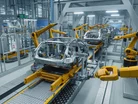
Africa’s first EV battery gigafactory is nearing full production, as the African Development Bank Group (AfDB) approves a further US$113.7m investment.
Morocco will host the continent’s first EV battery facility, producing 10GWh of battery cells, anodes and cathodes.
More than 600 jobs are expected to be generated from the Moroccan plant and continue Africa’s transition to clean energy.
Africa’s first EV battery gigafactory
In May 2023, Chinese battery manufacturer Gotion High-Tech signed a memorandum of understanding with the Moroccan government to produce EV batteries in Africa.
Together, the two companies formed Gotion Power Morocco and accelerated lithium-ion battery technology production and energy storage systems in Africa.
By the end of 2024, an initial US$1.3bn investment was agreed and construction in the Rabat-Salé-Kénitra Free Trade Zone began in May 2025.
According to the International Trade Council, plans could scale up over the coming years and reach a total investment of US$6.4bn.
A facility of this scale, powered primarily by renewable energy, strengthens the foundations for the large-scale integration of solar and wind power, which our grids increasingly depend on.
Despite starting at 10GWh of battery cells and batteries for EVs per year, Gotion Power Morocco has set plans to increase production to 100GWh.
The facility will span 1.56 million m² and is expected to reach 6.35 million m² after its full construction.
Volkswagen Group holds a 33% stake in Gotion, which could strengthen the Moroccan supply chain to European automotive manufacturers.
Kevin Kariuki, the Bank Group’s Vice President for Power, Energy, Climate and Green Growth, says: “Battery storage is the missing link in Africa's clean energy transition. A facility of this scale, powered primarily by renewable energy, strengthens the foundations for the large-scale integration of solar and wind power, which our grids increasingly depend on.”
Why is it in Morocco?
The African nation is just 14km from Spain and has traded with European nations for decades through the Tanger Med Port.
Sitting in Northern Morocco on the Strait of Gibraltar, Tanger Med Port is Africa’s largest container port, handling 10,241,392 containers in 2024, according to Tanger Med Port Authority.
It is the second largest trade gateway globally and boasts connectivity to 180 ports and 70 countries.
Alongside its favourable location, Morocco also has trade agreements with key manufacturing countries across the world.
It is the only African nation that holds a comprehensive Free Trade Agreement with the US, a deal that has been running since 2004.
Morocco has also built a strong trade relationship with the European Union since the EU-Morocco Association Agreement was signed in 1996.
In the AfDB’s 2025 Africa Industrialisation Index, Morocco was top of the rankings, dethroning South Africa, which held pole position for 15 years.

EV manufacturing in Africa
EV manufacturing in Africa has seen heavy investment in recent years, with Gotion Power Morocco nearing full battery production and Nigeria’s agreement with South Korea in February 2026.
Nigeria signed a deal with South Korea’s Asian Economic Development Committee to build Africa’s first EV manufacturing facility.
It will oversee every stage of EV production, including assembly, manufacturing and supportive infrastructure.
In February 2024, the South African Minister of Finance, Enoch Godongwana, announced plans to improve EV production in the nation.
This initiative came into action in March 2026, offering EV producers a 150% tax deduction to increase manufacturing.
Further tax incentives and Morocco’s plant entering full production could bring a significant rise in localised EV manufacturing across Africa.
Company portals
Executives

Kevin Kariuki
Vice President for Power, Energy, Climate and Green Growth