
Electric mobility is reshaping how vehicles are designed, built and supported at scale.
A small group of manufacturers are setting the pace, coupling advanced product engineering with world-class operations to deliver electric cars, SUVs and trucks while building the batteries, software and charging networks that make mass adoption viable.
For manufacturing leaders, these firms are case studies in industrial execution. They are retooling plants for high-mix EV lines, localising battery supply chains, applying digital twins and AI to cut defects and hardwiring circularity into materials and end-of-life recovery.
Here, Manufacturing Digital takes a look at the world's top 10 EV manufacturers.
10. Linamar Corporation
Revenue: US$5.55bn (2024)
CEO: Jim Jarrell
Founded: 1966

Linamar Corporation ranks among the leading EV manufacturers, pairing advanced engineering with a global footprint built for electrified propulsion.
Expertise in light metal casting, driveline and eAxle systems and lightweight structural components helps OEMs accelerate battery electric and fuel cell programmes.
AI-led quality control, robotics and data-driven maintenance lift throughput and reduce defects, while sustainable materials and closed-loop recycling cut cost and carbon.
With integrated facilities near customer hubs, Linamar scales efficiently and localises critical content, positioning the business as a pivotal partner in the industry’s electric future.
9. Rivian
Sales: US$5.1bn
CEO: RJ Scaringe
Founded: 2009
Rivian positions itself as a decarbonisation catalyst, blending adventurous design with rigorous sustainability.
It manufactures electric trucks and SUVs with animal-free interiors, battery packs engineered for second-life use and transparent impact reporting.
Having signed the Climate Pledge to reach net zero by 2040, Rivian is scaling production with a $1bn Georgia plant set to build R2 and R3 from 2028 and to supply Amazon with electric delivery vans. A culture of supplier scrutiny and circular design aims to shift consumer expectations and reset industry practice.
8. SAIC
Revenue: US$7.4bn
CEO: Wang Xiaoqiu
Founded: 1969
SAIC Motor sits among the leading EV makers, especially when it comes to scale and disciplined execution. In 2024, it sold 1.37 million new energy vehicles, up 30% year on year, within 4.01 million wholesale and 4.64 million retail sales.
Self-owned brands delivered 2.74 million units, approaching 60% of the total, underscoring the strength of its in-house portfolio and manufacturing cadence.
SAIC's global reach now represents a growth engine. Overseas sales reached 1.08 million, supported by 15 vehicle manufacturing bases across China and additional plants abroad.
A multi-brand line-up spanning MG, Roewe, Wuling, Maxus, Rising Auto and IM, together with integrated components, finance and mobility services, underpins rapid electrification and sustained operating leverage.
7. NIO
Revenue: US$9.54bn
CEO: William Li
Founded: 2014

NIO stands among leading EV manufacturers, anchored by its Hefei plant where more than 10,000 employees build high-performance models such as ES6 and ES8.
Smart, digitised production across sites including Factory Two blends mass manufacture with meaningful customisation while holding quality high and the carbon footprint low.
Guided by its 'Blue Sky Coming' philosophy, NIO couples technology innovation with distinctive design and user services.
With R&D and production centres in 14 countries, sales and service in seven countries and an owner community across more than 350 cities, the company continues to scale electrification with disciplined industrial execution.
6. Tesla
Revenue: US$97.7bn
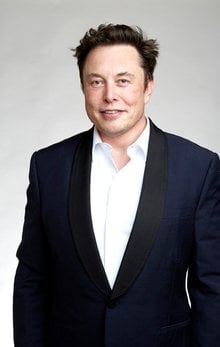
CEO: Elon Musk
Founded: 2003
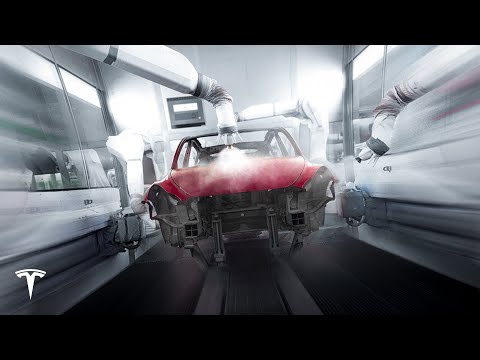
Tesla's spot in the top 10 is largely thanks to the Model 3’s scale and appeal.
Led by CEO Elon Musk, the brand pairs performance with safety, holding 5-star Euro NCAP ratings across key models. Real-world usability is a differentiator: 374-mile WLTP range, a 15-minute top-up adding 172 miles and access to 45,000 Superchargers.
Industrial execution remains robust, too. In Q3 2025 Tesla built 447,450 vehicles and delivered 497,099.
With factories on three continents and annual capacity above one million, Tesla continues to set a benchmark for EV manufacturing at scale.
5. BYD
Revenue: US$109.2bn
CEO: Wang Chuanfu
Founded: 1995
BYD is the world’s leading new electric vehicle maker, built on deep vertical integration that drives efficiency, scalability and cost control from batteries to final assembly.
Headquartered in Shenzhen and led by CEO Wang Chuanfu, the company reported $109.1bn revenue and now operates in more than 300 cities across 50 countries. Its line-up spans hatchbacks, luxury saloons and commercial vehicles, giving breadth at scale for global programmes.
Battery expertise is the core advantage. Launched in 2020, the Blade Battery uses LFP chemistry for safety and durability, supported by two decades of in-house innovation.
With more than three million EVs on the road and leadership in China’s EV sales, BYD couples product range with disciplined manufacturing to set the pace in electrification.
4. Hyundai Motors
Revenue: US$123.9bn
CEO: José Muñoz
Founded: 1967

With Chinese firms setting the pace when it comes to innovation, Hyundai Motor Group is accelerating its EV shift. Strong demand for the IONIQ line has lifted its BEV share to 3.96%, just 0.01% behind its nearest rival, signalling competitive momentum in core markets.
Ulsan, the world’s largest integrated auto plant, is now Hyundai’s EV hub, building Kona Electric and IONIQ models. A dedicated EV facility there completes this year and targets 200,000 units annually from 2026.
Underpinned by multi-billion investment, Hyundai is pushing battery energy density higher while driving down pack and system costs, positioning its manufacturing base to compete globally at scale.
3. BMW Group
Revenue: US$149.9bn
CEO: Oliver Zipse
Founded: 1916
BMW sits among leading EV makers on scale, technology and a clear path to transition.
A strong EV pipeline, led by the iX3 and the forthcoming Neue Klasse, leverages a global network of 30 plants and sales in 140 countries to industrialise next-gen platforms at pace.
Partnership with Toyota is accelerating third-generation fuel cells, with the first mass-produced FCEV targeted for 2028. Momentum is visible in doubled all-electric sales in Q2 2023 and wider BMW and Mini line-ups.
With robust aftersales, digital services and measurable sustainability goals embedded in operations and supply chains, BMW couples product innovation with disciplined manufacturing to sustain long-term leadership.
2. General Motors
Revenue: US$178.1bn
CEO: Mary Barra
Founded: 1908

General Motors remains among the world’s leading EV makers and is the US' number-two seller. In August 2025, it set a monthly record with more than 21,000 EVs across Chevrolet, Cadillac and GMC, led by Equinox EV, Cadillac Lyriq and GMC Sierra EV.
Near-term volatility is expected as federal tax credits roll off, yet GM plans to keep building share through a broad model line-up, sharp pricing and wider access to fast charging via partnerships and the expanding NACS ecosystem.
Management points to improving Ultium platform yields, stronger cell supply and maturing software to lift throughput while protecting margins.
The focus at GM is disciplined output matched to demand, tighter cost control across plants and suppliers and higher-quality launches in core segments. With portfolio depth from entry crossover to premium SUV and pickup, the organisation is positioned for long-term, profitable electrification in North America and select global markets.
1. Volkswagen Group
Revenue: US$324.66bn
CEO: Oliver Blume
Founded: 1937

Volkswagen Group strengthened its position among leading EV makers in H1 2025, delivering 465,500 battery-electric vehicles, up about 47% year on year.
Battery-electric models represented 11% of group sales, with Europe the clear engine of growth and a market share near 28%. Total deliveries reached 4.41 million, up 1.3%, led by Volkswagen ID.4/ID.5 and ID.3 alongside Audi Q4 e-tron and Škoda Enyaq.
From 2026, the Electric Urban Car Family targets mass adoption on an updated MEB+ platform with unified cell technology across global programmes. The focus is improving affordability, usable range and charging performance while scaling production in core markets.
Volkswagen is positioning its mainstream brands to capture incremental demand in compact segments, supported by a more efficient supply chain and shared components.
The strategy signals a steady shift of the group’s volume portfolio to battery-electric, with execution hinging on tighter cost discipline and supply resilience.
Company portals






Executives
Elon Musk
Tesla CEO

Jim Jarrell
CEO

José Muñoz
CEO

Mary Barra
CEO
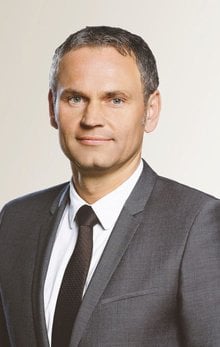
Oliver Blume
CEO
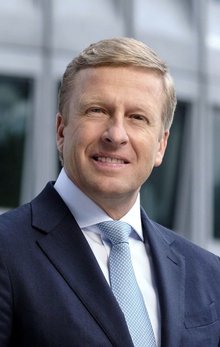
Oliver Zipse
CEO

RJ Scaringe
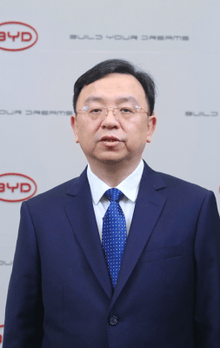
Wang Chuanfu
CEO

William Li
CEO