
Creating a Concrete Path to Decarbonising Indian Textiles
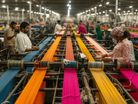
A report by the Apparel Impact Institute (Aii) and Development Finance International Inc. (DFI), supported by HSBC, has revealed that US$2.5bn is currently available to fund sustainable practices in India’s textile and apparel sector.
The Landscape and Opportunities to Finance the Decarbonisation of India’s Apparel Manufacturing report, published in late 2024, highlights the urgent need for financial mobilisation to reduce emissions in one of the world’s largest apparel manufacturing regions.
The fashion industry, responsible for significant carbon emissions, must reduce its footprint by 50% by 2030 to align with the Fashion Industry Charter for Climate Action under the United Nations Climate Change Secretariat.
India alone requires US$6.5bn to meet this target, but encouragingly, at least US$1.3bn in financing is readily available through credit lines and revolving funds.
An additional US$1.2bn is being developed through International Financing Institutions, government initiatives and NGOs.
Key interventions needed across manufacturing
The report identifies six critical interventions to facilitate India's transition towards a greener textile industry.
Chief among them is the need to rapidly mobilise capital and foster collaboration across the entire value chain.
Investments in renewable energy sources and energy-efficient technologies will play a crucial role in reducing emissions.
India, with its well-established energy efficiency service market, is well-positioned to scale up decarbonisation efforts swiftly.
Blended finance—a combination of public and private capital—can lower investment risks and make sustainability transitions more viable for manufacturers.
However, challenges remain, including risk constraints, unfavourable financing conditions and limited infrastructure.
Addressing these barriers will be essential to ensuring India meets its emissions reduction targets.
“This report goes beyond exploring renewable energy and energy efficiency in India’s apparel sector – it provides a clear path forward and offers practical guidance to close the climate finance gap and ensure proven decarbonisation solutions receive the critical funding they need,” said Lewis Perkins, President of Apparel Impact Institute.
“Aii plays a crucial role in connecting our industry’s stakeholders – the report’s findings on India’s capital potential are encouraging as we continue our work in helping brands, manufacturers and international finance institutions accelerate the uptake of decarbonisation efforts across global manufacturing hubs.”
The broader manufacturing impact
The decarbonisation of India’s textile sector will have far-reaching implications for the manufacturing industry as a whole.
Given that textiles account for 13% of India’s total industrial output, the push for sustainability will likely set a precedent for other industries to follow.
Increased investment in green technologies and energy efficiency measures can catalyse similar transitions in sectors such as chemicals, steel and automotive manufacturing.
Moreover, financial institutions and policymakers can leverage insights from this sector-specific transition to design broader funding mechanisms that support industrial sustainability.

The integration of renewable energy into textile production may encourage wider adoption of such practices in other energy-intensive industries, accelerating India’s progress towards its Nationally Determined Contributions (NDCs) under the Paris Agreement.
After COP29, the findings of the Aii report continue to highlight the urgent need for stakeholders to act.
With financial resources already available and additional capital on the horizon, the opportunity to decarbonise Indian textiles is within reach.
Scaling up these efforts will not only help meet climate goals but also reshape manufacturing towards a more sustainable future.
“As India’s apparel sector plays a pivotal role in global supply chains, decarbonising its operations is not only essential for meeting climate goals but also for securing the future competitiveness of the industry,” says Emilio Bunge, President and CEO at Development Finance International Inc.
“We are pleased to have worked with Aii on this report to outline how stakeholders can work together to accelerate the transition to a low-carbon apparel industry.”
Explore the latest edition of Manufacturing Digital and be part of the conversation at our global conference series, Manufacturing LIVE.
Sign up to our weekly newsletter here.
Discover all our upcoming events and secure your tickets today.
Manufacturing Digital is a BizClik brand.