Trump's tariffs, Market Volatility and Manufacturing

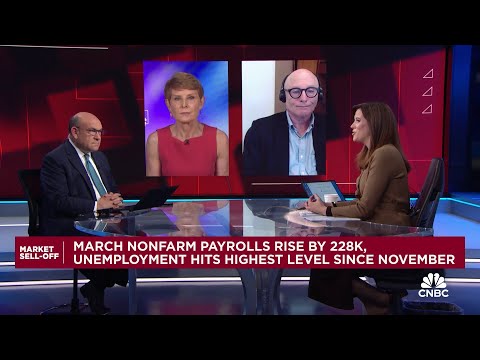
Global financial markets are reeling from a sharp sell-off, triggered by sweeping new import tariffs from US President Donald Trump.
The S&P 500 is nearing bear market territory, oil prices are tumbling and major stock indexes across Asia and Europe have plummeted.
Beneath the volatility is a more serious concern – the disruption of global supply chains and the mounting pressure on industries built on cross-border manufacturing and trade.
While headlines spotlight market drops and political manoeuvring, it is supply chains that sit at the centre of this crisis.
Tariffs hit key Asian exporters
President Trump's move to introduce sweeping new tariffs has sent shockwaves through the global economy.
Nations like Vietnam and Bangladesh, now vital links in US supply chains, are under pressure. These countries manufacture everything from garments and sportswear to electronics and home goods for American brands.
Vietnam and Bangladesh, two of the fastest-growing export hubs, now face tariffs of 46% and 37% respectively. Both are essential to companies such as Nike and Lululemon. According to the Bangladesh Garment Manufacturers and Exporters Association, Bangladesh alone exports clothing worth US$8.4bn to the US each year.
Qian Wang, Asia Pacific Chief Economist at Vanguard, says: “Asia is bearing the brunt of the US tariff hike. This is negative to the global and Asia economy, especially those small open economies, both in the short term and long term.”
Asian markets slump amid recession fears
Asian markets responded with sharp declines; Hong Kong's Hang Seng index dropped 12.5%, Taiwan’s index slid 9.7% and South Korea’s Kospi fell 5.6%, while Japan’s Nikkei 225 closed 7.8% lower.
These losses reflect not only anxiety over a looming US recession but also the direct blow to regional manufacturers embedded in global production chains.
US tariffs shake Europe’s industrial core
European stocks have also suffered, especially in industries heavily dependent on international supply networks.
Luxury brands and banks led the decline, with shares in LVMH, Kering and Pandora falling between 6% and 14%. Burberry, highly reliant on Asian manufacturing, dropped more than 9%. These companies count on production bases in Asia and strong demand from US buyers.
Luxury houses are unlikely to shift production despite rising costs, but higher tariffs could weaken demand, squeeze margins and change sales forecasts.
Freight companies were also hit hard. Danish shipping giant AP Moller Maersk, a major player in global logistics, fell around 9%. As goods become pricier to transport across borders, shipping volumes could shrink, affecting firms that rely on strong trade flows.
Defence firms steady as supply chain concerns mount
While most sectors took a hit, some offered relative stability. Defence and utility stocks held firm, attracting investors seeking safer ground.
Shares in BAE Systems in the UK and Germany’s Rheinmetall edged up, despite the wider sell-off. European defence companies, buoyed by increased military budgets, are somewhat shielded from trade disruptions as most procurement is domestic.
Still, the sector wasn’t immune. France’s Thales, Sweden’s Saab and Italy’s Leonardo all saw losses between 2% and 4%, showing investor caution amid wider market turmoil.
Ben Heelan at Bank of America downplays concerns over long-term effects in this sector: "The tariff impact on European defence stocks was likely to be 'pretty small'.
“We now have five to 10 years runway of growth as we move toward 3% of GDP.”
Meanwhile, US oil prices have fallen below US$60 a barrel, the lowest in four years. While cheaper oil may appear positive for fuel-intensive industries, it also reflects weakening economic momentum.
If prices stay low, US energy companies may be forced to cut operations, reduce spending and lay off workers – adding further strain to the global supply chain.
Widespread concern is growing that this trade dispute, if drawn out, could hamper economic growth across regions. Goldman Sachs has raised the risk of a US recession to 45%, with JPMorgan placing it at 60%.
As markets continue to fall, governments have limited time to act. Tariffs are already in place and may soon provoke retaliation from trade partners, setting off a cycle of protectionism that threatens the core of global commerce.
Explore the latest edition of Manufacturing Digital and be part of the conversation at our global conference series, Manufacturing LIVE.
Discover all our upcoming events and secure your tickets today.
Manufacturing Digital is a BizClik brand