Toyota & JLR say 'Made in EU' Threatens Investment and Jobs
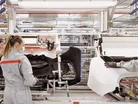
JLR and Japan’s Toyota have warned that “Made in Europe”, and the European Commission's proposed Industrial Accelerator Act (IAA), threaten both manufacturing and jobs.
JLR, owned by India’s Tata Motors, said that it could make cars produced in Europe even more expensive than Chinese vehicles.
The IAA could potentially impact billions of euros in annual subsidies and public procurement spending, according to the economic thinktank Bruegel.
This comes after the UK’s largest trade association, the SMMT, called on the EU to amend its proposed IAA to keep the UK automotive sector as a "Made in Europe" partner.
The European car industry is split over “Made in the Europe” manufacturing targets, with Volkswagen, Stellantis and Renault recently joining forces to argue in favour of the plan.
Investment and jobs
Speaking at an automotive event in Europe, Yoshihiro Nakata, President & CEO of Toyota Motor Europe expressed Toyota’s fears that excluding key international partners in the automotive sector could undermine future investment, employment and technology transfer, while reducing the regional scale considered necessary to effectively compete globally.
He said: “We believe that selected critical partners, for instance the UK, Japan and Turkiye, should be recognised in the same way as ‘Made in EU’ under the IAA.”
He added: “Europe’s resilience is built not only on local production, but also on working with partners to create regional scale and shared success. By working together we are all stronger.”
JLR also made comments about the IAA. According to the Financial Times, it said: “The IAA layers incremental costs on to manufacturers and would make European cars more expensive.
“It does nothing to address the underlying structural differences that make European manufacturing less competitive than China.”
Additionally, Nissan could close its Sunderland plant if the UK were to be excluded from the "Made in Europe" rules, according to an earlier report in The Guardian.

Automakers split over IAA
The auto industry is split over the IAA, with Volkswagen, Stellantis and Renault recently making a joint statement to push for “Made in Europe” manufacturing targets.
In a joint statement, the companies which combined represent more than 60% of EU vehicle production, said: “‘Made in Europe’ must support competitiveness, attract investment and recognise the cost gap we face versus global competitors.”
China is considered the largest global competitor to European carmakers. More than a million new vehicles were imported into the EU from China in 2025, according to statistics published by Acea.
The three companies continued in a statement: “If we get this right, Europe can remain a global automotive powerhouse.
"We are calling on our EU institutions to create a framework aimed at achieving that 70% of the vehicles, carmakers sell in Europe, include this content in the EU’s 27 member states."
What is the IAA?
The IAA, proposed by the European Commission, is a framework designed to accelerate industrial investment and decarbonisation in strategic sectors, including the automotive industry. It also includes steel, cement and aluminium.
It rests on three main pillars: faster permitting for industrial projects, creating lead markets for clean industrial projects and strengthening investment in strategic sectors.
Part of the framework includes a "Made in Europe" initiative in public procurement that could see the UK and other countries excluded from incentives offered to EU based manufacturers.
Bruegel says the IAA is controversial because of disagreement over the degree to which the EU should introduce protectionist measures to shield domestic industry from foreign competition.
Under the proposed legislation, in public procurement and support schemes, vehicles would have to be assembled in the EU and minimum 70% of the components, excluding the battery, would have to be of EU-origin to qualify.
SMMT calls for changes
The UK’s largest auto trade association weighed in on the matter earlier this year.
In April, the SMMT argued that the "Made in Europe" regulation, as is currently drafted, would exclude the UK from incentives offered to EU manufacturers.
Mike Hawes, SMMT Chief Executive, said: “If the IAA proceeds as drafted, it threatens to reverse progress, undermining the Trade and Cooperation Agreement all sides worked so hard to deliver and jeopardise our respective competitiveness, damaging to jobs, investment and innovation.”





Executives
Mike Hawes
Chief Executive Officer

Yoshihiro Nakata
CEO, Europe Region, Toyota Motor Corporation