ABB: Electric Motors Hold Key to Industrial Sustainability

As industries grapple with mounting pressure to reduce carbon emissions, the hidden workhorses of manufacturing are emerging as unexpected champions in the sustainability battle.
Electric motors, accounting for 45% of global electricity consumption, represent one of the most significant opportunities for energy savings – yet many businesses struggle to unlock their full potential.
Daniel Eberli, Global Business Line Manager for IEC Low Voltage Motors at ABB, believes the tide is turning. Drawing on insights from ABB's survey of more than 2,400 industrial decision-makers across 13 countries, he reveals a manufacturing sector poised for transformation, but still facing critical barriers that must be addressed.
The silent energy consumers
Electric motors power everything from conveyor belts and water pumps to compressors and fans across manufacturing operations worldwide.
Daniel explains that these devices are everywhere, often operating out of sight, quietly keeping production lines moving and facilities running. Yet their collective impact is staggering.
"They are the hidden workhorses of the modern world, accounting for 45% of global electricity consumption," Daniel notes.
"These devices power everything from conveyor belts and water pumps to compressors and fans across the manufacturing industry and beyond. Motors are everywhere, often out of sight, quietly keeping the world in motion."
The challenge is that many of these motors remain outdated and energy inefficient, especially in markets still running on legacy systems.
As the global population races towards 9.7 billion by 2050 and energy demand surges, the urgency for industries to address this inefficiency has never been greater.
A growing commitment to change
According to ABB's research, momentum is building across the industrial sector.
Daniel reveals that a vast majority of businesses (94%) say they are already investing in energy efficiency or planning to do so in the near future. Perhaps more tellingly, 91% report that energy efficiency now plays a critical role in how they select electric motors.
"We are seeing a growing alignment between environmental responsibility and financial performance – they’re two sides of the same coin," Daniel explains.
This shift in mindset represents a fundamental change in how businesses approach their operations. While policymakers set long-term targets like Net Zero by 2050 under the European Climate Law, end-user businesses are feeling pressure from a growing base of conscientious customers who demand sustainable practices now, rather than waiting for decades of climate negotiations to materialise.
Daniel adds that at the core of any credible sustainability effort is energy efficiency: wherever power is being used, the goal should be to use less of it. Nowhere is this more evident than in the case of electric motors.
Breaking down barriers
However, intent doesn't always translate seamlessly into execution.
Daniel acknowledges that, while the motivation is there, many businesses still face practical and financial hurdles that complicate implementation. Chief among them is the upfront cost of high-efficiency equipment.
Even with payback in as little as two to three years, 37% of decision‑makers still see the initial cost of energy-efficient equipment as a roadblock. This is especially true for larger businesses that require full-fleet upgrades or complex system retrofits.
Daniel notes that also high on the list of barriers to energy efficiency initiatives are concerns over system compatibility and the potential downtime that upgrades might cause to ongoing operations.
Beyond the price tag
To overcome these hurdles, Daniel believes a shift in perspective is vital.
“We encourage businesses to move away from looking just at the purchase price, instead prioritising total cost of ownership (TCO),” Daniel says. “This considers the full lifecycle of energy, maintenance, performance, and uptime.”
ABB’s survey found that 41% of respondents now prioritise TCO over short-term cost metrics when buying motors.
Daniel explains that there's good reason for this approach: over a motor's lifetime, operating energy takes up the lion's share of its total cost compared to the initial purchase price and maintenance expenses.
"With this in mind, it's easier to see why energy efficiency pays off faster than manufacturers might expect," he says.
But to fully realise these benefits, industrial businesses need technologies that make energy efficiency achievable in practice – not just in theory.
Efficiency in action
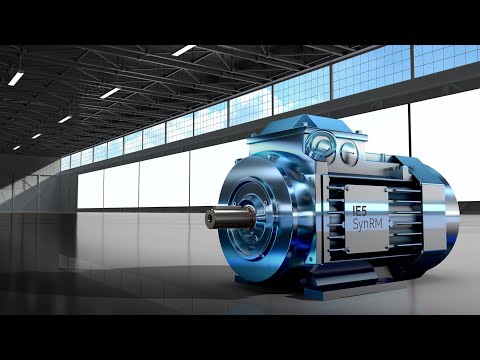
ABB is among those responding to the demand. Its synchronous reluctance (SynRM) motors offer manufacturers a way to embed high-efficiency performance into new and existing fleets.
Daniel continues: “Delivering Ultra‑Premium IE5 efficiency and up to 40% lower energy losses compared to IE3 induction motors, SynRM technology cuts emissions and energy usage without the need to rely on permanent magnets or rare earth metals.
“By reducing energy consumption, maintenance needs and downtime, SynRM motors support a TCO strategy that delivers long-term value well beyond the initial investment.”
The approach is already delivering results. A strong example of the scale and impact of ABB’s IE5 SynRM technology can be seen at Aurubis, Europe’s largest copper producer. At its Pirdop, Bulgaria plant, the company replaced inefficient induction motors with IE4 Process Performance motors and IE5 SynRM models – many of them controlled by ABB’s ACS880 drives. These upgrades were implemented across critical pumps, fans and conveyors.
The result of the site-wide upgrade was immediate: annual energy savings of 25 GWh – equivalent to the electricity used by around 6,250 average European households in one year – and 12,000 tonnes of CO₂ avoided. In addition to achieving a three-and-a-half-year payback, the upgraded motors have reduced heat and vibration to extend bearing life and uptime.
The Aurubis plant is also benefitting by streamlining its motor sourcing activities. Daniel says it has been able to “transition from 42 different suppliers to a single partner, enabling much simpler spares inventory operations and considerably reduced storage and management costs”.
Accelerating progress
Daniel acknowledges that innovation and new technologies have set the stage for broader adoption of energy efficiency efforts. But just as important, he says, is coordinated action across governments, manufacturers and industry at large.
This should be backed by targeted educational campaigns and smart incentive programmes to help bridge upfront costs, particularly in developing regions.
Supportive regulatory frameworks are also essential – not just to enforce minimum standards, but to steer investment toward future-ready technologies and the accessibility of these tools.
"Ultimately, energy efficiency is not a future goal; it's a present imperative," Daniel insists.
“With the manufacturing sector responsible for a significant share of global energy use, even small improvements in motor performance can translate into gigawatts of saved electricity annually and millions of tonnes of CO₂ avoided."
Outrunning the challenges of tomorrow
“Energy-efficient motors that can make a very significant difference are readily available now,” Daniel concludes.
“However, being engineered to outrun reflects a mindset of continuous advancement: designing systems that not only perform efficiently in the present, but will continue to deliver reliability, adaptability and low emissions into the future.”
With many businesses moving in the right direction, but gaps remaining between ambition and full implementation – especially where costs or infrastructure challenges come into play – the opportunity for impact remains substantial.
For leaders looking to future-proof their operations whilst meeting sustainability commitments, the humble electric motor may well be the most powerful lever at their disposal.