AI & Robotics: Is Tesla Leaving EV Manufacturing Behind?
Tesla CEO Elon Musk continues to project confidence in the company's trajectory despite financial headwinds, with the electric vehicle (EV) manufacturer reporting its second consecutive quarterly decline.
Annual revenue dropped to US$94.8bn, yet Musk has signalled substantial capital investments in AI, infrastructure and humanoid robotics while rebranding the company's mission from 'Sustainable Abundance' to 'Amazing Abundance'.
The company's profits declined 61% in the final quarter of 2025, though this has not deterred Musk's spending plans.
"We're making big investments for an epic future," he said during a Q&A call with investors held on 28 January.
The billionaire entrepreneur has halted production of the Model S and Model X at Tesla's California facility to accommodate manufacturing of the company's humanoid robots.
Additionally, Musk's separate AI company, xAI, is set to recieve receive US$2bn in funding.
Repeating his claims that robotics and AI will bring forth a future of abundance, he said Tesla was making headway in vehicle autonomy and beginning to "produce Optimus robots at scale".
The shift comes as Chinese manufacturer BYD overtook Tesla as the global leader in EV sales.
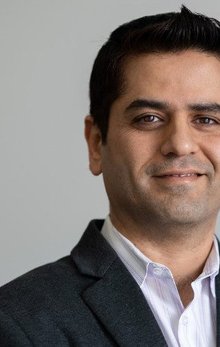
According to Vaibhav Tanjea, Chief Financial Officer (CFO) at Tesla, margins could face further pressure as the company transitions to a fully subscription-based Full Self-Driving (FSD) model.
Optimus humanoid robots
Tesla plans to unveil Optimus 3 in the first half of 2026 as it makes its entry into the humanoid robotics sector.
Musk described Optimus as "an incredibly capable robot" that would be "surprising to people" during the investor Q&A call.
"Optimus really will be a general purpose robot that can learn by observing human behaviour," he explained.

"So, you can demonstrate a task or literally verbally describe a task or even show it a video and it will be able to do that task."
The development of Optimus represents Tesla's broader ambition to leverage its AI capabilities beyond automotive applications.
The robot is designed to perform tasks in manufacturing environments initially, with potential expansion into domestic and commercial settings.
Tesla has already deployed early versions of Optimus in its own factories for testing purposes.
The company believes the humanoid form factor offers advantages over traditional industrial robots due to its ability to navigate environments designed for human workers.
Solar energy infrastructure
Musk highlighted what he described as an "underestimated" opportunity in solar power to support AI infrastructure development during the investor call.
He added: “We think the best way to add significant capability to the grid – lets say it is powering AI data centres – is solar and batteries on earth and solar in space.
“That's why we are going to work towards getting 100 gigawatts a year of solar cell production integrating across the entire supply chain from raw materials all the way to finished solar panels.”
As part of this renewable energy initiative, Musk indicated Tesla aims to become a "significant manufacturer of solar cells" alongside its "massive investments in AI".
He added this would drive increased investment in "batteries as well as the entire supply chain of batteries".
Even after the company achieved 26.6% year-on-year growth in the energy sector, with Megapack 3 and Megablock awaiting launch, Vaibhav said the company expects “margin compression from the increased low cost competition, impacts to market from policy uncertainty and the cost of tariffs".
Capital expenditure and manufacturing facilities
Tesla has earmarked 2026 as a year of significant capital investment, with Vaibhav projecting capital expenditure to surpass US$20bn during the investor call.
"We will be paying for six factories, namely the refinery, LFP factory, cybercab, Semi, a new mega factory and the Optimus factory," he notes.

“On top of it, we'll also be spending money for building our AI compute infrastructure and we'll continue investing in our existing factories to build more capacity and also the related infrastructure along with it and we'll also further expand our fleet of robotaxi and Optimus.”
Musk also identified chip production as a potential constraint on Tesla's growth between 2026 and 2030.
“Completing the AI5 chip design and having it be a great chip is arguably the number-one most critical thing to get done, which is why I'm spending more time on that than currently anything else at Tesla,” he said.
Musk revealed plans for AI6, "yet another big leap beyond AI5", that could follow by early 2027.
He also discussed building a 'TeraFab' chip plant integrating logic memory and packaging, saying: "If we don't do that, we're just going to be fundamentally limited by supply chain."
“I do think that by far the biggest competition for humanoid robots will be from China,” he says.
“China is incredibly good at scaling manufacturing. Actually, quite good at AI," adding that the models being distributed for free there “keep getting better".
Summarising, he said: "So, China's very good at AI, very good at manufacturing and will definitely be the toughest competition for Tesla.”

Executives
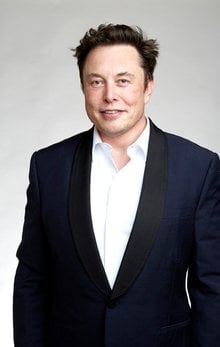
Elon Musk
Tesla CEO
Vaibhav Taneja
Chief Financial Officer