
How Is EV Manufacturer BYD Dominating The UK Market?
The story of BYD’s UK success showcases a leadership group delivering an assertive international plan, working around policy hurdles and reacting quickly to shifting demand.
As the global EV contest accelerates, BYD’s performance in Britain positions the company not only as a top EV producer, but as a potential architect of the broader shift to sustainable mobility.
According to CNBC, the Chinese EV manufacturer recorded an 880% year-on-year increase in UK sales. September alone saw 11,271 vehicles sold, taking 2025 sales in Britain past 35,000.
That run-rate elevates the UK to BYD’s largest market outside China: evidence of disciplined global expansion backed by fast decision-making.
CEO vision
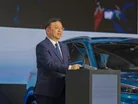
Under Founder and CEO Wang Chuanfu, BYD has evolved from a niche battery business into a world-scale EV maker with growing influence in renewable energy.
A hallmark of its approach is engineering for affordability without sacrificing pace of innovation. Exhibit A: the BYD Dolphin, which starts at just over £26,000 (US$34,880) and undercuts rivals such as Tesla’s Model 3.
Wang set out this trajectory early. In 2008, he outlined a target to be the world’s largest EV maker by 2025: “For new-energy cars, we believe we can become the global leader,” he said. “From the technology standpoint, 10 years should be enough. I believe Chinese companies can become leaders in the alternative car business because we make good batteries.”
With share gains and a broader model slate, BYD’s current momentum reflects that long-game mindset and an ability to adapt as markets evolve.
UK leadership built for scale
To underpin growth in Britain, BYD reinforced its local leadership in 2025. The company appointed Simon Bisp as Head of Customer Experience, with a remit spanning the journey from first contact to handover.
In March, Simon joined the UK-China Business Forum 2025, hosted by the China-Britain Business Council (CBBC), to discuss BYD’s strategy in the UK.
A former Peugeot Sales Director and Area Operations Manager, Simon drew a clear contrast: “At Peugeot, the shift to EVs felt like a necessary direction, but at BYD, it’s in their DNA.”
Detailing the brand’s ambition, he told CBBC: “Our objective is to be the number one brand in every market we enter. Price and accessibility are key factors and we’ve achieved price parity in the UK. Now it’s about educating customers.”
In April 2025, BYD named Andy Dolan as Head of Retail Sales for the UK.
Reflecting on his first days in role, he wrote on LinkedIn: “Three days in and I’m blown away by the passion, commitment and desire that new colleagues I have already met demonstrate. This brand is going places fast.”
According to Reuters, figures from The Society of Motor Manufacturers and Traders (SMMT) showed a 654% year-on-year surge for BYD in the first quarter, including 2,511 registrations in April 2025. Those early gains set the tone for the 880% jump reported in September.
Manufacturing momentum amid policy headwinds
BYD’s UK trajectory has advanced despite facing challenges, including exclusion from the government’s EV grant.
Even so, the company has maintained keen price points while widening consumer choice. The SEAL U DM-i and all-electric SEALION 7 have resonated with UK buyers, helping to fill multiple use cases across the market.
From a manufacturing perspective, BYD is also deepening its industrial footprint. Beyond passenger vehicles, the business has opened a UK battery facility to support its electric bus operations, embedding more of its value chain into Britain’s transport ecosystem and strengthening service capability for fleets.

Outlook: execution at volume
CNBC reports BYD has revised its global sales goal down 16% to 4.6 million vehicles.
Yet international demand remains resilient, and the UK's emergence as BYD’s largest market outside China, underscores the effectiveness of its formula: price discipline, rapid product cadence and leadership focused on execution.
If BYD continues to balance cost, capacity and customer education while building regional capability, it is well placed to help shape the UK’s transition to cleaner mobility, with a manufacturing mindset tuned to scale, reliability and total cost of ownership.
Company portals

Executives
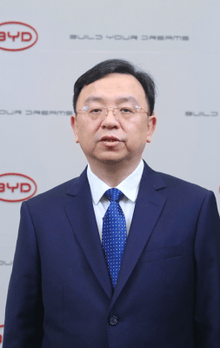
Wang Chuanfu
CEO