Apple Education Hub: Cutting Manufacturing Costs in India
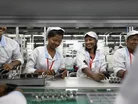
Apple is strengthening its position in India through expanded training initiatives designed to upskill manufacturing workers across the region.
From March 2026, the Apple Education Hub will deliver digital literacy programmes aimed at equipping employees with fundamental capabilities needed for modern manufacturing environments.
Through these workforce development investments, Apple can enhance the operational stability and competitiveness of its Indian manufacturing and supply chain operations.

Addressing the skills gap
These initiatives come as India continues to demonstrate significant economic momentum.
In 2024, the IMF reported India to be the fastest-growing economy globally, with projected GDP growth of 8.4%.
This performance has drawn major multinational companies, including Tesco and Apple, to redirect investment towards the country.
However, infrastructure challenges continue within the region.
Manufacturing networks in established markets have proved challenging to replicate, even as organisations seek to diversify sourcing strategies amid international uncertainty.
Despite these obstacles, India has positioned itself as the world's second-largest smartphone manufacturer, with annual production capacity exceeding 300 million units and exports surpassing US$24bn in FY25.
India is increasingly viewed as a fundamental component of Apple's worldwide supply chain architecture.
In 2024, India faced manufacturing costs from 5% to 10% higher than China, attributed to productivity gaps stemming from workforce skill deficiencies and reduced automation adoption, according to supply chain analysis.
Apple's expanded training investment aims to address these disparities.
Building digital capabilities
The Apple Education Hub is the first initiative of its type in India, developed in partnership with the Manipal Academy of Higher Education (MAHE) to deliver specialised courses to Apple's workforce.
The broadening of skill-building and training offerings will support teams in developing digital literacy, a critical requirement as global supply chains transition towards increasingly digitised operations.
Apple's investment encompasses the expansion of development courses accessible to supplier employees across more than 25 supplier facilities in India.
The enhanced programme will begin with Tata Electronics, featuring curriculum designed to help supplier employees acquire competencies in digital literacy, Swift coding, robotics, automation technology and smart manufacturing.
This is part of Apple's global US$50mn Supplier Employee Development Fund.
"The same spirit of innovation that drives our products also guides our commitment to supporting people across our global supply chain," says Sarah Chandler, Apple's Vice President of Environment and Supply Chain Innovation.
"We're thrilled to expand our technical training courses in India, giving thousands of employees the opportunity to learn valuable new skills and explore new paths for career growth."
Apple and its partners provide more than 75 courses for supplier employees in India, with plans to expand the robotics training programme that was launched in December 2024.
The programme trains and certifies factory educators at robotics laboratories, equipping them with capabilities to customise curriculum and conduct sessions throughout their facilities.
Pathways for advancement
The partnership with MAHE means the hub will connect trainers and students who will receive instruction directly from specialist educators.
MAHE staff will teach supplier trainers, who will subsequently deliver the training to the broader supply chain workforce across India.
"This collaboration brings together Apple's commitment to its supplier employees and Manipal's experience in applied education to create meaningful opportunities for growth," says Lt. Gen. Venkatesh, Vice Chancellor at MAHE.
"Supplier communities sit at the heart of India's manufacturing ecosystem, and investing in their skills is more important than ever."
By developing the local workforce, Apple can narrow the skills gap whilst creating additional opportunities to integrate automation.
This initial investment can lead to efficiency gains, as the implementation of technology and robotics, when executed properly with appropriate training, has demonstrated potential to deliver cost reductions and productivity improvements throughout supply chain operations.